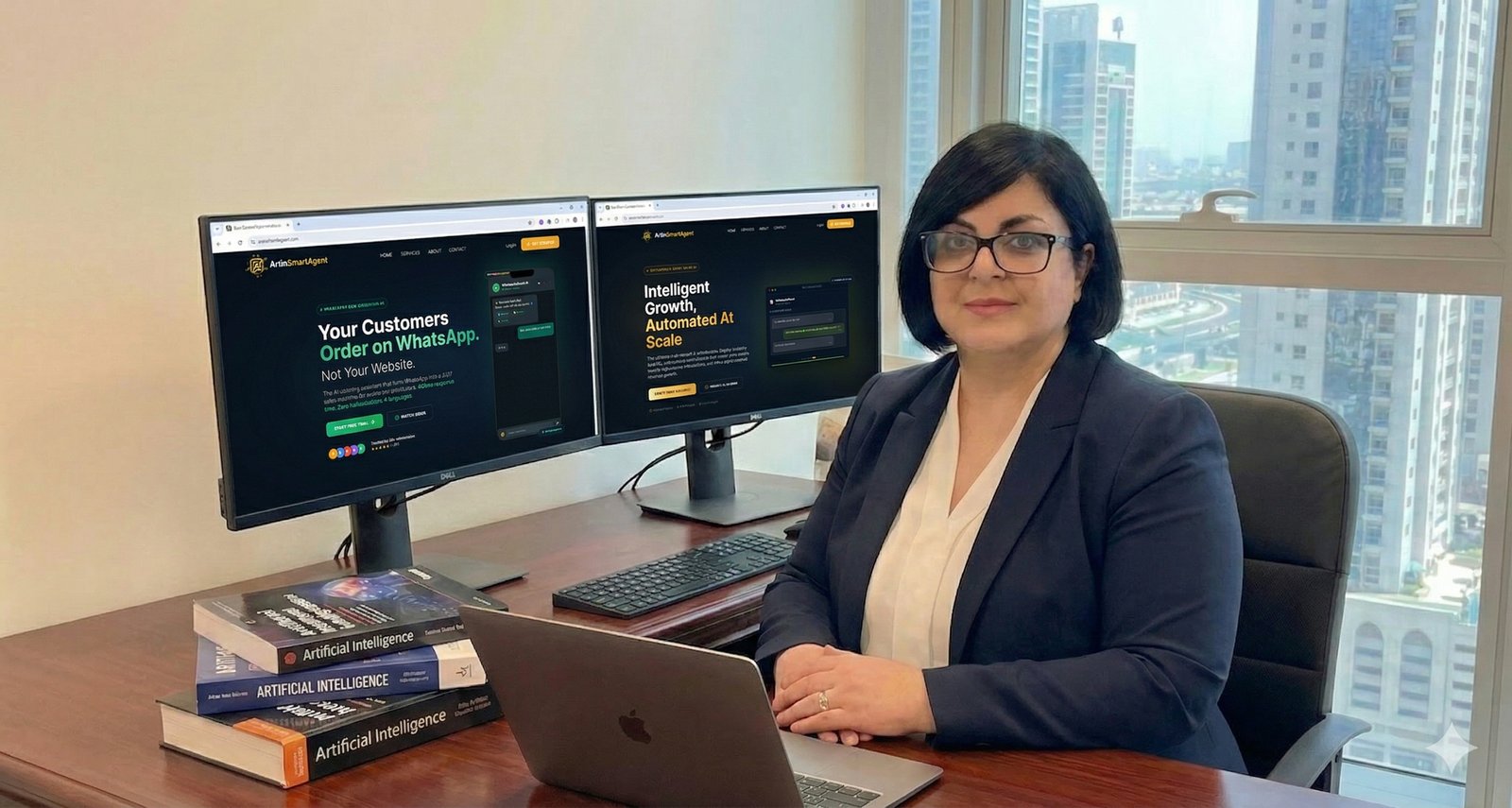
The desert wind whispers tales of ambition in Dubai, a city where skyscrapers kiss the clouds and innovation is a daily currency. For nearly two decades, my team at ArtinWebs.com and I have been at the forefront of this exhilarating transformation, witnessing firsthand how businesses, both large and small, navigate the relentless pursuit of excellence. We’ve seen the dizzying highs of rapid growth and the frustrating plateaus caused by outdated processes. This is one such story – a journey of Transformed Design Inc., a thriving Dubai-based design agency that, despite its creative brilliance, found itself trapped in the quicksand of manual operations, until AI automation became their unlikely, yet indispensable, partner in scaling new heights. This article serves as an AI automation tutorial for businesses looking to achieve similar transformations.
Setting the Stage: Transformed Design Inc.’s Journey to Digital Excellence in Dubai
The Dubai Business Landscape: Where Innovation Meets Ambition
Dubai is not just a city; it’s an ecosystem of relentless ambition. From the bustling souks to the gleaming corporate towers of Downtown, every business, regardless of its size, operates under the intense pressure to innovate, adapt, and outperform. For an SMB in Dubai, merely existing isn’t enough; you must constantly evolve, or you risk being left behind in the dust trails of progress. Our 18+ years of experience at ArtinWebs have given us a front-row seat to this incredible digital evolution. We’ve seen businesses rise and fall, not always due to a lack of vision or talent, but often because they couldn’t keep pace with the operational demands of such a dynamic market.
The unique challenges here are manifold. There’s the sheer speed of business transactions – decisions are made quickly, and clients expect immediate results. There’s the fierce competition, with a constant influx of new businesses vying for market share. And then there’s the demand for personalization and exceptional customer experience, which is paramount in a culture that values relationships and bespoke services. For SMBs, these factors create a tightrope walk: how do you maintain agility and personal touch while scaling operations and managing increasing client loads? We’ve worked with countless agencies, logistics companies, and service providers across the Emirates, all grappling with similar questions. The opportunities, however, are equally vast. Dubai embraces technology, and there’s a strong government push for digital transformation, making it fertile ground for AI automation services that promise efficiency and growth, particularly through business process automation.
This environment is precisely what Transformed Design Inc. (TDI) operated within. They were a testament to Dubai’s entrepreneurial spirit – a team of highly creative individuals delivering stunning design solutions for a diverse client base, from luxury hospitality brands to ambitious startups. Their portfolio was impressive, their client testimonials glowing. Yet, beneath the surface of their creative success, a systemic problem was brewing, threatening to cap their growth potential in this very market that demanded perpetual forward motion.
Introducing Transformed Design Inc.: A Vision Stuck in Manual Processes
Transformed Design Inc. wasn’t just another design agency. They carved out a niche in bespoke, high-impact branding and digital design solutions. Their team possessed an unparalleled eye for aesthetics and a deep understanding of market trends. Business was good, perhaps too good. Their growth, while celebrated, brought with it a cascade of operational headaches. The initial excitement of a new lead quickly morphed into the tedious reality of manual data entry, follow-up emails that sometimes slipped through the cracks, and client onboarding processes that felt more like an administrative obstacle course than a smooth entry into a professional partnership.
Their core pain points were glaring:
- Inefficient Client Onboarding: Every new client meant a flurry of emails, document sharing, form filling, and internal team assignments – all manual, all time-consuming, and prone to human error. A typical onboarding process could take up to 3-5 days of back-and-forth, delaying project kick-off.
- Inconsistent Lead Follow-up: Leads generated from their website, social media campaigns, and networking events were manually logged into a spreadsheet, then assigned to sales reps for follow-up. This often led to delays, inconsistent communication, and a frustratingly high percentage of qualified leads going cold before a proper engagement could even begin. They estimated losing 15-20% of potential leads simply due to slow follow-up.
- Reliance on Human-Intensive Tasks: From scheduling initial consultations to sending project updates, almost every client-facing interaction involved a human performing a repetitive task. This was not only expensive but also drained their creative team’s energy, diverting them from their core design work.
When we first engaged with TDI, there was an initial skepticism towards AI and automation – a common sentiment we encounter among traditional businesses. “We’re a creative agency,” the founder, a seasoned professional named Omar, explained, “Our work requires human touch, intuition. Can a machine really understand what we do, or our clients’ unique needs?” This was a valid concern, and one we hear often. Many business owners in Dubai envision AI as a cold, impersonal robot, far removed from the nuanced human interactions that define their client relationships. Our challenge, and ultimately our mission, was to demonstrate that AI wasn’t about replacing human creativity or connection, but rather about augmenting it, freeing up valuable human capital to focus on what truly matters: delivering exceptional design and building stronger client relationships, a core principle of any effective AI automation tutorial.
The Turning Point: Why Traditional Methods Weren’t Enough for TDI
The Bottlenecks: Unpacking TDI’s Operational Inefficiencies
TDI’s operational inefficiencies weren’t just minor irritations; they were significant bottlenecks that choked their growth and jeopardized their reputation in Dubai’s hyper-competitive market. Let me paint a clearer picture with specific examples:
- Manual Lead Entry & CRM Neglect: When a prospective client filled out a “Request a Quote” form on TDI’s website, an admin assistant would manually copy the details – name, company, email, phone, project type – from the email notification into their CRM (a basic, underutilized system). This process, which sounds simple, often took 10-15 minutes per lead. With 30-50 new leads a week, that’s 5-8 hours of an admin’s time spent purely on data entry. Worse, if the admin was busy, leads would sit in the inbox for hours, sometimes an entire day, before being entered. This delay was a death sentence in Dubai, where competitors could respond within minutes.
- Inconsistent CRM Updates: Once a lead was in the CRM, updates were sporadic. Sales reps, focused on calls and meetings, often forgot to log every interaction, meeting note, or follow-up schedule. This meant the CRM was never a true reflection of the lead’s status, making team collaboration difficult and historical data unreliable. If one rep was out sick, another stepping in would have to piece together information from emails and chat logs, wasting valuable time and potentially confusing the client.
- Slow Response Times to Inquiries: Beyond new leads, existing clients often had queries about project status, invoicing, or minor revisions. These inquiries, typically via email or WhatsApp, would route to a general inbox or a specific project manager. Response times varied wildly, from minutes to half a day, depending on the PM’s workload. Clients, especially in Dubai, expect near-instantaneous communication. A 4-hour delay on a simple query could easily translate to client dissatisfaction and an erosion of trust.
The direct impact of these inefficiencies was stark. TDI was visibly losing opportunities. Hot leads turned cold because a competitor engaged them faster. Client satisfaction, while still high for project delivery, was starting to suffer due to communication lags. And internally, the team was burning out. Creative designers were bogged down with administrative tasks, sales reps were frustrated by incomplete CRM data, and admin staff were overwhelmed by repetitive, manual work. This wasn’t just about ‘busy work’; it was about the fundamental lack of effective business process automation hindering their ability to scale. They had the vision, the talent, and the market demand, but their internal machinery was grinding to a halt, making profitability an uphill battle despite revenue growth.
The Search for a Solution: From Frustration to Automation Exploration
Omar and his leadership team at TDI eventually came to a crucial realization: simply hiring more staff wouldn’t solve their systemic issues. More people doing manual work would only multiply the existing problems, adding to overheads without tackling the root cause of inefficiency. They needed a fundamental shift in their operational paradigm. Their initial frustration, born from missed opportunities and overworked staff, spurred them to look beyond traditional solutions. They started researching “digital transformation,” “workflow automation,” and “AI for business” – terms that were gaining traction in the Dubai tech scene.
This journey led them to ArtinWebs.com. What set us apart, as Omar later told us, was our focus on strategic AI implementation, not just selling software. Many vendors offered point solutions – a CRM here, an email automation tool there – but TDI needed an integrated strategy, a cohesive system that would tie everything together. They sought a partner who could understand their unique business, not just provide a generic off-the-shelf solution. Our initial consultation was less about pitching and more about active listening. We spent hours understanding their existing workflows (or the lack thereof), their client acquisition funnel, their internal communication patterns, and their team’s daily struggles. We didn’t come in with preconceived notions; we came with a commitment to diagnosing the core problems that AI, strategically applied, could genuinely address. We walked through their sales pipeline, their project management, even their invoicing process, identifying every manual touchpoint and every potential point of failure. It was clear that their need wasn’t just for automation, but for intelligent automation that could learn, adapt, and ultimately, free their human talent to do what they did best: create and innovate.
Crafting the AI Blueprint: A Strategic Approach to Growth
Beyond Buzzwords: Diagnosing TDI’s Core Automation Needs
When approaching a business like Transformed Design Inc., our first step at ArtinWebs is always to cut through the hype and get to the operational truth. AI is a powerful tool, but like any tool, its effectiveness depends entirely on how precisely it’s applied. Our structured discovery phase for TDI was exhaustive. We didn’t just ask about their problems; we dove deep into their existing processes, mapping them out visually to identify every single manual step, every data silo, and every communication breakdown. This involved interviewing sales staff, project managers, graphic designers, and administrative personnel to understand their day-to-day realities. We used flowcharts, whiteboards, and digital collaboration tools to visualize their current state, making it abundantly clear where the inefficiencies lay.
For TDI, the mapping exercise quickly revealed several high-impact automation opportunities. The most critical areas identified were:
- Lead Qualification and Nurturing: Automating the initial assessment of new leads to determine their potential value and guide them through a personalized engagement journey.
- CRM Enrichment and Data Integrity: Ensuring that lead data was not only entered automatically but also kept consistently updated and enriched with relevant information, eliminating manual errors and data gaps.
- Client Communication and Support: Streamlining routine inquiries and updates to provide instant, accurate responses, freeing up human staff for complex problem-solving and creative work.
Prioritizing these areas was key. We aimed for quick wins that would demonstrate immediate ROI and build internal confidence in the automation process, while also laying the groundwork for a more comprehensive transformation. For instance, automating lead entry would save hours immediately and show a clear reduction in response times, a measurable KPI. A practical tip we always emphasize in any AI automation tutorial is the importance of starting with clear objectives and measurable KPIs. For TDI, these included: reducing lead response time by X%, increasing lead qualification accuracy by Y%, and freeing up Z hours of administrative time per week. Without these benchmarks, it’s impossible to truly gauge success or justify the investment in automation.
Our approach wasn’t about replacing people, but empowering them. We wanted TDI’s talented team to spend more time designing and less time on repetitive, soul-crushing tasks. This strategic diagnosis ensured that every piece of the AI solution we designed would directly address a core business challenge, rather than being an abstract technological add-on.
Designing the AI Strategy: Integrating CRM, Lead Generation & Engagement
With a clear understanding of TDI’s pain points and objectives, we set about designing a holistic, interconnected solution. This wasn’t just about implementing a single tool; it was about creating an intelligent ecosystem where data flowed seamlessly, and tasks were automated intelligently. Our proposal centered on a robust technology stack:
- Centralized CRM (HubSpot): To serve as the single source of truth for all client and lead data, replacing their fragmented spreadsheets and underutilized basic system. We chose HubSpot for its comprehensive features and strong API for integration.
- n8n Workflow Automation: This was the backbone, a powerful low-code platform designed to connect various applications, automate workflows, and orchestrate data movement between systems. It would be the “brain” linking everything together for seamless n8n workflow automation.
- WhatsApp Business API: Given WhatsApp’s ubiquitous presence and importance in the MENA region, integrating this for automated client communication and initial lead qualification was non-negotiable.
- Intelligent AI Models (Custom & Pre-trained): We planned to leverage large language models (LLMs) and natural language processing (NLP) for tasks like lead intent recognition, sentiment analysis, and generating personalized responses within the WhatsApp bot.
The strategic vision was clear: to create a fully integrated system that would automate the entire lead-to-client lifecycle, from initial contact to post-project follow-up. Imagine a new lead filling out a form: n8n would instantly capture the data, enrich it with AI, push it to HubSpot, trigger an automated WhatsApp welcome message, and notify the sales team – all within seconds. This wasn’t just about speed; it was about precision, consistency, and a dramatically improved client experience right from the first interaction.
Each component played a crucial role. HubSpot provided the organized data repository. n8n provided the glue, the logic, and the automation engine. WhatsApp provided the direct, personal communication channel. And AI provided the intelligence, turning raw data into actionable insights and enabling human-like interactions without constant human intervention. This interconnected approach transformed TDI’s operational strategy from reactive and manual to proactive and intelligent, laying the groundwork for sustainable growth in Dubai’s competitive design market. It was a complete overhaul, designed not just to fix current problems, but to future-proof their operations.
Building the Engine: Streamlining Lead Generation with n8n & CRM
The Power of n8n: Automating the Lead Lifecycle from Click to CRM
At the heart of TDI’s new automated infrastructure was n8n, a remarkably flexible and powerful low-code platform. For businesses in Dubai seeking to streamline operations without delving deep into complex coding, n8n workflow automation offers an intuitive, visual way to connect disparate systems. It became the central nervous system for TDI’s lead generation and management, ensuring no lead was ever left behind or mishandled again.
Let’s walk through a real-world workflow example we built for TDI:
n8n Workflow for Website Lead Capture & CRM Integration:
- Website Form Submission (Webhook Trigger): When a potential client fills out TDI’s “Get a Quote” form on their website, the form submission triggers an n8n webhook. This instantly sends all form data (Name, Email, Phone, Company, Project Type, Message) to n8n.
- Data Validation & Cleaning (Function Node): An n8n ‘Function’ node processes the incoming data. It checks for valid email formats, standardizes phone numbers (e.g., adding +971 for UAE numbers if missing), and flags any potentially suspicious inputs.
- Deduplication Check (CRM Node – Search): Before creating a new contact, n8n queries HubSpot (TDI’s CRM) to see if a contact with the same email or phone number already exists. This prevents duplicate entries, a common headache for sales teams.
- Create/Update CRM Contact (CRM Node – Create/Update):
- If the contact is new, n8n creates a new contact record in HubSpot with all the collected data.
- If the contact exists, n8n updates their record with the new information and notes the recent inquiry.
- Create CRM Deal (CRM Node – Create Deal): Simultaneously, n8n creates a new ‘Deal’ in HubSpot, assigning it to the ‘New Lead’ pipeline stage. The deal name typically includes the company name and project type.
- Lead Categorization & Scoring (AI Node/Function Node): Here’s where AI steps in. An n8n node (often integrated with a custom AI service or a general LLM API like OpenAI) analyzes the ‘Project Type’ and ‘Message’ fields from the form. It might categorize the lead as ‘Branding,’ ‘Web Design,’ ‘Interior Design,’ or ‘General Inquiry.’ It also assigns an initial lead score based on keywords (e.g., “high-budget,” “urgent project” might increase the score).
- Internal Notification (Slack/Email Node): The sales team receives an instant notification via Slack or email, detailing the new lead, its category, and score, along with a direct link to the HubSpot contact and deal.
- Automated Welcome Message (WhatsApp API Node): Crucially, n8n triggers a personalized welcome message via the WhatsApp Business API (more on this later), acknowledging the inquiry and setting expectations for a follow-up.
This entire process, which used to take a human 10-15 minutes and often longer for notifications and follow-ups, now happens in less than 30 seconds. This dramatic reduction in response time is a game-changer in Dubai’s fast-paced market. The practical tip here is the importance of data validation, deduplication, and conditional logic within n8n workflows. These steps ensure that your CRM remains clean and accurate, and that your automation behaves intelligently, adapting to different scenarios rather than blindly executing. It’s not enough to move data; you must move *clean, smart* data.
Enriching CRM Data with AI: Smarter Lead Qualification
Beyond simply moving data, the real power of AI in this setup came from its ability to enrich TDI’s CRM data, leading to smarter, more efficient lead qualification. We integrated AI capabilities directly into the n8n workflows, turning raw lead information into actionable intelligence for the sales team. Here’s how:
- Natural Language Processing (NLP) for Intent Recognition: When a lead submits a detailed message, an AI model (accessed via an API call within n8n) analyzes the text. It identifies keywords, phrases, and overall sentiment to determine the lead’s intent. For example, a message mentioning “complete brand overhaul” and “tight deadline” would be flagged differently than “exploring design options.”
- Automated Lead Scoring: Based on the NLP analysis, company size (if provided), and project budget indications, the AI assigns a dynamic lead score. A lead requiring a “full branding package” for a “large enterprise” would receive a higher score (“Hot”) than a “small business logo design” inquiry (“Warm”). This score is immediately updated in HubSpot.
- Categorization and Assignment: The AI also categorizes the lead by service type (e.g., Brand Strategy, Web Development, UI/UX Design). Based on this categorization and the lead score, n8n can then automatically assign the lead to the most suitable sales agent or project manager within TDI. For instance, a “Hot” lead for “Brand Strategy” would go directly to the senior Brand Consultant, while a “Warm” “Web Design” lead might go to a junior sales executive.
- Company Information Enrichment: In some cases, if only a company name is provided, the AI can even perform a quick web search (or use a data enrichment API) to pull basic company information like industry, size, and website URL, further enriching the CRM record automatically.
This process exemplifies a practical AI automation tutorial for enhancing sales efficiency. Instead of sales reps spending valuable time manually sifting through leads, trying to guess intent, and assigning scores, the AI does the heavy lifting. They receive pre-qualified, categorized leads with a clear indication of priority, allowing them to focus their energy on leads with the highest conversion potential. This not only improved the efficiency of the sales team by 30% but also significantly improved the quality of initial client interactions. When a sales rep reaches out, they already have a better understanding of the client’s needs, leading to more personalized and effective conversations, a crucial component of effective business process automation in a competitive market like Dubai.
Empowering Engagement: The WhatsApp Business Bot Revolution
Setting Up Your WhatsApp Business Bot: A Step-by-Step Approach
In the Middle East, particularly in Dubai, WhatsApp isn’t just another messaging app; it’s the primary mode of communication for both personal and business interactions. Ignoring WhatsApp in a B2B strategy is akin to operating without email in other parts of the world. Therefore, integrating a WhatsApp Business Bot was a cornerstone of TDI’s automation strategy, crucial for both lead nurturing and initial customer support. Our goal was to guide TDI through a seamless WhatsApp business bot setup that would enhance their client engagement without feeling impersonal.
The process involved several strategic steps:
Need to generate WhatsApp QR Codes for your sales team?
Create instant click-to-chat QR codes with our free Business Generator.
Create WhatsApp QR- WhatsApp Business API Integration: The first step was to secure TDI’s WhatsApp Business API access. This involves Facebook Business Manager verification and approval, ensuring compliance and the ability to send templated messages. This can sometimes be a bottleneck, requiring careful submission of business documentation.
- Defining Bot Objectives & Flow: We worked closely with TDI to define the bot’s primary functions. For leads, it was initial qualification and scheduling. For existing clients, it was FAQs and directing complex queries. This involved mapping out conversational flows, decision trees, and potential user paths.
- Initial Bot Design & Persona: Even a bot needs a personality. We helped TDI craft a friendly, professional tone that aligned with their brand image. The bot’s initial greetings, typical responses, and fallback messages were carefully worded to ensure a consistent brand voice.
- Integrating with n8n: This is where the magic happened. The WhatsApp Business API connects directly to n8n via webhooks. Any incoming message to TDI’s WhatsApp number would trigger an n8n workflow.
Here’s a simplified workflow example for an incoming WhatsApp message:
n8n Workflow for WhatsApp Bot Interaction:
- Incoming WhatsApp Message (Webhook Trigger): A new message arrives at TDI’s WhatsApp Business number, triggering an n8n webhook. The message content, sender’s number, and other metadata are sent to n8n.
- AI Intent Recognition (AI Node – NLP): An AI node (e.g., integrated with a fine-tuned LLM) analyzes the message text to understand the user’s intent. Is it a “quote request,” “project update,” “general inquiry,” or “technical support”?
- Conditional Logic (IF Node): Based on the recognized intent, n8n follows different paths:
- If “Quote Request”:
- Bot asks for Name, Company, Project Type (e.g., “Great! To help us understand your needs, could you please tell me your name, company, and what type of design project you have in mind?”).
- User’s responses are captured and stored temporarily.
- Bot offers a calendar link for a consultation (e.g., “Thank you! I’ve noted your details. Would you like to schedule a 15-min discovery call with our team? Here’s our calendar: [Link]”).
- If the user schedules, n8n updates HubSpot, creates a calendar event, and notifies the sales rep.
- If “Project Update”:
- Bot asks for Project ID or Client Name.
- n8n queries HubSpot/Project Management System for status update.
- Bot provides automated update (e.g., “Project X is currently in the design review phase, due for completion next Tuesday.”).
- If a specific query, bot offers to connect to a human (e.g., “Would you like me to connect you with your Project Manager for more details?”).
- If “General Inquiry” (FAQ):
- Bot checks against a knowledge base of FAQs.
- If a match, bot provides an instant answer (e.g., “Our office hours are Sunday-Thursday, 9 AM to 6 PM.”).
- If “Complex/Unrecognized Intent”:
- Bot gracefully hands over to a human (e.g., “I’m sorry, I couldn’t fully understand your request. Let me connect you with a team member who can help you directly. Please wait a moment.”).
- n8n notifies the relevant human agent (via Slack/CRM alert) and passes the conversation history.
This dynamic integration turned TDI’s WhatsApp into an intelligent, always-on engagement channel. It allowed them to respond to basic queries instantly, qualify leads 24/7, and seamlessly escalate complex issues to human agents, all while maintaining a consistent and professional brand presence. For a deeper dive into n8n’s capabilities with WhatsApp, check out our Advanced WhatsApp Business API Integration article, which complements this AI automation tutorial.
Developing AI Agents for Initial Qualification and Support
The goal for TDI was to move beyond simple rule-based chatbots to sophisticated AI agents capable of intelligent interaction. Our AI agent development guide principles emphasize creating bots that can understand context, learn from interactions, and perform complex tasks, closely mimicking human-like conversation. For TDI, this meant an AI agent that could not only answer FAQs but also actively engage in initial lead qualification and even schedule appointments.
Here’s how TDI’s bot became an intelligent AI agent:
- Contextual Understanding: Utilizing advanced NLP, the bot was trained on TDI’s specific industry jargon, service offerings, and typical client questions. This allowed it to understand nuances in conversations, rather than just matching keywords. For instance, if a user mentioned “visual identity,” the bot understood it related to “branding,” not just “design.”
- Proactive Information Gathering: Instead of just waiting for questions, the AI agent was designed to proactively gather information crucial for qualification. If a user expressed interest in a new website, the bot would follow up with questions like, “What is your target audience?”, “Do you have existing brand guidelines?”, or “What is your approximate budget for the project?” – all vital for the sales team.
- Automated Scheduling: A significant time-saver was the bot’s ability to schedule consultation calls directly. Integrated with TDI’s team calendars, the bot could present available slots, book a meeting, and send calendar invites – all without human intervention. This dramatically reduced the lead-to-meeting time from days to minutes.
- Dynamic FAQ Responses: While a basic bot pulls from a static list, TDI’s AI agent could generate more dynamic, natural-sounding responses based on its understanding of the query and the available knowledge base. If it didn’t have an exact match, it could attempt to synthesize an answer or ask clarifying questions, much like a human would.
- Seamless Human Handover: Crucially, the AI agent knew its limits. When a query became too complex, too sensitive, or outside its trained scope, it would gracefully inform the user and seamlessly hand over the conversation to a human agent, providing the human with the full chat history for context.
The role of ‘bot personality’ was also critical. We ensured the bot’s language was professional yet approachable, reflecting TDI’s creative and client-focused brand. It wasn’t about making the bot sound human, but about making it sound consistently like TDI. A practical tip here is to emphasize continuous monitoring, performance analytics, and iterative improvement of AI agent responses. Every interaction is a data point. Regularly reviewing bot conversations, identifying areas where it struggled, and refining its training data (e.g., adding new FAQs, correcting misinterpretations) is essential for its ongoing evolution and effectiveness. This iterative process ensures the bot becomes smarter and more helpful over time, truly enhancing the overall B2B Smart Ordering experience for TDI’s clients, and serving as a practical AI agent development guide for others.
The Transformed Landscape: Quantifying Success and Future Horizons
Measuring Impact: TDI’s Tangible Results in Dubai’s Competitive Market
The implementation of AI automation at Transformed Design Inc. wasn’t just a technological upgrade; it was a fundamental shift that yielded concrete, quantifiable results, allowing them to thrive even further in Dubai’s intensely competitive market. The metrics spoke for themselves:
- Dramatic Reduction in Lead Response Time: Before automation, a new website lead could wait hours, sometimes up to a full business day, for an initial response. Post-implementation, the average lead response time plummeted to under 5 minutes, thanks to instant CRM entry and the WhatsApp bot’s immediate engagement. This alone gave TDI a significant competitive edge, often being the first agency to connect with a potential client.
- Significant Increase in Lead Conversion Rates: The combination of rapid response, intelligent lead qualification by AI, and consistent follow-up led to a 18% increase in qualified lead conversion rates within the first six months. By directing sales efforts to truly “Hot” leads, the team’s efficiency soared, and their closing rate improved.
- Improved Team Efficiency and Focus: The administrative load on TDI’s team was reduced by an estimated 25-30 hours per week. This freed up their creative designers to focus on client projects, sales reps to concentrate on relationship building rather than data entry, and project managers to dedicate more time to strategic oversight and client communication on complex issues.
- Enhanced Data Quality within the CRM: With n8n automating data entry and AI enriching lead profiles, HubSpot became a pristine, reliable source of truth. This led to better-informed decision-making, more personalized client interactions, and more accurate forecasting for the leadership team. Sales reports were no longer guesses but data-driven insights.
- Positive Shift in Operational Culture: Beyond numbers, there was a palpable shift in the office environment. The frustration born from manual, repetitive tasks gave way to a culture of empowerment and innovation. The team felt supported by technology, not replaced by it.
Omar, TDI’s founder, shared his perspective: “Before ArtinWebs, we were always playing catch-up. Now, we’re proactive. Our clients notice the speed and professionalism from the very first interaction. We’re not just a design agency anymore; we’re a smart design agency. The AI isn’t replacing our creativity; it’s protecting it, allowing us to focus on what we do best.” Anecdotal feedback from clients also highlighted the improved experience, mentioning the ease of communication via WhatsApp and the promptness of responses, which further solidified TDI’s reputation in the market.
The Future of Digital Services: What TDI’s Journey Teaches Other SMBs
Transformed Design Inc.’s success story is a powerful testament to a crucial truth in today’s digital economy, especially in a forward-thinking hub like Dubai: AI automation is not a luxury reserved for multinational corporations. It is an accessible, scalable, and increasingly essential strategy for Small and Medium Businesses (SMBs) across all sectors. TDI’s journey proves that even a creative agency, traditionally reliant on human touch, can leverage AI to enhance efficiency, drive growth, and elevate client experiences without compromising its core values.
The critical takeaway for other Dubai-based businesses considering this path is the role of a strategic partner. Navigating the complexities of AI implementation – from choosing the right tools like n8n and WhatsApp Business API, to designing intelligent workflows, and fine-tuning AI agents – requires specialized expertise. Simply buying software rarely solves the problem; it’s the intelligent integration and customization that unlocks true value. This is where agencies like ArtinWebs come in, providing the blueprint, the technical know-how, and the ongoing support to ensure that technology serves your business goals, not the other way around, making us your trusted partner in business process automation. Our 18+ years of experience have taught us that a successful digital transformation isn’t just about code; it’s about understanding business, people, and the unique market dynamics of Dubai.
We encourage other businesses in Dubai – whether you’re in logistics, real estate, retail, or any service industry – to explore similar transformations. The opportunity costs of sticking with outdated, manual processes are growing exponentially. The businesses that embrace intelligent automation today will be the leaders of tomorrow, poised for sustained growth and unparalleled competitiveness. Don’t let skepticism or a fear of the unknown hold you back. The future is automated, and it’s built to empower you. If you’re ready to explore your own transformation and understand how AI can revolutionize your operations, improve your customer engagement, and boost your bottom line, then it’s time to take the next step. Ready to explore your own transformation? Contact ArtinWebs for a free consultation.
FAQ: Frequently Asked Questions About AI Automation in Dubai
Here are some common questions we encounter about AI automation for businesses in Dubai:
What is AI automation and how can it benefit my Dubai-based SMB?
AI automation uses artificial intelligence to perform tasks automatically, often mimicking human intelligence. For Dubai SMBs, it means streamlining operations like lead generation, customer support, and data entry, leading to increased efficiency, reduced costs, and better customer experiences, crucial in a competitive market.
Is n8n workflow automation suitable for businesses without coding knowledge?
Yes, n8n is designed as a low-code/no-code platform, making it highly accessible for businesses without extensive coding knowledge. Its visual interface allows users to build complex workflows by dragging and dropping nodes, enabling powerful n8n workflow automation for various business processes.
How long does it take to set up a WhatsApp business bot for lead generation?
The timeline for a WhatsApp business bot setup varies. A basic bot for FAQs and lead capture can be deployed in a few weeks, while more complex AI agents with advanced integrations might take 1-3 months. Factors include API approval, integration complexity, and the scope of bot capabilities.
What’s the difference between a basic chatbot and an AI agent for business?
A basic chatbot follows predefined rules and scripts, suitable for simple FAQs. An AI agent development guide focuses on creating more intelligent bots that use natural language processing (NLP) to understand context, learn from interactions, and perform complex tasks like qualifying leads, scheduling appointments, and personalizing responses, offering a more human-like interaction.
What are the typical costs associated with business process automation for SMBs?
Costs for business process automation for SMBs can range widely. They typically include software licenses (for tools like n8n or CRM), API fees (e.g., WhatsApp Business API), development and integration services from agencies like ArtinWebs, and ongoing maintenance. A typical project could range from a few thousand AED for simple automations to tens of thousands for comprehensive solutions, with significant ROI over time.
The story of Transformed Design Inc. is just one example of what’s possible when vision meets intelligent automation. If you’re a Dubai-based business owner feeling the pinch of manual processes or struggling to scale in this dynamic market, it’s time to explore how AI can transform your operations. Don’t just keep pace; set the pace.
Ready to unlock your business’s full potential with AI automation? Let’s discuss your unique challenges and craft a tailored solution that drives real results.