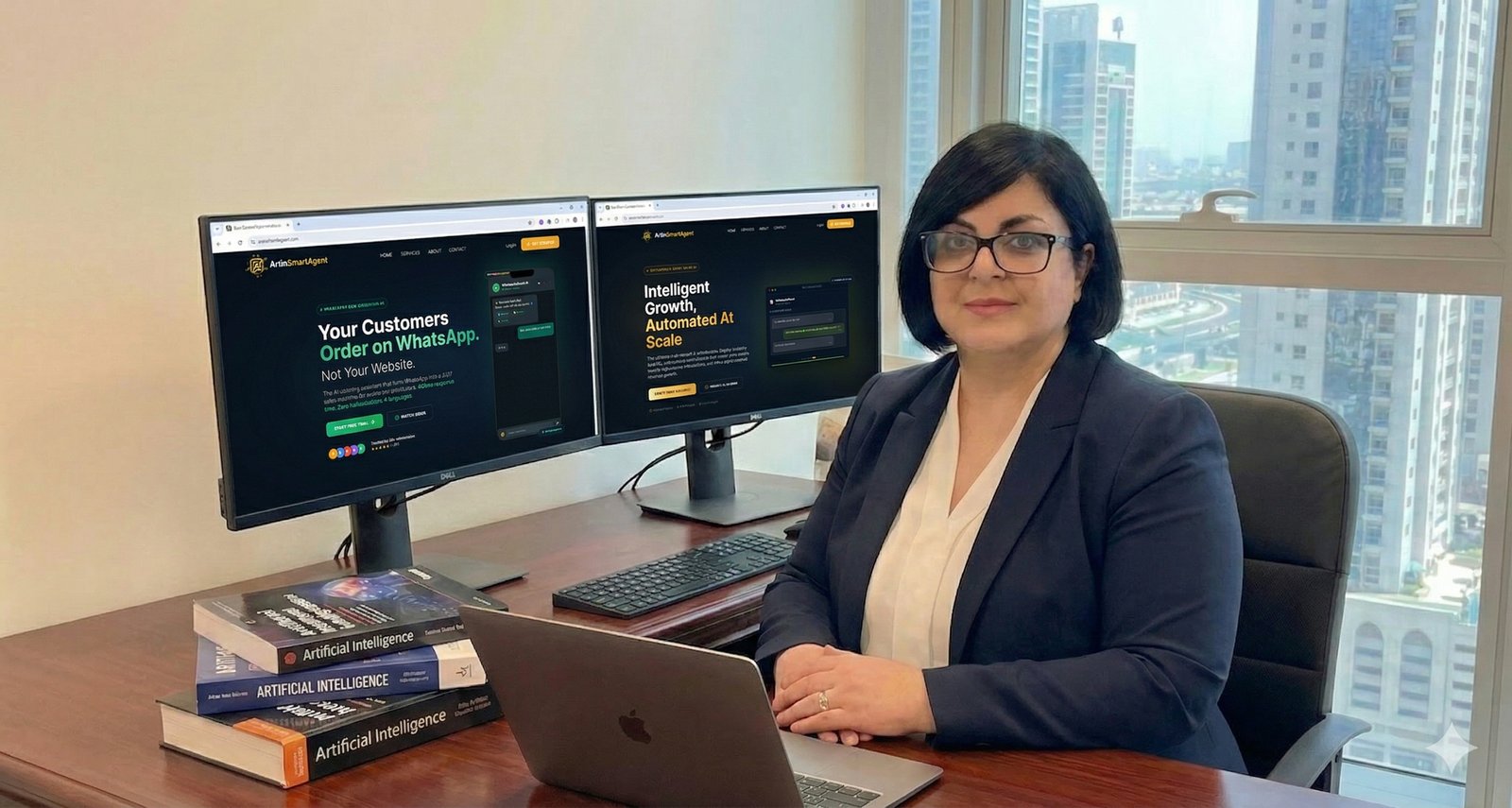
The desert sun beat down, reflecting off the chrome of luxury cars zipping along Sheikh Zayed Road. Inside my office, the air conditioning hummed a stark contrast to the boiling frustration I often felt. It was just over 18 years ago, and even then, in the heart of Dubai’s booming economy, a common enemy plagued almost every business, big or small: the relentless, soul-crushing tide of manual tasks. I saw it in the trading companies struggling to track inventory, the real estate agencies drowning in lead follow-ups, and even within our own burgeoning agency. We were all chasing growth, but too often, we were tripped up by the mundane. This isn’t just a story about technology; it’s a story about realizing that the path to true growth isn’t about working harder, but about working smarter, and how AI automation became the compass that guided us – and can guide your Dubai SMB – to uncharted territories of efficiency and profitability. This comprehensive AI automation tutorial will walk you through the steps.
The Awakening: Why AI Automation Isn’t Just for Giants (My Dubai Story)
From Manual Mayhem to Methodical Magic: The Early Days
I remember the early days of our agency in Dubai vividly. The phones would ring off the hook, emails piled up, and every single client interaction, every lead qualification, every project update felt like a manual Everest climb. We were a team of bright, ambitious individuals, but our days were often consumed by the sheer volume of repetitive tasks: copying data from an inquiry form into a CRM, sending follow-up emails one by one, manually updating spreadsheets after every sales call, or even just checking inventory levels for a client in the wholesale distribution sector. The rhythm of business was a constant grind, and the competitive Dubai B2B landscape amplified this pressure. If you weren’t swift, responsive, and efficient, your competitors – often just a stone’s throw away in Business Bay or JLT – would be.
The “aha!” moment wasn’t a single flash of lightning, but a gradual dawning. It was watching a competitor’s customer service team take 24 hours to respond to a simple query, while our own team was equally swamped, barely keeping up. It was seeing promising leads vanish because we couldn’t follow up fast enough, or witnessing a client, a small trading company in Al Quoz, lose track of an entire shipment because their manual inventory system failed them. The sheer human error, the fatigue, the lost opportunities – it was palpable. The growth we aspired to felt like it was always just out of reach, not because we lacked talent or drive, but because we were drowning in administrative quicksand. My personal journey into automation began with a desperate search for anything that could alleviate this burden. Initially, it was simple scripts, then basic CRM systems, then off-the-shelf tools that promised efficiency. There was skepticism, of course. “Is this really worth the effort?” “Will it be too complicated?” But the alternative – continuing the manual mayhem – was simply unsustainable.
This struggle wasn’t unique to us or to Dubai. Globally, the US Marketing Automation Market, for instance, has been on a relentless upward trajectory for years, projected to hit over $10 billion by 2027. This isn’t just a statistic; it’s a testament to a universal truth: businesses, irrespective of their size or location, cannot afford to be shackled by manual processes in an increasingly digital world. What was once a luxury for large enterprises has now become a necessity for SMBs. In dynamic markets like Dubai, where agility and innovation are key differentiators, embracing modern business process automation isn’t just about saving time; it’s about survival and, more importantly, unlocking unprecedented growth. The lessons we learned then, about the critical need to automate, laid the groundwork for everything we do today at ArtinWebs, shaping our focus on delivering practical, impactful AI automation solutions for businesses just like yours.
The Tipping Point: When I Knew We Needed AI (and You Do Too)
As our agency grew, and we took on more clients across various sectors in Dubai – from luxury retail to logistics, from professional services to manufacturing – the limitations of basic automation became painfully clear. Simple task automation was good, but it couldn’t handle the nuances, the decisions, the “intelligence” that true business efficiency demanded. This was the tipping point, the moment I realized we didn’t just need automation; we needed AI automation. I began seeing critical bottlenecks that only AI could truly address. For instance, consider a Dubai-based real estate agency client. They were getting hundreds of online inquiries daily. Their existing system could auto-reply, but it couldn’t understand the intent behind a query like “Looking for a family villa in Arabian Ranches with 4 beds and a big garden” versus “What’s the process for buying property as an expat?” Manual sorting and qualification of these leads took hours, often leading to slow follow-ups and losing 3-5 high-value leads every single month to competitors who were simply faster.
Another example was a logistics company struggling with customer service queries about shipment tracking, delivery times, and documentation. Their team was overwhelmed, leading to long wait times and frustrated clients. Similarly, an internal issue we faced was the sheer volume of data we generated from marketing campaigns and website analytics. Generating meaningful, actionable reports manually was a Herculean task, often delayed and therefore less impactful. The cost of inaction was staggering: not just lost revenue from missed leads or dissatisfied customers, but also the immense operational inefficiencies, the burnout of our valuable team members, and the opportunity cost of not being able to focus on strategic growth initiatives.
This is when the vision for AI automation truly crystallized for us. We began to explore how AI could not just automate a task, but understand context, make informed decisions, and even learn from interactions. We envisioned AI agents that could qualify leads intelligently, WhatsApp bots that could answer complex customer queries with human-like understanding, and automated reporting systems that could provide real-time insights without manual intervention. This wasn’t just about cutting costs; it was about transforming how a business operates, how it interacts with its customers, and how it empowers its employees. For any SMB in Dubai looking to thrive, AI automation isn’t a futuristic concept; it’s a strategic imperative. The groundwork for you begins by simply looking at your business and identifying where intelligence, speed, and consistency are most lacking. Where are your team members spending their time on repetitive decisions? Where are errors most frequent? These are your starting points, the simple principles to begin thinking about where AI can make the most impact in *your* business, turning those bottlenecks into growth accelerators. This is a key part of any effective AI agent development guide.
Demystifying the ‘How’: Your First Steps in AI Automation
Identifying Your Automation Hotspots: Where to Begin
Embarking on the AI automation journey can feel daunting, like staring at the vast desert and wondering where to dig for water. But the secret, as I’ve learned over nearly two decades, is to start small and targeted. My advice to every SMB owner in Dubai is to conduct a “Pain Point” exercise. Grab a whiteboard, a pen, or even just a notebook. Gather your key team members and honestly map out your most time-consuming, repetitive, and error-prone tasks. Ask yourselves:
- What tasks do we perform daily or weekly that feel like ‘busy work’?
- Where do we frequently make mistakes that cost us time or money?
- Which processes require constant human oversight but are largely rule-based?
- Where are our customers experiencing friction or delays due to manual steps?
You’ll quickly find patterns. These patterns are your “automation hotspots” – the low-hanging fruit that offers immediate and tangible ROI. We’re talking about tasks that are repetitive, rule-based, and ideally, have a clear input and a clear output. Don’t try to automate your entire business overnight. Focus on one or two critical areas first. This section of our AI automation tutorial will demystify the process.
Let me give you a couple of real-world examples from Dubai businesses. We worked with a popular salon in Jumeirah, where their receptionists spent nearly 40% of their day answering phone calls for appointment bookings, rescheduling, and general inquiries. This was a massive pain point. By automating their appointment booking system with a simple online form linked to their calendar and an automated WhatsApp reminder system, we freed up their staff to focus on customer experience within the salon, leading to a noticeable increase in client satisfaction and service quality. Another example was a small real estate agency in Downtown Dubai. Their agents were spending hours manually qualifying leads from various portals – calling each person, asking about their budget, property type, and preferred location. We implemented a system to automate initial client qualification through an interactive form and a series of intelligent questions delivered via a chat interface, ensuring that by the time a lead reached an agent, they were already 70% qualified. This wasn’t just about saving time; it was about ensuring agents spent their precious time on genuinely interested buyers, dramatically increasing their conversion rates.
This embodies the “1% improvement” philosophy. You don’t need a revolutionary change to see significant impact. Small, consistent automations, even just saving 15 minutes a day per employee, compound into massive gains over weeks, months, and years. Think about it: if 5 employees save 15 minutes a day, that’s over 6 hours a week, almost a full workday. Over a year, that’s hundreds of hours of productivity reclaimed. Start small, prove the concept, measure the impact, and then expand. That’s the most sustainable and least overwhelming way to introduce AI automation into your Dubai SMB.
Choosing Your Weapons: Tools for the Modern SMB
Once you’ve identified your automation hotspots, the next question is: what tools do you use? The landscape of automation tools has evolved dramatically since I started. We’ve moved from rudimentary spreadsheets and basic email marketing tools to sophisticated CRMs, enterprise resource planning (ERP) systems, and now, advanced AI platforms. The good news for SMBs in Dubai is that you don’t need to hire a team of developers or invest millions to get started. The real game-changer has been the rise of low-code/no-code platforms.
These platforms are designed to empower business users – people without a deep programming background – to build powerful applications and automate complex workflows using visual interfaces, drag-and-drop functionalities, and pre-built templates. This democratizes technology, making it accessible to SMBs who often can’t afford a dedicated IT department or a full-time software engineering team. For instance, platforms like Zapier or Make (formerly Integromat) are excellent for connecting different apps and automating simple data transfers. But when you need more power, more flexibility, and the ability to build truly complex, multi-step business process automation, that’s where tools like n8n shine.
n8n is an open-source workflow automation tool that stands out for its flexibility and power. It allows you to connect hundreds of different applications and services, from CRMs and email platforms to databases and custom APIs, all through a visual workflow builder. Its open-source nature means you can self-host it, giving you greater control over your data – a significant advantage for businesses operating in a data-conscious environment like Dubai. We use n8n extensively at ArtinWebs because it allows us to craft bespoke solutions for our clients without always needing to write custom code from scratch. It bridges the gap between simple integrations and full-blown software development, making it an ideal choice for ambitious SMBs looking to truly leverage AI automation.
When considering your tools, it’s a quick comparison: when do you use off-the-shelf solutions versus custom builds? For basic tasks like email marketing or simple CRM, an off-the-shelf solution like Mailchimp or HubSpot might be perfect. However, if your business process is unique, involves multiple systems that don’t natively integrate, or requires complex conditional logic and AI integration, then a platform like n8n or a custom-built solution might be necessary. At ArtinWebs, our AI automation services often involve a blend of these, leveraging powerful platforms like n8n to deliver highly customized and effective solutions that truly fit the unique operational rhythms of Dubai businesses, making n8n workflow automation a cornerstone of our approach.
Building Your Digital Frontline: The WhatsApp Business Bot Revolution
Crafting Your First WhatsApp Business Bot: A Step-by-Step Blueprint
In Dubai, WhatsApp isn’t just an app; it’s practically the default communication channel for everything from personal chats to business inquiries. Its prevalence in the MENA region is unparalleled, with nearly 90% of Dubai residents using it daily. For an SMB, not having a robust WhatsApp presence is akin to not having a phone number a decade ago. This makes the WhatsApp Business bot revolution not just an opportunity, but a non-negotiable part of your digital frontline strategy. Mastering WhatsApp business bot setup is crucial for any Dubai SMB. The beauty of these bots is their ability to provide instant, 24/7 service, capturing leads and answering common queries even when your team is offline or busy.
So, how do you craft your first WhatsApp Business bot? First, you need to define your bot’s persona and purpose. Is it primarily for answering Frequently Asked Questions (FAQs)? Is it a lead generation machine, designed to capture customer details and interests? Or is it an initial layer of customer support, guiding users to the right information or human agent? Clarity here is crucial. For instance, if you’re a real estate agent, your bot’s purpose might be to pre-qualify leads by asking about their budget, property type preference, and desired location. If you’re a restaurant, it might be for table bookings and menu inquiries.
The practical guide to setting up a basic bot typically involves these steps, forming a solid foundation for your WhatsApp business bot setup:
- Apply for WhatsApp Business API Access: This is the official gateway. You’ll need a verified Facebook Business Manager account and a phone number that isn’t already tied to a personal WhatsApp account. This can be done directly through Meta for Business or via a Business Solution Provider (BSP) like Twilio or MessageBird, which often simplify the process.
- Choose a Bot Builder Platform: While you can code a bot from scratch, low-code/no-code platforms like ManyChat, Chatfuel, or even direct integrations through n8n are far more accessible. These platforms provide visual interfaces to design conversational flows.
- Design Your Conversation Flow: Start simple. Map out the questions your bot will ask and the answers it will provide. Use buttons for easy navigation (e.g., “Press 1 for Services, 2 for Location, 3 to Speak to an Agent”).
- Integrate (if necessary): Connect your bot builder to your WhatsApp Business API account.
- Test, Test, Test: Run through every possible scenario to ensure the bot responds correctly and smoothly.
Let’s consider a workflow example for a Dubai-based consultancy. Their bot’s purpose is lead qualification. A user messages “Hi” to their WhatsApp Business number. The bot automatically replies: “Hello! Welcome to [Consultancy Name]. To help us understand your needs, could you please tell us your name and email address?” Once provided, the bot follows up: “Great, [Name]! What kind of service are you interested in today? (e.g., Business Strategy, Market Research, Digital Transformation) Please type your interest.” The bot captures this information, thanks the user, and informs them that a human expert will get back to them shortly. This simple flow captures vital lead data, qualifies their interest, and ensures that by the time a human agent takes over, they have all the necessary context, saving precious time and improving initial engagement quality. This foundational setup is your first step in building a responsive, efficient digital frontline that operates 24/7 in the bustling Dubai market.
Beyond Basic Replies: Integrating AI for Smarter Conversations
While a rule-based WhatsApp bot is a fantastic starting point for basic FAQs and lead capture, the true revolution begins when you integrate Artificial Intelligence. This is the leap from a rigid, menu-driven bot to an engaging, conversational partner. The key technologies enabling this are Natural Language Processing (NLP) and intent recognition. NLP allows the bot to understand the nuances of human language – not just keywords, but the meaning and context behind a user’s free-form text. Intent recognition then identifies the user’s goal or purpose (e.g., “track order,” “change appointment,” “ask about pricing”) even if phrased in multiple ways.
Imagine the difference: a basic bot might only respond if you type “ORDER STATUS.” An AI-powered bot, however, would understand “Where’s my parcel?”, “Has my delivery shipped yet?”, or “Can I get an update on my purchase?” and direct you to the order tracking function. This dramatically enhances the user experience, making the interaction feel more natural, more helpful, and less like talking to a machine. It transforms a transactional bot into an engaging conversational partner, fostering greater customer satisfaction and loyalty.
A real-world application in Dubai could be an AI-driven WhatsApp bot for an e-commerce store selling abayas and modest fashion. Beyond handling simple product inquiries (“Do you have this in size M?”), the AI bot could:
- Handle Order Tracking: Users simply provide an order number, and the bot fetches and displays real-time shipping updates.
- Recommend Products: Based on previous purchases or expressed preferences (“I’m looking for an evening abaya”), the bot could recommend specific products from the catalog, complete with links and images.
- Process Returns/Exchanges: Guide users through the return policy, initiate a return request, and even schedule a pickup.
- Answer Complex FAQs: “What’s your delivery policy to Abu Dhabi?”, “Do you offer cash on delivery?” – the bot can pull information from your knowledge base.
The core of this advanced capability lies in an AI agent development guide. You’re essentially training a mini-brain. Tips for training your AI are crucial:
- Start with a Rich Dataset: Feed your AI bot with as many examples of customer questions and your desired answers as possible. Think about all the ways a customer might ask about “delivery time” or “product availability.”
- Iterative Learning: AI isn’t a “set it and forget it” solution. Continuously monitor your bot’s conversations. Identify where it struggles to understand, and provide it with more training data for those specific queries. This iterative learning process is key to refinement.
- Handle Edge Cases and Local Nuances: Dubai’s diverse population means various accents, colloquialisms, and cultural references might come into play. Ensure your AI is trained to recognize these, or at least gracefully escalate to a human when it encounters something truly unfamiliar. For example, understanding that “khalas” might mean “finished” or “done” in a particular context.
By integrating AI, your WhatsApp bot becomes more than just an automated responder; it becomes an intelligent, efficient, and scalable extension of your customer service and sales teams, operating tirelessly on the platform most preferred by your Dubai clientele.
The Powerhouse Behind the Scenes: Mastering n8n Workflow Automation
Connecting the Dots: An n8n Workflow Example for Lead Nurturing
While WhatsApp bots handle your digital frontline, the true power of AI automation often lies in the seamless, intelligent processes running behind the scenes. This is where tools like n8n become indispensable. n8n, as I mentioned, is an incredibly versatile open-source workflow automation tool. Its visual workflow builder is a dream for anyone who thinks in processes, not just code. This makes n8n workflow automation accessible and powerful. You can self-host it, ensuring your data remains within your control, which is a significant advantage for businesses in Dubai with strict data governance requirements.
Let’s walk through a concrete scenario: a Dubai real estate agency’s lead nurturing process. Historically, a lead fills out a form on their website, an agent manually copies the details into their CRM, then manually sends a generic welcome email, and maybe remembers to follow up a week later. This is slow, prone to error, and inconsistent. With n8n, we can transform this into a smooth, automated, and intelligent workflow:
Step-by-step n8n workflow construction:
- Trigger (Website Form Submission): The workflow starts with a ‘Webhook’ node. When a potential buyer fills out the “Enquire About a Property” form on the agency’s website, this webhook receives the data (name, email, phone, desired property type, budget range).
- Data Extraction and Initial Processing: The next node would be a ‘JSON Parser’ or a ‘Set’ node to neatly extract and format the incoming data. We might also add a ‘Conditional’ node here to check for basic data validity (e.g., is the email format correct?).
- Conditional Logic (Lead Qualification): This is where it gets smart. We add an ‘IF’ node. If the lead’s budget range is above a certain threshold (e.g., AED 2 Million) AND they specified a “Villa” as their desired property type, they are tagged as a ‘High-Value Lead’. Otherwise, they are a ‘Standard Lead’.
- CRM Integration (HubSpot/Salesforce/Custom CRM): Based on the conditional logic, the workflow branches.
- For ‘High-Value Leads’, an ‘CRM’ node (e.g., HubSpot, Salesforce, or even a custom API call to a bespoke CRM) automatically creates a new contact entry, assigns them to a senior agent, and tags them as ‘VIP’.
- For ‘Standard Leads’, a similar CRM node creates an entry, assigns them to a junior agent, and tags them as ‘General’.
- Automated Email Sequence (Personalized Nurturing):
- For ‘High-Value Leads’, an ‘Email’ node (e.g., SendGrid, Mailgun) sends a highly personalized welcome email, perhaps featuring a link to exclusive luxury properties and inviting them for a personalized consultation.
- For ‘Standard Leads’, a different ‘Email’ node sends a more general welcome, introducing the agency’s services and linking to popular property listings.
- Internal Notification: Finally, a ‘Slack’ or ‘Email’ node sends an internal notification to the assigned agent and sales manager, informing them of the new lead and their qualification status, complete with all captured details.
Here’s a simplified conceptual n8n workflow diagram:
Trigger: Webhook (Website Form Submission)
↓
Node: Extract & Format Data
↓
Node: IF Condition (Lead Qualifies as High-Value?)
├─> TRUE (High-Value Lead)
│ ↓
│ Node: CRM (Add VIP Lead, Assign Senior Agent)
│ ↓
│ Node: Email (Send Personalized VIP Welcome)
│ ↓
│ Node: Slack (Notify Senior Agent)
│
└─> FALSE (Standard Lead)
↓
Node: CRM (Add Standard Lead, Assign Junior Agent)
↓
Node: Email (Send General Welcome)
↓
Node: Slack (Notify Junior Agent)
This n8n workflow ensures every lead is processed instantly, qualified intelligently, and nurtured appropriately, all without a single manual click, dramatically increasing the agency’s efficiency and conversion rates in the competitive Dubai real estate market. This is the essence of powerful business process automation.
Curious how much an AI Agent could save your UAE business?
Calculate your exact Visa, Gratuity, and workspace savings compared to hiring a human.
Launch AI ROI CalculatorScaling Your Operations: Advanced n8n Strategies for Growth
The beauty of n8n isn’t just in automating simple lead nurturing; it’s in its capacity to scale and handle incredibly complex business process automation, integrating intelligence at every step. As your Dubai business grows, your operational needs become more intricate – multi-step approvals, data synchronization across disparate systems, and the need for more sophisticated decision-making. n8n is built for this.
Consider a Dubai-based trading company that deals with imports and exports. They have multiple suppliers, logistics partners, and customs agents. An advanced n8n workflow could automate their entire order-to-delivery process:
- Automated PO Generation: Triggered by low inventory levels (from an ERP system), n8n automatically generates purchase orders and sends them to approved suppliers.
- Multi-Step Approvals: Once a supplier confirms, n8n could route the PO through a multi-step approval process (e.g., finance manager approves budget, operations manager approves delivery schedule) via email or a custom internal tool, only proceeding to the next step when all approvals are received.
- Data Synchronization: It could then synchronize order data across their ERP, logistics tracking system, and even a custom database for customs documentation.
- Automated Notifications: Send real-time updates to customers and internal teams about shipment status, customs clearance, and delivery estimates, reducing customer service queries significantly.
Furthermore, n8n excels at integrating with cutting-edge AI services, bringing true intelligence into your automated workflows. You can use n8n to connect to:
- OpenAI (for content generation): Imagine an n8n workflow that, after a customer purchase, sends product details to OpenAI to generate a personalized thank-you note or a review request email draft, which then gets sent via your email marketing platform. Or, for a content agency, automatically generate blog post outlines based on trending keywords.
- Google Vision (for image processing): For a property management company, an n8n workflow could take new property photos, send them to Google Vision to detect specific features (e.g., “swimming pool,” “sea view”), and then automatically tag and categorize these properties in their listing database, making searches more accurate.
- Custom AI Models: If you’ve developed your own machine learning model for, say, predicting customer churn or optimizing pricing, n8n can connect to its API to feed data in and receive predictions, integrating that intelligence directly into your business processes.
Robust error handling and monitoring are paramount when dealing with complex workflows. n8n allows you to configure error notifications (e.g., send an email to an admin if a workflow fails), retry mechanisms, and logs, ensuring your automations are reliable and you’re immediately aware of any issues. For instance, if an API call to a shipping provider fails, n8n can automatically retry it a few times and then notify a human if it still doesn’t go through.
We’ve seen how a Dubai logistics company utilized n8n to automate their customs documentation checks and notifications for goods moving through Jebel Ali Port. By integrating with various government portals and internal databases, n8n could automatically extract shipment details, cross-reference them with customs regulations, generate necessary forms, and send automated alerts to relevant parties if any discrepancies were found. This drastically reduced delays, minimized human error, and ensured smoother, faster customs clearance. This level of WholesaleOS platform integration and automation is what truly differentiates a forward-thinking Dubai SMB, enabling them to operate with a lean team while handling massive volumes, ensuring they stay competitive and efficient in the global supply chain, often powered by advanced n8n workflow automation.
From Bots to Brains: Developing Your Own AI Agents
Defining Your Agent’s Mission: What Problems Can AI Solve for You?
Moving beyond simple automation or even smart conversational bots, the next frontier for SMBs in Dubai is the development of true AI agents. This isn’t just about following rules; it’s about building digital entities capable of autonomous decision-making, learning from data, and even reasoning. It’s about empowering your business with virtual colleagues that can perform tasks requiring a level of intelligence traditionally reserved for humans. The first, and most crucial, step in this journey is defining your agent’s mission: what specific problems can an AI agent solve for you?
To brainstorm agent roles, think about tasks that require more than just data movement or conditional logic. These are tasks that involve:
- Reasoning: Interpreting complex information and drawing conclusions.
- Prediction: Forecasting future events based on historical data and patterns.
- Pattern Recognition: Identifying trends or anomalies in large datasets.
- Autonomous Execution: Taking action based on its analysis without constant human intervention.
Identify high-value tasks that humans often find tedious, repetitive, but also intellectually demanding. These are the perfect candidates for AI agents. For example:
- Customer Success Agent: Beyond answering FAQs, an AI agent could proactively monitor customer usage patterns, identify potential churn risks, and trigger personalized retention strategies or escalate to a human.
- Sales Prospecting Agent: An agent could scour public data (company websites, news articles, LinkedIn) to identify potential leads based on specific criteria (e.g., companies in Dubai expanding into new markets, recent funding rounds), qualify them, and even draft initial outreach messages.
- Data Analysis Agent: Instead of relying on a human analyst to pull reports, an AI agent could continuously monitor key business metrics, identify correlations, flag anomalies, and even suggest actionable insights, like “Sales of product X are dropping in Q3; consider a targeted marketing campaign.”
Let’s draw inspiration from a real-world scenario: optimizing inventory management for a Dubai retail chain. Manually managing inventory across multiple stores, especially with fluctuating demand from tourists and residents, is a nightmare. An AI agent, however, could revolutionize this. Its mission: optimize stock levels to minimize waste and maximize sales. How would it do this?
- Real-time Sales Data: Continuously ingest sales data from all POS systems.
- External Factors: Integrate data on upcoming holidays (Eid, Dubai Shopping Festival), weather forecasts, local events, and even social media trends.
- Predictive Analytics: Based on historical data and these external factors, the agent predicts demand for specific products at each store location.
- Automated Reordering: When stock levels drop below a dynamic threshold (calculated by the AI), it automatically generates purchase orders or internal transfer requests to replenish inventory, ensuring shelves are always stocked with what customers want, when they want it.
- Waste Reduction: Identifies slow-moving items and suggests promotions to clear them before they become dead stock.
This AI agent moves beyond simple automation; it provides intelligent foresight and takes proactive steps, directly impacting the bottom line of the retail chain by reducing inventory costs and maximizing sales opportunities. Defining such a clear, high-impact mission is the cornerstone of successful AI agent development, a key step in any comprehensive AI agent development guide.
The Iterative Journey: Building, Testing, and Refining Your AI Agent
Developing an AI agent, particularly for an SMB without a massive R&D budget, is not a one-off project; it’s an iterative journey. Think of it as a “build-measure-learn” loop. You build a minimal viable agent, measure its performance against your defined KPIs, learn from its successes and failures, and then refine and expand its capabilities. This continuous improvement model is absolutely critical, especially in dynamic markets like Dubai where customer preferences and market conditions can shift rapidly.
When it comes to choosing your AI tools, you have options that don’t necessarily require you to be a machine learning expert. For most SMBs, leveraging cloud-based AI services is the most practical approach. Platforms like AWS AI/ML services (e.g., Amazon Comprehend for NLP, Amazon Forecast for prediction), Azure AI services (e.g., Azure Cognitive Services), or Google Cloud AI (e.g., Google’s Vertex AI platform) offer pre-built models and APIs that you can integrate into your workflows (often via n8n!). These services abstract away much of the underlying complexity, allowing you to focus on the problem you’re trying to solve rather than the intricate details of model training. For those with a stronger tech inclination, open-source frameworks like TensorFlow or PyTorch exist, but typically require more specialized knowledge.
A crucial consideration in AI agent development, especially in a diverse and multicultural market like Dubai, revolves around ethical considerations and bias. AI models learn from the data they’re fed. If your historical customer data disproportionately represents certain demographics or preferences, your AI agent might inadvertently develop biases. For example, a loan application AI trained on historical approvals might unfairly penalize applicants from certain areas if past data showed lower repayment rates from those areas due to systemic issues, not individual risk. It’s imperative to carefully curate your training data, regularly audit your AI’s decisions, and ensure fairness and effectiveness across all segments of your diverse customer base. Transparency about how your AI makes decisions is also key to building trust.
Finally, embrace the “human-in-the-loop” approach. True AI autonomy is often a long-term goal. For most business-critical applications, human oversight remains invaluable. This means designing your AI agent to flag complex cases, uncertain decisions, or high-stakes actions for human review and approval. For instance, a sales prospecting agent might identify potential leads and draft emails, but a human sales rep reviews and sends the final message. An inventory optimization agent might suggest a massive order, but a human manager gives the final sign-off. This synergy ensures that your AI agents deliver on their promise of efficiency and intelligence while mitigating risks and leveraging the irreplaceable creativity, empathy, and strategic thinking of your human team. This iterative approach, combined with smart tool selection and ethical considerations, forms the core of a successful AI agent development guide for any ambitious Dubai SMB.
The Road Ahead: Sustaining and Expanding Your Automation Empire
Measuring Success: KPIs for Your Automated Processes
Launching your first AI automations and agents is an exciting milestone, but the journey doesn’t end there. To truly build a sustainable automation empire, you need to rigorously measure its impact. This goes far beyond a vague sense of “time saved.” You need concrete Key Performance Indicators (KPIs) to justify your investment, demonstrate ROI, and identify areas for further optimization. Without clear metrics, you’re flying blind in the competitive Dubai market.
Here are some crucial KPIs to consider for your AI automation efforts:
- Reduced Error Rates: For automated data entry or reporting, track the reduction in manual errors. A manufacturing client in Jebel Ali, for example, saw a 90% reduction in order processing errors after implementing an automated system.
- Increased Lead Conversion Rate: If your WhatsApp bot or AI agent is qualifying leads, track how many qualified leads convert into customers compared to manual processes. We’ve seen clients boost their lead-to-opportunity conversion by 15-20% simply by ensuring faster, more intelligent initial engagement.
- Faster Response Times: Measure the average response time for customer inquiries before and after bot implementation. A 24/7 WhatsApp bot can reduce this from hours to seconds.
- Cost Reduction: Quantify savings in man-hours, reduced re-work, or even lower operational costs (e.g., less need for overtime).
- Employee Productivity/Satisfaction: While harder to quantify, measure how much time employees are now dedicating to high-value, strategic tasks versus repetitive ones. Surveys can gauge satisfaction.
- Customer Satisfaction (CSAT/NPS): Automated, faster service often leads to happier customers. Track your CSAT scores or Net Promoter Score.
- Process Cycle Time: For internal processes like invoice approvals or onboarding, measure how much faster the entire cycle is completed.
Setting up dashboards is crucial for visualizing the impact of your AI automation tutorial efforts. Tools like Google Data Studio, Power BI, or even simple custom dashboards built into your CRM can pull data from your automated systems and display these KPIs in real-time. This provides an instant snapshot of your automation’s health and performance. Continuous optimization is then driven by this data. If your lead qualification bot is still struggling with certain types of queries, your dashboard will show a higher escalation rate to human agents, signaling where more AI training or flow refinement is needed. If an automated invoicing system isn’t reducing payment cycles as much as expected, you can investigate which steps are still causing delays.
A prime Dubai example comes from an automated invoicing system we helped implement for a large trading house. Before automation, their average payment cycle was 45 days, with 15% of invoices requiring manual follow-up due to errors or late payments. After implementing a system that automatically generated invoices, sent reminders, and integrated with their accounting software, their payment cycle dropped to an average of 30 days, and manual follow-ups for errors were virtually eliminated. This directly translated into improved cash flow and significant operational savings – clear, measurable benefits that any business owner can appreciate. By consistently measuring, you ensure your automation efforts are not just running, but truly adding value and driving growth.
The Human Element: Training Your Team to Work with AI
Perhaps the most critical, yet often overlooked, aspect of implementing AI automation is the human element. The fear of job displacement, the uncertainty of new technologies, and the resistance to change are very real concerns for your team. Introducing AI automation without addressing these fears head-on is a recipe for internal friction and failed adoption, no matter how brilliant your tech solution. My 18+ years of experience in Dubai have taught me that technology is only as effective as the people who use it.
Start by openly communicating the “why.” Explain that AI is not there to replace jobs, but to augment capabilities, eliminate drudgery, and free up valuable human potential for more creative, strategic, and fulfilling work. Frame AI as a powerful assistant, a co-pilot that handles the mundane so your team can focus on what they do best – building relationships, innovating, and solving complex problems. For example, a customer service agent who once spent 60% of their day answering repetitive FAQs can now dedicate that time to resolving complex customer issues, personalizing service, or even engaging in proactive outreach, which ultimately makes their job more rewarding.
Upskilling your workforce is paramount. Empower your employees to become “automation managers” or “AI co-pilots.” Provide training on how to interact with the new systems, how to monitor automated workflows, how to troubleshoot minor issues, and even how to identify new opportunities for automation within their own roles. Simple workshops on using n8n for personal productivity, or understanding how to train a WhatsApp bot, can turn skeptics into champions. This fosters a culture of innovation and continuous improvement, where your team feels like they are part of the solution, not victims of technological change.
The new synergy between humans and AI is where unprecedented productivity truly lies. Imagine your sales team, no longer bogged down by manual lead qualification, but instead receiving a daily list of highly qualified leads generated by an AI agent, complete with suggested talking points. Or your marketing team, using AI to generate multiple ad copy variations in seconds, allowing them to focus on strategic campaign design. This collaboration allows humans to handle exceptions, apply critical thinking, and inject empathy, while AI handles the speed, scale, and repetitive analysis. For instance, in our own agency, while we offer Done-For-You SEO services, AI helps us analyze vast amounts of data for keyword research and content optimization, but it’s our human experts who craft the compelling narratives and strategic plans that truly resonate with Dubai’s diverse audiences.
Our agency’s experience in Dubai has been a testament to this approach. We actively trained our team members, from project managers to content creators, to understand and even build simple automations themselves using tools like n8n. This not only made our internal processes incredibly efficient but also deepened their understanding of our clients’ needs, allowing them to propose even more innovative solutions. By investing in your team’s understanding and adoption of AI, you’re not just implementing technology; you’re building a future-proof, highly adaptable, and incredibly productive workforce ready to navigate the complexities and seize the opportunities of Dubai’s ever-evolving business landscape.
Frequently Asked Questions About AI Automation for SMBs in Dubai
What is AI automation and how can it benefit my SMB in Dubai?
AI automation uses artificial intelligence to perform tasks that would typically require human intelligence, such as understanding natural language, making decisions, and learning from data. For a Dubai SMB, it can streamline customer service with WhatsApp bots, automate lead generation, optimize internal business processes, and reduce operational costs, ultimately freeing up staff for more strategic work.
Is setting up a WhatsApp business bot complicated for a small business?
While it requires some initial setup, platforms and an AI automation tutorial can simplify the process significantly. You can start with rule-based bots for FAQs and then gradually integrate AI for more complex interactions. Many low-code tools and agencies (like ArtinWebs) specialize in making WhatsApp business bot setup accessible for SMBs.
What is n8n workflow automation and why is it recommended?
n8n is an open-source workflow automation tool that allows you to connect various apps and services to automate tasks. It’s recommended because it offers powerful customization, can be self-hosted for data privacy, and is highly flexible for building complex business process automation workflows, from simple data transfers to integrating AI services.
How do I get started with developing my own AI agent without a deep tech background?
You don’t necessarily need to be a programmer. Start by defining a clear problem an AI agent can solve. Utilize cloud AI services (like Google Cloud AI, AWS AI) or integrate with large language models via platforms like n8n. Focus on iterative development: build a small agent, test it, and refine its capabilities based on feedback. An AI agent development guide often emphasizes a practical, problem-solving approach.
What are the common pitfalls to avoid when implementing AI automation in my business?
Common pitfalls include trying to automate everything at once, neglecting data quality, underestimating the need for human oversight, failing to train staff, and not clearly defining KPIs. Start small, focus on high-impact areas, ensure your data is clean, and involve your team from the beginning to ensure successful adoption and long-term benefits.
Ready to Transform Your Dubai Business with AI Automation?
The journey from manual mayhem to methodical magic, from repetitive tasks to intelligent automation, is within your reach. As a Dubai-based AI automation agency founder with nearly two decades of experience, I’ve seen firsthand how these technologies can redefine what’s possible for SMBs. You don’t need to be a tech giant to leverage the power of AI; you just need the right guidance and the right tools. If you’re ready to unlock new levels of efficiency, boost your bottom line, and empower your team to focus on meaningful work, we’re here to help you navigate this exciting future. Let’s discuss how customized AI automation can transform your business. Reach out to us today and let’s build your automation empire together.