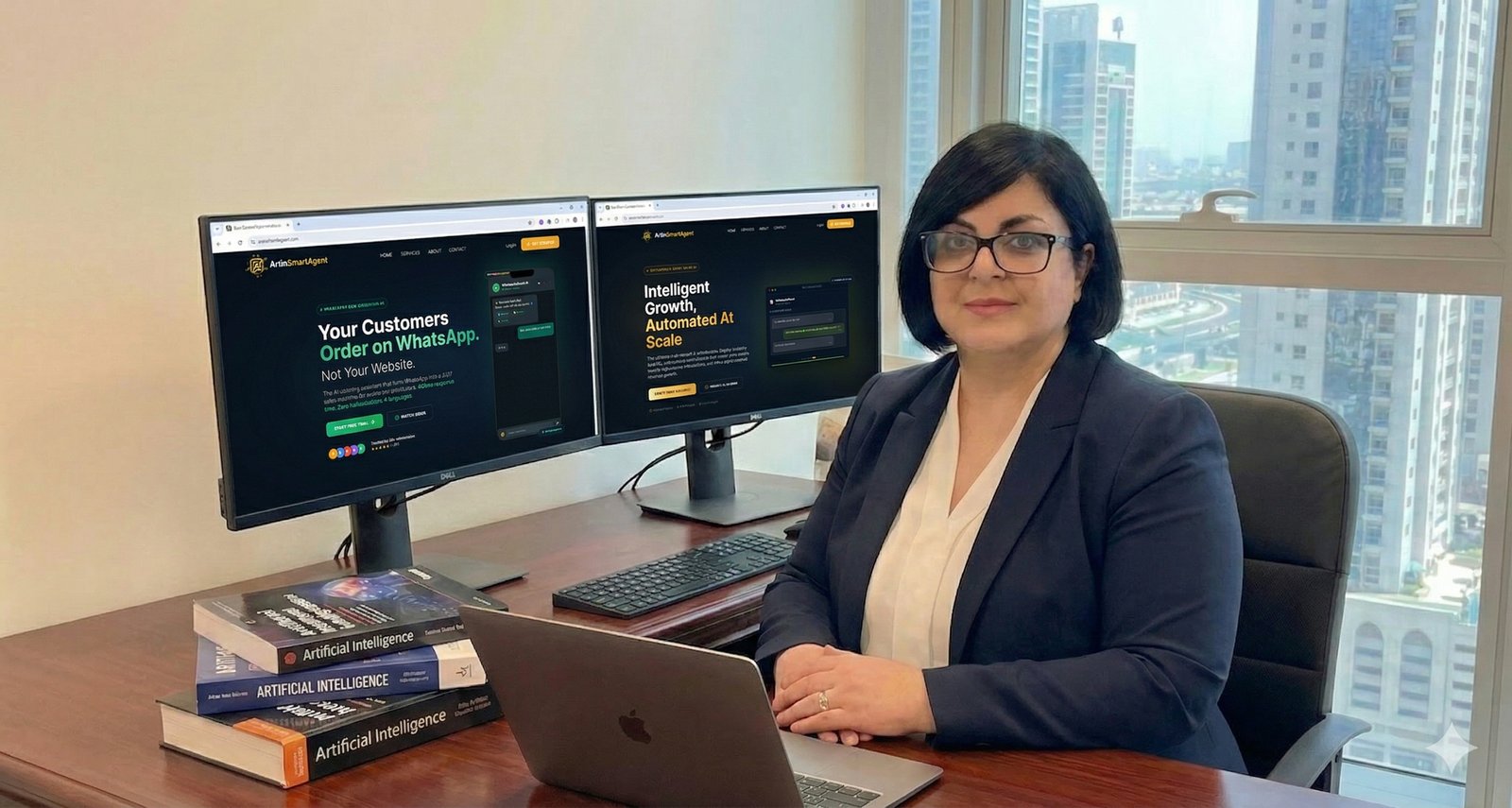
In the vibrant, relentless heart of Dubai, where innovation is currency and time is an irreplaceable asset, businesses are constantly seeking the next edge. We’ve seen the landscape evolve at breakneck speed, from the days when a simple website was considered revolutionary to today, where AI-driven efficiency isn’t just a luxury but a necessity. For small to medium-sized businesses (SMBs) here, the challenge isn’t merely to keep up, but to leap ahead, transforming how teams collaborate, communicate, and create value. It’s about moving beyond generic platforms and embracing intelligent automation that truly understands the rhythm of your operations.
AI Automation for Dubai SMBs: WhatsApp Bots, n8n Workflows & AI Agents
The Dubai Business Pulse: Beyond Basic Collaboration Platforms
The pace of business in Dubai and across the wider Gulf region is nothing short of electrifying. Every day brings new opportunities, new competitors, and new demands from customers who expect nothing less than excellence and instant gratification. For years, the initial answer to improving team collaboration was to adopt digital platforms – Microsoft Teams, Slack, Zoom, Asana, Trello. These tools were, and still are, fantastic for breaking down geographical barriers and centralizing communication. But as an agency founder who’s been navigating this digital landscape for over 18 years, I’ve witnessed firsthand how quickly “cutting edge” becomes “table stakes.”
The Evolving Landscape of Digital Collaboration in the UAE
I remember when email was cutting edge for collaboration, now it’s just a starting point. Back then, simply getting everyone on the same email chain felt like a significant step forward. Then came the era of shared documents, then instant messaging, and eventually, the comprehensive collaboration suites we know today. Dubai businesses, always at the forefront of adopting new technologies, embraced these platforms with open arms. They helped bridge distances, facilitated remote work, and brought a semblance of order to complex projects. However, the inherent limitations soon became apparent. While these platforms offered a central hub for communication, they often still left the heavy lifting – the actual ‘doing’ – to manual human effort. The growing pressure for instant communication, seamless workflows, and truly data-driven decisions meant that these platforms, on their own, were no longer enough to sustain competitive advantage. Businesses in the UAE aren’t just looking for tools to talk to each other; they’re looking for tools that help them work smarter, faster, and with fewer errors. The aspiration has shifted from simply connecting people to intelligently connecting processes.
The Hidden Costs of Manual Collaboration: Why Platforms Alone Aren’t Enough
Even with the most sophisticated collaboration platforms, a critical truth remains: human beings are still performing countless repetitive, manual tasks. Think about it. Your sales team uses a CRM, your marketing team uses a project management tool, your finance team uses an accounting system, and your customer service team uses a helpdesk. Information often needs to be manually transferred between these systems. Data points from a client call might need to be manually entered into the CRM, then copied into a project brief, then referenced in an invoice. Chasing approvals, compiling reports from disparate sources, and redundant communication across multiple channels are daily occurrences that chip away at productivity.
These manual collaboration gaps aren’t just minor inefficiencies; they represent significant hidden costs. They lead to an erosion of productivity as valuable employee time is spent on administrative busywork rather than strategic tasks. They dramatically increase the risk of human error, leading to costly mistakes, rework, and potential client dissatisfaction. Crucially, they cause missed opportunities – a delayed follow-up, a slow response to a market trend, or a bottleneck in a critical workflow can mean the difference between winning and losing a deal in Dubai’s fast-paced environment. These inefficiencies create friction, slow down decision-making, and ultimately hinder growth. This is precisely where AI automation steps in, not to replace these platforms, but to supercharge them, transforming them from mere communication channels into intelligent, proactive engines of efficiency. It’s about building bridges between your existing tools and automating the repetitive tasks that currently drain your team’s energy and focus.
Unlocking Efficiency: Why AI Automation is the Game Changer for SMBs
For many SMB owners, the term “AI automation” can sound intimidating, conjuring images of complex algorithms and massive enterprise-level investments. But the reality, especially in the context of improving collaboration, is far more accessible and immediately impactful. At its core, AI automation for SMBs is about smart, strategic deployment of technology to eliminate the mundane, amplify human potential, and drive tangible business outcomes. It’s not about replacing people; it’s about empowering them to do their best work.
Defining Business Process Automation (BPA) in the Collaboration Context
Let’s demystify Business Process Automation (BPA). For SMBs, BPA is simply the strategic use of technology to automate repetitive, routine tasks within a business process. It’s about taking those predictable, step-by-step actions that humans currently perform and handing them over to a digital workforce. But it’s crucial to understand that BPA extends far beyond simple task automation; it encompasses entire workflows, making them seamless, efficient, and error-free. Think of it as choreographing your business processes so that each step flows automatically into the next, guided by predefined rules and, increasingly, by intelligent AI.
Consider some relatable examples: instead of a sales assistant manually sifting through new inquiries, an automated lead qualification system can instantly score leads, route them to the correct sales rep, and even schedule an introductory call based on availability. Imagine invoice processing where the system automatically extracts data from a received invoice, matches it against a purchase order, initiates payment, and updates your accounting software – all without human intervention beyond an initial review. Employee onboarding can be streamlined by an automated system that sends welcome emails, collects necessary documents, sets up access to company tools, and schedules initial training sessions. Even customer support ticket routing can be intelligently automated, directing queries to the right department or agent based on keywords or customer history. This kind of AI automation services forms the bedrock of advanced business process automation, freeing up your team to focus on complex problem-solving, strategic planning, and building stronger client relationships.
The Strategic Advantage: How AI Elevates Standard Collaboration Tools
The beauty of AI in collaboration isn’t about replacing your existing platforms like Teams or Slack. It’s about making them profoundly smarter and more proactive. Think of AI as the intelligent layer that sits atop your current tools, giving them a brain. Instead of just being a place to chat, your collaboration platform becomes a dynamic assistant. Imagine project management tools that use predictive analytics to flag potential delays before they happen, suggesting resource reallocations. Or an internal communication system that provides intelligent content recommendations based on your team’s current project, ensuring everyone sees the most relevant information without endless searching. AI can personalize communication streams, filter out noise, and even generate automated meeting summaries, highlighting key decisions and assigning action items – saving countless hours of follow-up work.
I distinctly remember a client, a mid-sized trading company in Jebel Ali, who thought they had collaboration covered. They had a CRM, a project tool, and a popular chat app. But their sales team spent hours manually updating their CRM after every client call. They’d take notes, then carve out another hour at the end of the day to type everything into the system, often missing details or delaying critical follow-ups. We showed them how AI could automate that. A simple voice-to-text transcription service combined with a natural language processing (NLP) model could extract key information from call recordings and automatically populate CRM fields, even flagging potential cross-sell opportunities. This freed their sales team up for actual sales, boosting their client engagement by 20% within months. This isn’t just about efficiency; it’s about AI acting as a force multiplier, making human teams exponentially more effective.
The ArtinWebs Philosophy: Practical AI, Real-World Impact for Dubai Businesses
At ArtinWebs, our approach to AI automation is rooted in pragmatism and a deep understanding of the Dubai B2B market. With over 18 years of experience in this dynamic region, we’ve learned that “tech for tech’s sake” is a costly distraction. Our philosophy is simple: focus on tangible Return on Investment (ROI). We don’t advocate for implementing AI just because it’s the latest buzzword. Instead, we start by identifying your most pressing business challenges, your most significant bottlenecks, and the areas where automation can deliver the quickest, most measurable impact.
We believe in starting small, proving the value with pilot projects, and then scaling based on proven results. This iterative approach minimizes risk and ensures that every AI solution we implement directly addresses a specific business need. Whether it’s streamlining a complex supply chain for a logistics firm or automating customer support for a retail brand, our solutions are tailored to the unique local nuances and operational demands of Dubai businesses. We understand the regulatory environment, the cultural expectations, and the competitive pressures. Partnering with ArtinWebs means gaining a strategic ally who can help you navigate the complex AI landscape, ensuring your investments translate into real-world efficiency, enhanced collaboration, and sustainable growth.
Mastering Instant Communication: Your WhatsApp Business Bot Setup Guide
In Dubai, and indeed across the entire MENA region, WhatsApp isn’t just another messaging app; it’s the default communication channel for personal and increasingly, professional interactions. Ignoring its potential for your business is akin to ignoring email a decade ago. It’s where your customers are, and it’s where they expect to engage with you – instantly, personally, and conveniently.
Why WhatsApp is Non-Negotiable for Dubai Businesses (and Beyond)
The dominance of WhatsApp in the MENA region is unparalleled. From small local businesses to large corporations, it’s the go-to platform for quick queries, sharing information, and direct engagement. For businesses, this translates into an incredible opportunity to build trust, foster loyalty, and provide personalized experiences that traditional channels simply cannot match. Customers appreciate the immediacy and the personal touch that WhatsApp offers, making them more likely to interact with your brand.
I recall a local beauty salon in Jumeirah Lakes Towers that was struggling with missed calls and late-night booking inquiries outside of business hours. Their website booking system was clunky, and clients preferred sending a quick message. We helped them implement a simple WhatsApp business bot. Suddenly, clients could instantly check availability, book appointments, and even get answers to common FAQs like “What services do you offer?” or “What are your opening hours?” The result? They quadrupled their bookings within six months simply by making it easier for clients to schedule via WhatsApp, something their old website couldn’t match. This success story perfectly illustrates the power of meeting your customers where they are. In today’s market, the expectation for instant, personal communication is no longer a perk; it’s a fundamental requirement, and WhatsApp is the undisputed king of that realm.
Step-by-Step: Setting Up Your First WhatsApp Business Bot for Customer Service
Ready to dive into your first WhatsApp business bot setup? It’s more accessible than you might think. This isn’t just an AI automation tutorial; it’s a practical guide to deploying a powerful tool. First, you’ll need access to the WhatsApp Business API. This typically involves working with a WhatsApp Business Solution Provider (BSP) like Twilio, 360dialog, or MessageBird. These providers handle the technical heavy lifting of connecting your business to WhatsApp’s infrastructure.
Once you have API access, the next step is choosing a platform to build your bot. Many low-code/no-code platforms exist that integrate with BSPs, allowing you to design conversational flows without extensive programming. Key considerations include:
- API Access: Choose a reliable BSP.
- Platform Choice: Select a bot builder that suits your technical comfort level (e.g., ManyChat, Dialogflow, or a custom solution for more complex needs).
- Basic Flow Design: Start simple. Your bot’s initial flow should greet the user and offer clear menu options. For example, a user sends “Hi” -> the bot replies with a menu (1. FAQs, 2. Book an Appointment, 3. Talk to Agent).
- Lead Capture: Design flows to collect essential customer information if they’re a new lead.
- Integration: Consider how the bot will connect to your CRM or other systems.
A practical tip: start by automating a specific, high-volume query that currently consumes a lot of your customer service team’s time. This delivers immediate ROI and helps you learn and refine your bot’s capabilities. For a deeper dive into advanced bot features and custom integrations, explore our comprehensive guide on AI Chatbot Development for Enterprises.
Beyond Support: Leveraging WhatsApp Bots for Internal Collaboration & HR
While WhatsApp bots shine in external customer service, their utility extends profoundly into internal collaboration and HR functions. Imagine the efficiency gains. For instance, in employee onboarding, a WhatsApp bot can automatically disseminate company policies, collect necessary documents, answer common new-hire questions, and even schedule initial meetings or training sessions. This reduces the administrative burden on HR teams and ensures new employees feel supported and informed from day one.
Internal announcements can be streamlined, ensuring critical updates reach all relevant employees instantly without getting lost in email inboxes. Leave request automation is another powerful use case: an employee simply messages the bot, inputs their dates, and the bot routes the request for approval, updating relevant calendars upon confirmation. Even IT support ticket creation can be initiated via WhatsApp, with the bot gathering initial problem details before routing it to the IT team. We worked with a prominent Dubai firm’s HR department, and by implementing an internal bot for FAQs and leave requests, they reduced manual queries by a staggering 40%, freeing up their HR specialists for more strategic, people-centric initiatives. This isn’t just about cutting costs; it’s about transforming internal processes to make them more agile, responsive, and human-centric.
The Brain Behind the Operations: n8n Workflow Automation in Action
If WhatsApp bots are the friendly faces of your automation strategy, then n8n is the sophisticated, behind-the-scenes brain that connects everything. In today’s fragmented digital landscape, businesses often use dozens of applications that don’t inherently ‘talk’ to each other. This creates data silos and manual transfer points – precisely where n8n steps in to weave a seamless web of interconnected workflows.
Introducing n8n: The Open-Source Powerhouse for Connecting Your Digital Ecosystem
So, what exactly is n8n? It’s a powerful, open-source workflow automation tool that allows you to connect hundreds of apps and services to automate complex processes. Unlike some other automation tools, n8n stands out with its visual workflow builder, which makes designing intricate automations surprisingly intuitive. You drag and drop ‘nodes’ – representing different applications or actions – and link them together to create a custom workflow. Its open-source nature means immense flexibility, allowing for self-hosting (giving you complete control over your data and infrastructure) or using their cloud service.
For SMBs in Dubai, n8n offers significant advantages:
- Cost-Effectiveness: The self-hosted option can be very budget-friendly, especially compared to proprietary solutions with hefty monthly fees.
- Control and Customization: You have unparalleled control over how your data flows and how your automations are built, allowing for highly specific business logic.
- Scalability: As your business grows, n8n can scale with you, handling increasing complexity and data volumes without requiring a complete overhaul.
It’s an incredibly versatile tool for n8n workflow automation, acting as the central nervous system for your digital ecosystem, ensuring that information flows freely and tasks are executed automatically across all your platforms.
Practical n8n Workflows for Enhanced Collaboration (Examples & Snippets)
Let’s get practical with some real-world AI automation tutorial examples of how n8n can revolutionize your collaboration. Imagine these scenarios:
Trigger: New Lead in CRM (e.g., Zoho CRM or Salesforce)

→ CRM Node: Extract Lead Details

→ Email Node: Send Personalized Welcome Email (e.g., via Mailchimp or SendGrid)

→ Project Management Tool Node: Create Task (e.g., "Follow up with [Lead Name]") in Asana/Trello, assign to relevant sales rep.

→ Communication Node: Notify Sales Team in Slack/Teams channel: "New lead: [Lead Name] from [Company] - check CRM for details!"
This workflow ensures no lead falls through the cracks, and your sales team is instantly aware and prepared.
Trigger: New Email in Shared Inbox (e.g., Gmail)

→ Email Node: Extract Subject and Body, identify keywords (e.g., "urgent", "billing", "technical issue")

→ Helpdesk Node: Create Ticket in Zendesk/Freshdesk, categorize based on keywords.

→ Communication Node: Assign Ticket to relevant team member (e.g., based on category)

→ Communication Node: Notify Team Lead in WhatsApp: "New high-priority ticket [Ticket ID] assigned to [Agent Name]."
This dramatically reduces response times and ensures the right person handles the right query immediately. For those new to n8n, our in-depth Getting Started Guide to n8n walks you through your first automation.
Integrating n8n with Your Existing Collaboration Platforms
n8n truly shines as the ‘glue’ between disparate systems that don’t natively communicate. Most businesses accumulate a variety of tools over time – a CRM for sales, an ERP for operations, a project management tool for development, various communication apps, and marketing platforms. The challenge is getting them to work together seamlessly. n8n bridges these gaps. It can connect:
- CRMs (Zoho, Salesforce): Automate lead scoring, contact updates, and task creation.
- ERPs (SAP, Oracle, Odoo): Sync inventory levels, order statuses, and financial data.
- Project Management Tools (Asana, Trello, Jira): Automate task creation, status updates, and notifications.
- Communication Apps (Slack, Teams, WhatsApp): Send automated alerts, summaries, and approvals.
- Marketing Platforms (Mailchimp, HubSpot): Automate email campaigns based on customer behavior or CRM updates.
I recall a particular challenge we solved for a logistics company operating out of Jebel Ali. Their dispatch system, accounting software, and driver communication all operated in silos. Dispatchers would manually update spreadsheets, then email accounting, and then WhatsApp drivers. It was a nightmare of manual data entry and delays. We used n8n to connect their legacy dispatch system with their modern accounting software and a custom WhatsApp notification system for drivers. This brought everything together, cutting down reporting time from days to hours and significantly reducing delivery errors. The power of a unified digital ecosystem, orchestrated by n8n, is truly transformative for collaboration and operational efficiency.
Building Your Digital Workforce: An AI Agent Development Guide for Enhanced Collaboration
While WhatsApp bots handle specific interactions and n8n automates workflows, the next frontier in collaboration is the rise of AI agents. These aren’t just simple bots following rules; they are autonomous digital entities capable of understanding complex goals, making decisions, performing multi-step tasks across various systems, and even learning from their environment. Think of them as your personal digital assistants, but with a much broader scope and greater autonomy.
What are AI Agents and How Do They Differ from Simple Bots?
To truly understand the power of AI agents, it’s essential to differentiate them from the rule-based chatbots we’ve discussed. A simple chatbot operates on predefined scripts or flows. If a user asks “What are your opening hours?”, the bot looks up the answer and provides it. It reacts. An AI agent, on the other hand, is proactive. It has ‘reasoning’ capabilities, can break down a complex goal into smaller sub-tasks, and has a ‘memory’ of past interactions and decisions. It doesn’t just respond to direct commands; it works towards an objective, dynamically choosing the best tools and actions to achieve that goal. This is a crucial part of an AI agent development guide because it moves beyond mere automation to intelligent autonomy.
For example, instead of a bot that just answers FAQs, an AI agent could be tasked with “research new market trends in renewable energy for the UAE.” It would then autonomously scour the internet, analyze reports, synthesize findings, identify key players, and present a summarized report, potentially even scheduling a meeting to discuss its findings. This represents an advanced AI automation tutorial, showcasing how AI can take on more cognitive, multi-faceted tasks that traditionally required significant human effort and decision-making.
Use Cases for AI Agents in Enterprise Collaboration
The applications for AI agents in enterprise collaboration are vast and incredibly exciting. Imagine these scenarios:
- Data Analysis Agents: An agent could be tasked with autonomously gathering market data from various sources (news, social media, competitor websites), identifying emerging trends, correlating them with internal sales data, and presenting summarized, actionable reports to the executive team weekly. This saves countless hours of manual research.
- Proactive Customer Outreach: An AI agent could monitor customer usage patterns and feedback. If it detects signs of potential churn (e.g., reduced engagement, negative sentiment), it could autonomously trigger a personalized retention campaign, perhaps drafting a custom email offer or alerting a human account manager.
- Intelligent Document Routing and Summarization: Imagine an agent that ingests all incoming company documents (emails, internal reports, client contracts). It understands the content, extracts key information, automatically directs it to the right department or individual, and even provides a concise summary of lengthy reports, ensuring everyone quickly grasps critical information.
- Meeting Facilitators: AI agents can attend virtual meetings, not just taking notes, but actively identifying action items, assigning tasks to team members (based on roles and availability), and ensuring follow-ups are scheduled – all without human intervention during the meeting itself.
These examples illustrate how AI agents can elevate collaboration from reactive communication to proactive, intelligent assistance, empowering teams to achieve more with less administrative burden.
A Phased Approach to Developing Your First AI Agent
For SMBs, jumping straight into complex AI agent development might seem daunting. However, a phased, strategic approach makes it entirely feasible. Here’s a practical roadmap:
- Clearly Define a Specific, High-Value Problem: Don’t start with “we need an AI agent.” Start with “we spend 10 hours a week manually summarizing client feedback, and it’s a bottleneck.” The problem should be specific, measurable, and impactful.
- Start with a Minimum Viable Agent (MVA): Don’t aim for a fully autonomous super-agent immediately. Build an agent that solves just one part of your defined problem, or performs a simpler version of the task. For instance, an MVA might only summarize internal meeting notes, not external market reports.
- Choose Appropriate Tools and Frameworks: Leverage existing libraries and frameworks. Tools like LangChain provide modular components for building agents (memory, tool use, reasoning). Concepts from AutoGPT can inspire the autonomous loop. For more specialized needs, custom solutions using Python and relevant AI/ML libraries might be necessary.
- Implement Robust Testing and Iterative Refinement: AI agents, especially in their early stages, require careful monitoring. Test them thoroughly in controlled environments. Gather feedback, identify areas for improvement, and continuously refine their logic, tools, and decision-making processes.
It’s also paramount to emphasize human oversight and ethical considerations. AI agents should augment, not replace, human judgment. We advised a legal firm in DIFC to start with an agent that only drafts initial client intake summaries, extracting key facts and identifying relevant case precedents, not full legal briefs. It saved them hours weekly, allowing their paralegals to focus on more complex analysis, and built confidence in the technology before expanding its scope. This phased approach ensures that your journey into AI agent development is strategic, controlled, and delivers tangible benefits from the outset.
Real-World Triumphs: Dubai SMBs & Their AI Automation Journeys
Theory is one thing; real-world impact is another. At ArtinWebs, we pride ourselves on delivering tangible results for Dubai businesses. Here are a couple of examples that illustrate how AI automation, WhatsApp bots, and n8n can transform collaboration and drive growth for SMBs in this dynamic market.
Case Study 1: Streamlining Customer Onboarding for a Dubai Real Estate Agency
Challenge: A mid-sized real estate agency in Business Bay was facing significant bottlenecks in its customer onboarding process. New client inquiries, often coming through various channels, required manual data entry into their CRM, followed by agents spending valuable time answering repetitive FAQs, explaining documentation requirements, and chasing clients for initial paperwork. This led to slow response times, high agent workload, and a frustrating experience for potential buyers and renters, often resulting in lost leads.
Solution: ArtinWebs implemented a comprehensive business process automation solution centered around a WhatsApp Business Bot. This bot was designed for instant lead qualification, answering common questions about properties, and guiding clients through initial document collection (e.g., Emirates ID copies, proof of funds). Crucially, this bot was seamlessly integrated with their existing CRM system via n8n. When a new lead interacted with the bot, n8n automatically created a new entry in the CRM, populated with collected data, and assigned it to the appropriate agent based on predefined rules (e.g., property type, budget).
Results: The impact was immediate and profound. The agency reduced its customer onboarding time by an astonishing 60%, from an average of 2-3 days to less than a day for initial qualification. Lead conversion rates increased by 25% as prospects received instant, efficient service. Agents were freed from administrative tasks, allowing them to focus on high-value interactions like property viewings and negotiations, directly boosting sales and client satisfaction. This demonstrated how a smart combination of a WhatsApp bot and n8n workflow automation could transform a critical customer-facing process.
Case Study 2: Enhancing Internal Project Management for a Local Marketing Firm
Challenge: A dynamic digital marketing firm based in Dubai Media City, managing multiple client campaigns simultaneously, struggled with internal communication silos. Creative teams, account managers, and SEO specialists often missed deadlines due to a lack of real-time updates across their various tools. Project status reporting was manual, time-consuming, and often outdated, leading to reactive problem-solving rather than proactive management.
Solution: We developed a robust n8n workflow automation framework that acted as the central nervous system for their project management. This system automatically created tasks in Asana based on new client briefs, synced progress updates from Slack channels to project boards, and triggered notifications for critical milestones. Beyond this, we implemented a custom AI agent designed to monitor project progress across Asana, detect potential delays or resource conflicts (anomaly detection), and generate a daily project status summary, which was then pushed to a dedicated Slack channel for managers. The agent could also be prompted to provide detailed reports on specific campaigns.
Results: The firm saw a dramatic improvement in internal collaboration and project delivery. Project delivery rates improved by 30%, with fewer missed deadlines and smoother handoffs between teams. Team coordination significantly enhanced, as everyone had real-time visibility into project status without constant manual checks. The time spent on administrative reporting for managers was reduced by approximately 70%, allowing them to focus on strategic client relationships and campaign optimization. This case highlighted the synergy between n8n workflow automation and a specialized AI agent, creating a truly intelligent project management environment.
Lessons Learned from the Dubai Market: Key Takeaways for SMBs
These successes, and many others, have taught us invaluable lessons relevant to any SMB in Dubai considering AI automation:
- Start with a Clear, Painful Problem: Don’t chase “AI” as a buzzword. Identify a specific, recurring bottleneck or pain point in your business that, if solved, would deliver tangible value.
- Embrace Iterative Development: Begin with a small, manageable pilot project. Prove the value, gather feedback, and then gradually expand and refine your automation solutions. This minimizes risk and builds internal confidence.
- Focus on Measurable ROI: Every AI investment should have a clear, quantifiable goal. Whether it’s reduced costs, increased efficiency, higher conversion rates, or improved customer satisfaction, ensure you can measure the impact.
- Partner with Experienced Local Agencies: The Dubai business environment has its unique nuances, from regulatory requirements to cultural communication styles. A local partner like ArtinWebs understands these complexities and can provide tailored, effective solutions.
- Emphasize Change Management and Employee Buy-in: Technology is only part of the equation. Involve your team early, communicate the benefits, and provide adequate training. A successful automation journey requires both technological solutions and human adoption.
By following these principles, Dubai SMBs can confidently embark on their AI automation journey, transforming their operations and future-proofing their businesses.
The Road Ahead: Future-Proofing Your Enterprise Collaboration with AI
As we look to the horizon, it’s clear that AI automation isn’t a passing trend; it’s the fundamental shift that will define the next era of business. For Dubai SMBs, staying competitive means not just adopting these technologies, but strategically integrating them to create resilient, agile, and intelligent operations. The future of collaboration isn’t just about tools; it’s about the intelligence woven into their very fabric.
The Evolution of Intelligent Collaboration Platforms
Imagine a future where AI isn’t just an add-on but is seamlessly embedded into every aspect of your collaboration platforms. We envision platforms that are not just reactive but proactive, anticipating your needs before you even articulate them. This means personalized communication streams that prioritize messages based on urgency and relevance, intelligent content creation tools that draft initial responses or summaries, and predictive analytics that highlight potential project risks or opportunities in real-time. This isn’t science fiction; it’s the trajectory of current AI development.
We’re moving towards ambient intelligence, where AI agents seamlessly assist without explicit commands. Your meeting notes are automatically summarized, action items are assigned, and follow-up reminders are generated. Market research is continuously updated, and competitive intelligence is flagged directly in your project channels. The platform learns your preferences, your team’s dynamics, and your business goals, evolving to become an indispensable, intelligent partner. For a deeper dive into the future of work and AI’s role, read our article on Next-Gen AI in Business: Trends for 2026 and Beyond.
Your Next Steps: Embracing AI Automation for Sustainable Growth
The future of intelligent collaboration is not just for tech giants; it’s accessible to every forward-thinking SMB in Dubai. Your journey into AI automation doesn’t need to be a massive overhaul; it can start with small, impactful steps. Here’s how to begin:
- Conduct an Internal Audit: Sit down with your team and identify all repetitive tasks, manual data transfers, and communication bottlenecks. Where are your employees spending time on mundane activities instead of high-value work? These are your prime candidates for automation.
- Identify Quick Wins for Pilot Projects: Start with something manageable. Perhaps automate a simple customer query with a WhatsApp bot, or connect two frequently used applications with a basic n8n workflow. These small victories build confidence and demonstrate immediate ROI.
- Seek Expert Consultation: The AI landscape is vast and complex. Partnering with an experienced agency like ArtinWebs can provide invaluable guidance. We can help you develop a tailored AI strategy that aligns with your specific business goals, identify the right tools, and implement solutions effectively, saving you time and costly missteps.
- Foster a Culture of Innovation: Encourage your team to embrace new technologies. Provide training, celebrate successes, and empower them to identify new opportunities for automation within their daily workflows.
The world of business in Dubai is relentlessly competitive. Embracing AI automation isn’t just about efficiency; it’s about building a future-proof business that can adapt, innovate, and thrive. The future of collaboration is intelligent, proactive, and deeply integrated, and it’s accessible to you right now.
Ready to transform your business operations and elevate your team’s collaboration with cutting-edge AI automation? Don’t let your competitors get ahead. Contact ArtinWebs today to schedule a personalized consultation and discover how we can tailor AI solutions to drive your success in the dynamic Dubai market.
Frequently Asked Questions
- What is AI automation, and how does it enhance digital collaboration platforms?
AI automation involves using artificial intelligence to perform tasks automatically, reducing manual effort and improving efficiency. For digital collaboration platforms, it means intelligent routing of messages, automated data entry, smart notifications, meeting summaries, and proactive task management, making human interaction more focused and productive. - Is setting up a WhatsApp Business Bot difficult for an SMB without a dedicated IT team?
Not necessarily. While some technical understanding helps, platforms and agencies like ArtinWebs offer user-friendly tools and services to simplify the setup process. We focus on low-code/no-code solutions and provide comprehensive support, making it accessible for SMBs to deploy powerful WhatsApp bots for customer service and internal communication. - How can n8n workflow automation integrate with my existing collaboration tools like Slack or Microsoft Teams?
n8n acts as a powerful middleware, connecting various applications through its extensive library of integrations. You can create workflows that, for example, send notifications to Slack or Teams when a new lead enters your CRM, automatically create tasks in your project management tool based on email triggers, or sync data between different platforms, streamlining cross-application collaboration. - What’s the difference between a simple AI chatbot and an AI agent, and why would an SMB need an AI agent?
A simple AI chatbot typically follows predefined rules or scripts to answer questions or perform basic tasks. An AI agent, however, is more autonomous, capable of understanding complex goals, making decisions, learning from interactions, and performing multi-step tasks across different systems. SMBs might need AI agents for tasks requiring more intelligence and autonomy, such as automated market research, proactive customer engagement, or intelligent data analysis that goes beyond basic Q&A. - What are the typical costs associated with implementing AI automation for a small to medium-sized business in Dubai?
Costs vary widely depending on the complexity and scope of the automation. Factors include platform licensing (e.g., WhatsApp API providers, n8n cloud), development costs for custom bots/agents, integration services, and ongoing maintenance. ArtinWebs focuses on scalable solutions, often starting with pilot projects to demonstrate ROI, ensuring SMBs can invest wisely and see tangible benefits without prohibitive upfront costs.