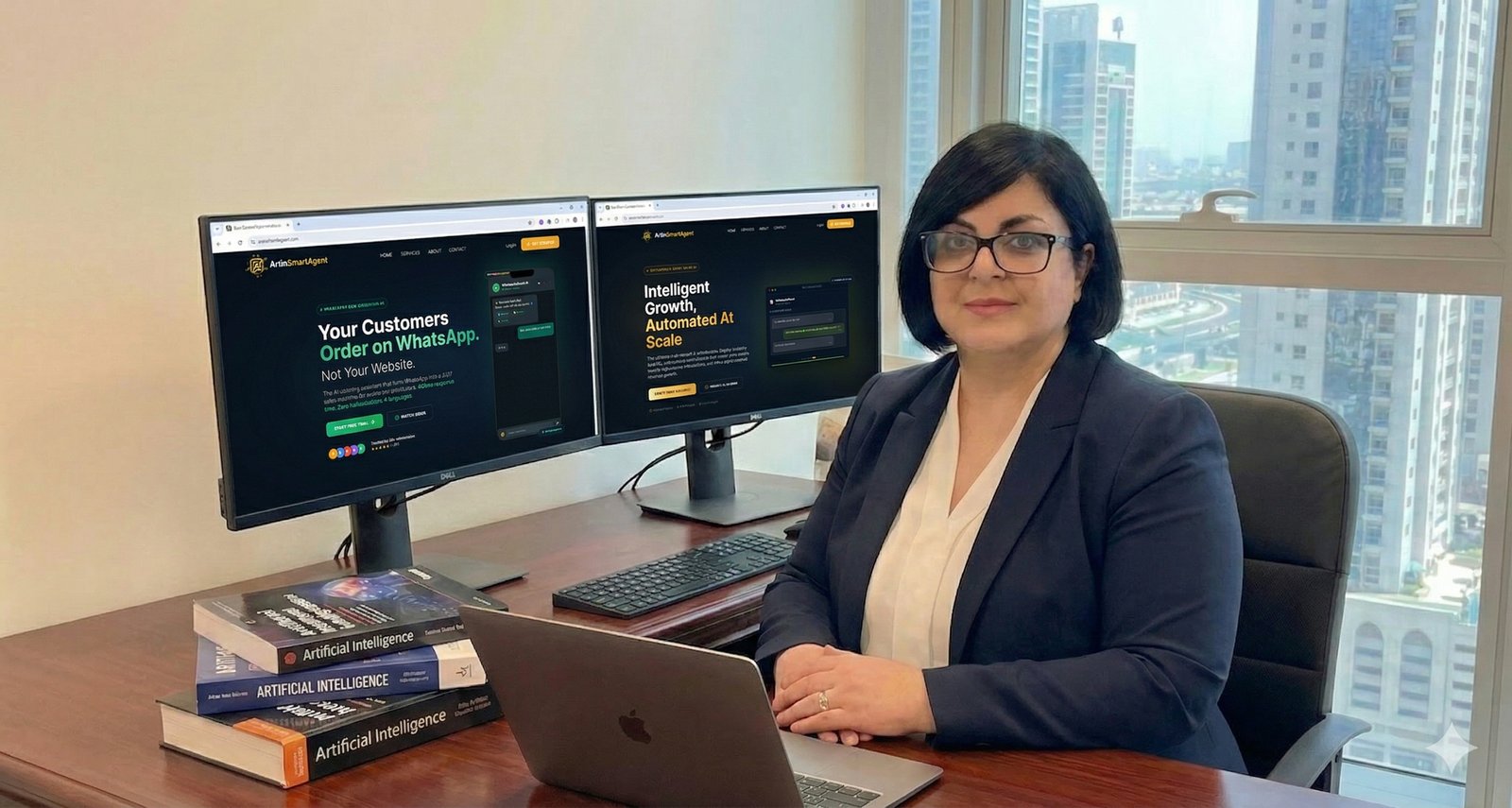
In the dynamic heart of Dubai, where the future is built faster than anywhere else, every sunrise brings a fresh wave of opportunities and an even more intense current of competition. As an SMB owner here, you’re not just running a business; you’re orchestrating a symphony of logistics, customer demands, market shifts, and growth ambitions, often with limited resources. It’s a relentless pace that can feel exhilarating one moment and overwhelming the next. But what if I told you there’s a powerful ally waiting to transform your daily grind into a streamlined, high-growth engine? This isn’t about science fiction; it’s about harnessing the tangible, transformative power of AI automation, and it’s no longer just for the tech giants. It’s for you, the backbone of Dubai’s economy, and it’s more accessible than you think. This comprehensive AI automation tutorial will guide you through the essentials.
Introduction: The Dubai Hustle & The Promise of Automation
The Relentless Pace: Why Dubai Businesses Need AI Now More Than Ever
The alarm blares at 6 AM. Before your first sip of karak, your phone already buzzes with emails: a supplier query, a customer complaint from last night, a reminder for a trade license renewal, and a new lead that needs an immediate follow-up. This isn’t an exaggeration; it’s a typical start to the day for countless SMB owners in Dubai. You’re constantly juggling operations, managing a small but dedicated team, trying to keep customers happy, and, above all, striving for growth in one of the world’s most competitive and fast-evolving markets.
Think of Layla, who runs a burgeoning online boutique specializing in bespoke abayas. Her passion for design is undeniable, but her days are consumed by the repetitive: manually processing dozens of orders from her Shopify store, updating inventory across multiple platforms, answering endless WhatsApp messages about sizes and shipping, and then somehow finding time to create new designs and market her brand. She’s drowning in manual tasks, her creativity stifled, and her growth potential limited by the sheer lack of hours in the day. This isn’t just Layla’s struggle; it’s a common narrative across Dubai’s vibrant SMB landscape, from a small F&B distributor trying to manage fluctuating stock and delivery schedules to a boutique real estate agency swamped with property inquiries.
Having founded ArtinWebs 18 years ago, I’ve had a front-row seat to the incredible technological evolution that has reshaped our world. I remember the early days of simple scripting and rudimentary databases, then the advent of web 2.0, mobile apps, and now, the profound paradigm shift brought by artificial intelligence. What started as basic automation for clients has blossomed into sophisticated AI-driven solutions. We’ve seen businesses transform from manual bottlenecks to lean, efficient powerhouses. My journey, and that of ArtinWebs, has been one of constant adaptation, learning, and above all, a deep understanding of how technology can solve real-world business problems. I’ve witnessed firsthand that AI automation isn’t just a buzzword for multinational corporations; it’s a strategic imperative for small and medium-sized businesses in Dubai to not just survive but thrive, innovate, and achieve sustainable growth in this incredibly competitive ecosystem. It’s about empowering businesses like Layla’s Boutique to scale without adding an army of staff, freeing up human potential to focus on what truly matters: creativity, strategy, and forging deeper customer relationships.
What ‘AI Automation’ Truly Means in 2026 for Your Business
Let’s clarify something upfront: when we talk about ‘AI automation’ in 2026, we’re not conjuring images of dystopian robot takeovers or replacing your entire workforce with silicon. That’s a common misconception, often fueled by sensational media. Instead, imagine a world where the tedious, repetitive, and time-consuming tasks that drain your team’s energy and creativity are handled by intelligent systems, seamlessly and accurately. AI automation is about augmenting human potential, not diminishing it.
The spectrum of AI automation is vast and continually expanding. At its foundational level, we have Robotic Process Automation (RPA), which focuses on automating rule-based, repetitive tasks by mimicking human interactions with digital systems. Think of it as a digital assistant that clicks, types, and copies data just like a human would, but at lightning speed and without errors. Moving up the intelligence ladder, we encounter Business Process Automation (BPA), which takes a holistic view, optimizing entire end-to-end workflows, often integrating multiple systems and decision points. And then, at the cutting edge, we have intelligent AI Agents. These are not just following rules; they’re goal-oriented, capable of autonomous decision-making, learning from data, adapting to new information, and even engaging in complex reasoning to achieve specific objectives. They can go beyond simple task execution to actually problem-solve and strategize.
The promise of embracing AI automation for your Dubai business is profound. It unlocks unprecedented efficiency, allowing you to process more orders, handle more inquiries, and manage more data with the same or fewer resources. This translates directly into significant cost savings, as you reduce manual labor hours and minimize human error. Crucially, it leads to an enhanced customer experience – instant responses, personalized interactions, and proactive support. But perhaps the most exciting benefit is the doors it opens to new growth opportunities. With the mundane handled, your team can pivot to innovation, market expansion, and strategic initiatives that were previously unimaginable. For a small business in Dubai, this isn’t just about keeping up; it’s about leapfrogging the competition and defining the future of your industry.
Chapter 1: Beyond Basic RPA – Understanding Business Process Automation (BPA) Core
The Foundation: Identifying & Streamlining Manual Business Processes
Before we dive into the exciting world of AI agents and smart bots, it’s crucial to lay a solid foundation. Automation isn’t just about applying technology; it’s about understanding your business processes first. Many SMB owners instinctively know where the bottlenecks are – those repetitive tasks that consume hours, frustrate employees, and are prone to human error. These are your prime candidates for automation. Think about data entry into multiple systems, generating routine reports, processing invoices, or even the tedious process of onboarding a new client. These aren’t just ‘tasks’; they’re integral parts of your business’s operational workflow.
Consider a mid-sized logistics company based in Jebel Ali, which we recently helped. Their operations involved manually preparing customs documents for every shipment, updating multiple spreadsheets, and sending email notifications to clients about tracking changes. This wasn’t just slow; it was a source of constant errors, delays, and wasted man-hours. By mapping out this process, we identified specific points where data could be automatically extracted, validated, and pushed into the necessary government portals and client communication systems. The result? Faster customs clearance, real-time shipment tracking updates for customers, and a significant reduction in operational overhead. This shift from manual to automated wasn’t just about doing tasks faster; it was about transforming their service delivery and reputation.
At ArtinWebs, our approach begins with what we call the ‘ArtinWebs Audit.’ It’s a simple, actionable framework designed for SMBs to dissect their own operations.
- Map Your Current Process: Grab a whiteboard or a digital flowchart tool. Document every step of a specific process, from start to finish. Who does what? What systems are involved? What data is exchanged?
- Identify Pain Points & Bottlenecks: Where do delays occur? Where are errors frequent? Which steps are purely repetitive and rule-based?
- Quantify the Impact: How much time does this process consume weekly? What’s the cost of errors? What’s the opportunity cost of not automating it? (e.g., “This takes 10 hours a week and costs us AED 500 in error correction.”)
- Prioritize for Impact: Focus on processes that are high-volume, highly repetitive, and have a clear, measurable impact on efficiency or customer satisfaction. Start with the ‘low-hanging fruit’ – processes that are relatively simple to automate but yield significant benefits.
This systematic approach helps you pinpoint high-impact automation potentials, ensuring your efforts are directed where they will yield the greatest returns and build momentum for further automation.
RPA vs. BPA: Why the Broader View is Crucial for Sustainable Growth
It’s easy to conflate RPA and BPA, but understanding the distinction is crucial for sustainable growth. Robotic Process Automation (RPA) is like a skilled typist. It’s excellent at automating individual, repetitive, rule-based tasks. For instance, an RPA bot can open an email, extract an invoice, log into your accounting software, and input the invoice details. It mimics human actions on the user interface. It’s focused, precise, and delivers quick wins in efficiency for specific tasks. Many businesses in Dubai start here, and it’s a perfectly valid first step.
However, Business Process Automation (BPA) takes a broader, more strategic view. Instead of just automating a single task within a process, BPA aims to optimize the entire end-to-end workflow, often redesigning the process itself for maximum efficiency and intelligence. It’s not just about doing tasks faster; it’s about re-engineering and doing the right tasks better and more intelligently. BPA involves integrating multiple systems, applying business logic, and often incorporating decision points that RPA alone cannot handle. For example, a BPA solution might not just input an invoice; it might validate the invoice against a purchase order, route it for approval based on its value, update inventory, trigger payment, and then send a confirmation to the supplier – all as part of a seamless, automated workflow.
The strategic advantage of BPA is profound. It moves beyond incremental efficiency gains for isolated tasks to delivering holistic operational transformation. For an SMB, this means not just saving a few hours here and there, but fundamentally improving how your business operates, leading to significant competitive advantages. Imagine an event management company in Dubai, constantly juggling client proposals, vendor coordination, venue bookings, and attendee registrations. Initially, they might use RPA to automate data entry from inquiry forms into their CRM. A BPA approach, however, would automate the entire client onboarding and vendor coordination process. From the moment a lead comes in, the BPA system could:
Lead Qualification: Automatically qualify leads based on predefined criteria (e.g., budget, event type) and assign them to the right sales agent.
Proposal Generation: Automatically pull relevant templates, client data, and service packages to draft personalized proposals.
Vendor Coordination: Once a proposal is accepted, automatically check vendor availability, send booking requests, and manage contracts.
Client Communication: Send automated updates, payment reminders, and event details to the client.
This comprehensive automation transforms their operations, reducing lead-to-event time by 30%, minimizing errors in bookings, and freeing up their team to focus on creative event design and client relationships. This is the power of BPA – it’s about re-imagining your business processes, not just digitizing existing ones. It’s about sustainable, integrated growth.
Chapter 2: The Workflow Engine – Mastering n8n for Business Process Automation
Building Bridges: Connecting Disparate Systems with n8n
In today’s digital landscape, businesses often rely on a patchwork of specialized software: a CRM for customer management, an ERP for operations, an e-commerce platform for sales, a separate tool for marketing emails, and of course, omnipresent communication apps like WhatsApp and Slack. The challenge? These systems often don’t talk to each other, leading to data silos, manual data entry, and fragmented workflows. This is where a powerful tool like n8n steps in, becoming the central nervous system for your automated processes.
n8n (pronounced “n-eight-n”) is a powerful, open-source workflow automation tool that empowers SMBs to connect disparate applications and automate complex workflows without needing to write extensive code. Think of it as a digital bridge builder, allowing data to flow freely and intelligently between all your essential business tools. As a founder who has witnessed the evolution of integration tools, I can confidently say n8n is a game-changer, especially for businesses in Dubai. Its open-source nature means it’s incredibly cost-effective, eliminating the hefty licensing fees associated with many proprietary automation platforms. Furthermore, its flexibility is unmatched, offering hundreds of pre-built integrations (nodes) for popular apps and services, alongside the capability to connect to virtually any API. This empowers SMBs to create highly customized, robust n8n workflow automation solutions tailored precisely to their unique needs, rather than fitting into a rigid, off-the-shelf system.
Let’s illustrate with a common scenario: automating lead qualification. Imagine a potential client fills out a ‘Request a Quote’ form on your website. Without automation, someone manually copies that data into your CRM, sends a generic email, and maybe posts a message in Slack. With n8n, this becomes a seamless, instantaneous workflow:
Practical Workflow Example 1 (Conceptual): Automating Lead Qualification
1. Webhook Trigger:– When a user submits your website form (e.g., Typeform, custom HTML form).
2. CRM Integration (e.g., HubSpot, Zoho CRM):– Create a new contact or update an existing one with the submitted details.
– Assign the lead to a specific sales agent based on criteria (e.g., inquiry type, region).
3. Email Auto-Response (e.g., SendGrid, Mailchimp):– Send a personalized ‘Thank You’ email to the lead, confirming receipt and setting expectations.
4. Internal Notification (e.g., Slack, Microsoft Teams):– Post a notification in a dedicated sales channel, alerting the assigned agent about the new lead.
– Include key details from the form submission for quick context.
5. Conditional Logic (Optional but powerful):– If the lead’s inquiry is ‘urgent’ or from a ‘VIP client,’ trigger an additional notification to a sales manager or prioritize their CRM entry.
This single workflow, once built, saves hours of manual work, ensures no lead falls through the cracks, and delivers an immediate, professional response to potential clients. For a deep dive into n8n setup and advanced techniques, explore our AI automation services.
Real-World Application: Automating Data Sync & Reporting for Dubai Businesses
One of the most persistent headaches for SMBs in Dubai is inconsistent data across various platforms. An e-commerce business running on Shopify might struggle to keep customer data, order details, and inventory levels synchronized with their accounting software (e.g., Zoho Books, QuickBooks) and their marketing automation platform (e.g., ActiveCampaign). This often leads to manual data entry, reconciliation errors, and outdated information, hindering accurate reporting and personalized customer engagement. This is a perfect scenario for n8n to shine.
Imagine an online electronics retailer in Dubai experiencing rapid growth. New orders on Shopify are pouring in, but their accounting team is manually entering each order into their bookkeeping software, cross-referencing inventory, and then sales are manually sending confirmation emails. This is unsustainable.
Here’s a conceptual n8n solution that automates this entire process:
Step-by-step n8n solution: Automating E-commerce Order Processing
1. Trigger: New Shopify Order– n8n listens for new orders placed on your Shopify store.
2. Fetch Customer Details:– Extract all relevant customer and order information (name, address, items, total, payment status) from the Shopify trigger.
3. Update Accounting System (e.g., Zoho Books, QuickBooks):– Create a new invoice or sales receipt in your accounting software using the extracted data.
– Update inventory levels for the purchased items.
4. Check Inventory (Conditional Logic):– If an item is low in stock after the purchase, trigger an alert to the procurement team.
5. Send Personalized Confirmation Email (e.g., SendGrid, custom SMTP):– Craft a dynamic email using the customer’s name, order number, and specific items purchased.
– Include tracking information once available.
6. Update Marketing CRM (e.g., Mailchimp, HubSpot):– Add the customer to a specific segment (e.g., “First-time Buyer,” “Electronics Enthusiast”) for targeted future marketing campaigns.
7. Log Data for Reporting (e.g., Google Sheets, custom database):– Store key order metrics in a centralized spreadsheet or database for easy analysis and business intelligence.
Building robust n8n workflows requires a few best practices. Always implement comprehensive error handling; what happens if Shopify is down, or the accounting API returns an error? N8n allows you to set up retries, notifications, or fallback actions. Ensure data validation at each step to prevent incorrect data from polluting your systems. Finally, set up effective monitoring and logging. You need to know when a workflow fails and why, so you can quickly address issues. This meticulous approach ensures your automation doesn’t just work, but works reliably, becoming a dependable pillar of your business operations.
Chapter 3: Engaging Customers – Building Smart WhatsApp Business Bots
The MENA Market Imperative: Why WhatsApp is Your Customer Service Gateway
In Dubai and across the wider MENA region, WhatsApp isn’t just another messaging app; it’s the undisputed king of digital communication. From family chats to business dealings, it’s the default channel for millions. For any SMB operating here, ignoring WhatsApp as a primary customer engagement platform is akin to ignoring email in the early 2000s – a critical misstep. People expect to communicate with businesses on WhatsApp, and if you’re not there, you’re missing a massive opportunity.
But simply having a WhatsApp Business profile is no longer enough. As your business grows, manually responding to every inquiry becomes unsustainable. That’s where the WhatsApp Business API comes into play, enabling you to move beyond basic messaging to scalable, intelligent, and personalized customer interactions. Imagine a system that can handle hundreds of customer queries simultaneously, 24/7, in multiple languages, all while maintaining a consistent brand voice. This isn’t just about efficiency; it’s about elevating your customer experience to a level that sets you apart in Dubai’s competitive market.
I recall a specific instance where ArtinWebs assisted a local real estate agency in Dubai, which was struggling with an overwhelming volume of property inquiries, especially outside business hours. Their sales agents were spending a significant portion of their day answering repetitive questions like “Is this villa still available?” or “What are the viewing times for that apartment?” We deployed a custom WhatsApp business bot setup integrated with their property listing database. This bot could:
Instantly respond to property inquiries with detailed information, photos, and virtual tour links. Qualify leads by asking a series of questions (e.g., budget, desired location, number of bedrooms). Schedule property viewings directly into the agent’s calendar, sending automated confirmations and reminders. Provide updates on new listings or price changes based on a client’s expressed preferences.
The impact was immediate and profound. The agency saw a 40% reduction in manual inquiry handling, a significant increase in qualified leads, and agents were freed up to focus on closing deals and building relationships. Their customers, in turn, received instant, accurate information and a seamless experience, leading to higher satisfaction. This isn’t theoretical; it’s a real-world testament to the power of leveraging WhatsApp automation in the Dubai market.
From Basic FAQ to Personalized Interactions: WhatsApp Business Bot Setup for SMBs
Building a smart WhatsApp Business bot isn’t just about scripting answers; it’s about designing a conversational experience that reflects your brand and meets your customers’ needs. The process involves careful planning and strategic integration.
Here’s a conceptual setup guide for an SMB looking to deploy a WhatsApp bot:
- Define Your Bot’s Personality & Tone: Will it be formal or friendly? Informative or engaging? This sets the stage for all interactions.
- Map Key Conversation Flows: Identify the most common customer queries and design clear, intuitive paths for the bot to guide users through (e.g., “Menu,” “Reservations,” “Location,” “Special Offers”).
- Integrate with Backend Systems: For true intelligence, your bot needs to talk to your CRM, inventory, booking platforms, or order management systems. This is where tools like n8n become invaluable, acting as the middleware between your bot and your business data.
- Plan for Human Handoff: Crucially, a bot should know its limits. Design clear points where complex or sensitive queries are seamlessly escalated to a human agent, providing the agent with the full conversation history for context.
Let’s take a practical example: a popular restaurant in Jumeirah looking to streamline its reservation process and enhance customer service.
Workflow Example 2 (Conceptual): Restaurant WhatsApp Bot
User: “Hi, I’d like to book a table.”
Bot: “Welcome to [Restaurant Name]! I can help you with that. For what date and time would you like your reservation, and for how many people?”
User: “Tonight at 8 PM for 4 people.”
Bot (integrates with booking system): “Checking availability… Great news! We have a table for 4 at 8 PM tonight. Shall I confirm this for [Customer Name]?”
User: “Yes, please.”
Bot: “Confirmed! Your reservation for 4 at 8 PM tonight is complete. You’ll receive a confirmation SMS shortly. Is there anything else I can help you with today? (1) View Menu (2) Special Offers (3) Location (4) Speak to a human.”
Practical tips for success:
- Incorporate Natural Language Processing (NLP): Don’t just rely on keyword matching. Use NLP to understand the intent behind a user’s message, even if they phrase it differently. This makes the bot feel much more intelligent and less rigid.
- Seamless Escalation: Make the handoff to a human agent as smooth as possible. Nothing frustrates a customer more than getting stuck in a bot loop.
- Continuous Improvement: Regularly review bot conversations. What questions is it failing to answer? Where are users dropping off? Use this feedback to refine your bot’s knowledge base and conversation flows.
- Multilingual Support: Given Dubai’s diverse population, offering your bot in English, Arabic, and potentially other languages like Hindi or Tagalog, can significantly broaden its reach and effectiveness.
Discover how our WholesaleOS platform can transform your customer engagement and streamline support, often leveraging the power of WhatsApp for B2B interactions.
Chapter 4: The Next Frontier – Developing Intelligent AI Agents for Your Business
Beyond Bots: Understanding and Deploying Autonomous AI Agents
If a traditional bot is a digital assistant following a script, an AI agent is a proactive, goal-oriented employee with a deep understanding of its objectives, capable of autonomous decision-making and learning. This is the cutting edge of AI automation, moving beyond simple rule-based interactions to truly intelligent, adaptive systems. The distinction is crucial for SMBs looking to gain a significant competitive advantage. While bots excel at predefined tasks like answering FAQs or taking simple orders, AI agents are designed to solve complex, multi-step problems that require reasoning, planning, and adaptation in dynamic environments.
The ‘Why’ for deploying AI Agents centers on tackling challenges that conventional bots simply cannot handle. These are problems that demand an understanding of context, the ability to synthesize information from various sources, make informed judgments, and even learn from previous interactions to improve future performance. Imagine an AI agent not just retrieving product information, but proactively recommending the best product based on a customer’s subtle behavioral cues, past purchases, and even current market trends – then negotiating the price within a set margin, and arranging personalized delivery. This level of autonomy and intelligence frees up human teams from intricate, time-consuming tasks that require cognitive effort, allowing them to focus on high-level strategy, complex problem-solving, and truly innovative endeavors.
For SMBs in Dubai, the use cases for AI agents are rapidly expanding and becoming increasingly accessible. Consider:
- Personalized Marketing Campaigns: An AI agent could analyze customer data, browsing history, and social media sentiment to craft hyper-personalized marketing messages and offers, sent at the optimal time through the customer’s preferred channel.
- Dynamic Pricing Adjustments: For a retail business, an AI agent could monitor competitor prices, inventory levels, demand fluctuations, and even weather patterns (e.g., for an outdoor gear shop) to dynamically adjust product prices in real-time, maximizing revenue and minimizing stockouts.
- Advanced Market Research: An agent could autonomously scour vast amounts of online data – news, social media, forums, competitor websites – to identify emerging trends, consumer sentiment shifts, and new market opportunities, presenting actionable insights to management.
- Proactive, Empathetic Customer Support: Beyond just answering questions, an AI agent could monitor customer behavior for signs of dissatisfaction, proactively reach out with solutions, offer personalized assistance, and even anticipate future needs based on past interactions.
These examples highlight how AI agents can act as extensions of your most strategic teams, operating with speed and precision that human teams alone cannot match.
A Step-by-Step Guide to AI Agent Development (Conceptual for SMBs)
Developing an AI agent might sound daunting, but with the right approach and tools, it’s becoming increasingly feasible for SMBs. The key is to start with a clear problem and a phased implementation. This section serves as an AI agent development guide for businesses.
- Defining the Agent’s Objective and Scope: This is the most critical first step. What exact problem will your agent solve? What are its boundaries?
Example: For a travel agency, the objective might be: “To proactively suggest personalized holiday packages to high-value customers based on their historical travel data, current browsing behavior, and real-time market deals, leading to a 15% increase in bookings from this segment.”
Scope: The agent will access CRM data, website analytics, travel partner APIs for deals, and communicate via email/WhatsApp, but will not handle payment processing directly.
- Choosing the Right Tools/Platforms: This is where the landscape is rapidly evolving.
- Large Language Models (LLMs): Foundation models like OpenAI’s GPT series, Google’s Gemini, or open-source alternatives like Llama 2 are the ‘brains’ of your agent, providing natural language understanding, generation, and reasoning capabilities.
- Orchestration Frameworks: Tools like LangChain or LlamaIndex provide the ‘nervous system,’ allowing you to connect LLMs to external data sources (your CRM, APIs), give them ‘memory’ of past interactions, and define sequences of actions.
- Data Sources & APIs: Your agent will need access to your business-critical data (CRM, inventory, sales data) and external APIs (e.g., travel booking APIs, market data feeds).
- Conceptual Example Scenario: Travel Agency AI Agent
Agent Name: “ArtinWebs Travel Concierge”
Objective: Proactively identify and pitch personalized holiday packages to existing high-value customers.
How it works:
- Trigger: Weekly scan of CRM for customers who haven’t booked in 6-12 months but have high historical spend.
- Data Collection: Accesses customer’s past booking history (destinations, travel style, budget), recent website browsing behavior (e.g., visited ‘Maldives’ pages), and real-time deals from partner travel APIs.
- Reasoning & Planning (LLM + Orchestration):
- – Identify Preferences: “Customer X prefers luxury beach holidays, typically travels in Q3, and recently viewed Maldives packages.”
- – Match Deals: “Found a 7-day luxury Maldives package in October with a 20% discount.”
- – Personalize: “Craft a compelling email highlighting the deal, referencing their past Maldives interest, and suggesting activities based on their previous travel style.”
- Action: Send a personalized email or WhatsApp message with the curated package details and a direct booking link.
- Monitoring & Learning: Track click-through rates, booking conversions, and agent feedback. Use this data to refine the agent’s recommendation algorithm and communication style over time.
- Ethical Considerations and Human Oversight: This is paramount.
- Transparency: Ensure customers know they are interacting with an AI.
- Bias Mitigation: Continuously evaluate the agent’s decisions for potential biases in data or logic.
- Human-in-the-Loop: For critical decisions (e.g., major financial transactions, highly sensitive customer issues), ensure there’s always a human checkpoint or escalation path. The agent should augment, not replace, human judgment when it matters most.
By following these steps, even an SMB can begin to harness the profound capabilities of AI agents, pushing the boundaries of what’s possible in customer engagement and operational efficiency. Explore our B2B Smart Ordering solutions to see how intelligent agents are already transforming sales processes.
Chapter 5: Your AI Automation Playbook – Strategy & Implementation for SMBs
Building Your Automation Roadmap: From Pilot to Scale
The journey into AI automation might seem like a vast ocean to navigate, but with a strategic roadmap, it becomes a series of manageable, rewarding voyages. The biggest mistake an SMB can make is trying to automate everything at once or picking an overly complex first project. Our 18 years of experience have taught us that the most successful automation initiatives begin small, demonstrate quick wins, and then scale incrementally.
We advocate for the “Crawl, Walk, Run” approach:
- Crawl (Pilot Project): Identify a single, high-impact, low-complexity process for your very first AI automation project. This is your pilot. It should be a process that is repetitive, rule-based, and has clear, measurable outcomes. Perhaps it’s automating data entry from website inquiries into your CRM, or setting up a basic WhatsApp bot for FAQs. The goal here is to build confidence, validate the technology, and demonstrate tangible value quickly. This initial success will be crucial for gaining internal buy-in.
- Walk (Iterative Improvement & Expansion): Once your pilot is successful, analyze the results. What worked well? What could be improved? Take those learnings and apply them to enhance your existing automation, or expand to a slightly more complex process. This phase is about iterative improvement, refining your workflows, and integrating more systems. Maybe your WhatsApp bot now integrates with your booking system, or your data entry automation now triggers an internal notification and a personalized follow-up email.
- Run (Strategic Scale): With several successful automations under your belt, you’re ready to tackle more strategic and complex AI agent deployments. This is where you integrate AI for dynamic decision-making, predictive analytics, and proactive customer engagement. Your team is now comfortable with automation, understands its benefits, and is actively looking for new opportunities to leverage AI.
Team involvement is absolutely critical. Automation isn’t just a tech project; it’s a change management initiative. Employees often fear automation will lead to job losses. It’s vital to communicate openly, explain that AI will augment, not replace, their roles, and emphasize how it will free them from mundane tasks, allowing them to focus on more fulfilling and strategic work. Involve them in the process of identifying automation opportunities and gathering requirements. Foster an “automation-first” culture where everyone is encouraged to think about how processes can be optimized.
Finally, you must measure success. Define clear Key Performance Indicators (KPIs) for each automation initiative before you start. Is it reducing processing time by X%? Decreasing error rates by Y%? Increasing customer satisfaction by Z points? Accurately calculating the Return on Investment (ROI) is paramount. This isn’t just about cost savings; it’s about quantifying improved efficiency, enhanced customer experience, and the strategic value of freeing up human capital. For instance, if an automation saves 20 hours a week, and your average employee cost is AED 100/hour, that’s AED 2,000 saved weekly, or AED 104,000 annually – a compelling ROI.
Navigating Challenges: Common Pitfalls and How ArtinWebs Helps You Avoid Them
While the promise of AI automation is immense, the path isn’t always smooth. SMBs often encounter several common challenges that can derail even the most well-intentioned initiatives:
- Resistance to Change: Employees may be hesitant or fearful. Addressing this requires strong leadership, transparent communication, and demonstrating the benefits directly to them.
- Data Quality Issues: Automation thrives on clean, structured data. If your data is messy, inconsistent, or siloed, your automation will inherit those problems. Prioritizing data hygiene is fundamental.
- Integration Complexities: Connecting different software systems, especially older legacy systems, can be technically challenging and time-consuming without the right expertise.
- Choosing the Wrong Technology Stack: With so many AI and automation tools available, selecting the most suitable ones for your specific needs and budget can be overwhelming. A mismatch can lead to wasted resources and failed projects.
- Scope Creep: Starting with a small project and then letting it expand uncontrollably before the initial phase is complete.
This is precisely why partnering with an experienced agency like ArtinWebs makes a crucial difference. With 18+ years of hands-on experience in the Dubai market, we’ve navigated these challenges countless times. We bring not just technical expertise in n8n, WhatsApp Business API, and AI agent development, but also a deep understanding of business processes and change management. We help you:
- Strategize: Define clear objectives, identify high-impact opportunities, and craft a realistic automation roadmap.
- Implement: Build robust, scalable, and error-proof workflows and AI agents, ensuring seamless integration with your existing systems.
- Train & Support: Empower your team to utilize and manage the new automated processes, providing ongoing support and optimization.
- Future-Proof: Advise on staying abreast of evolving AI technologies, market trends, and regulatory changes (e.g., data privacy in the UAE) to maintain a competitive edge.
Our expertise means you avoid costly mistakes, accelerate your time to value, and ensure your AI automation initiatives deliver tangible, measurable results. Explore our success stories and AI Automation Case Studies to see real-world results from Dubai businesses that have successfully transformed their operations with our guidance.
Conclusion: Embracing the Future of Work in Dubai
The Transformative Power of AI Automation for Dubai’s SMBs
We’ve journeyed from understanding the relentless pace of the Dubai hustle and the foundational concepts of RPA and BPA, through mastering powerful workflow engines like n8n for business process automation, to building engaging WhatsApp Business bots, and finally, exploring the cutting edge of intelligent AI agents. This playbook has aimed to demystify AI automation, illustrating its profound potential with real-world examples and practical insights tailored for Dubai’s vibrant SMB landscape.
The benefits are clear and compelling: vastly increased operational efficiency, freeing your team from the shackles of repetitive tasks; significantly improved customer satisfaction through instant, personalized, and proactive engagement; gaining a crucial competitive advantage in a market that rewards innovation; and most importantly, unlocking the full potential of your human capital, allowing your employees to focus on creativity, strategy, and forging deeper, more meaningful relationships. AI automation isn’t just about saving money or time; it’s about fundamentally reshaping how your business operates, making it more resilient, agile, and poised for exponential growth.
As the founder of ArtinWebs, I’ve seen firsthand the incredible transformations that technology can bring. My heartfelt call to action for Dubai’s SMBs is this: embrace AI. Don’t view it as a distant threat or an insurmountable challenge. Instead, see it as your most powerful ally in navigating the complexities of modern business, in achieving sustainable growth, and in cementing your position as a leader in your respective industry. The future of work is not just coming; it’s already here, and it’s built on intelligent automation. Seize this opportunity to redefine what’s possible for your business.
Your Next Step Towards an Automated Future
The time to act is now. The businesses that embrace AI automation today will be the ones that dominate tomorrow. Don’t let the fear of the unknown or the complexity of the technology hold you back. Start small, learn fast, and scale strategically. Your journey towards a more efficient, customer-centric, and profitable future begins with a single step.
Ready to transform your business and unlock its full potential with AI automation? Don’t navigate this exciting landscape alone.
Contact ArtinWebs for a personalized AI automation consultation today!
FAQ
- What is the key difference between RPA and AI automation for an SMB?
- RPA (Robotic Process Automation) focuses on automating repetitive, rule-based tasks by mimicking human actions on digital systems. AI automation is a broader concept that includes RPA but extends to intelligent systems capable of learning, decision-making, and handling unstructured data, often leveraging machine learning and natural language processing to automate more complex and cognitive processes. For SMBs, RPA is a great start for efficiency, while AI automation offers deeper insights and problem-solving.
- How can an SMB in Dubai benefit specifically from a WhatsApp Business bot setup?
- A WhatsApp Business bot can significantly enhance customer service for Dubai SMBs by providing instant 24/7 responses to common queries, automating appointment bookings, sharing product information, and even processing simple transactions. Given WhatsApp’s widespread popularity in the MENA region, it offers a direct, convenient, and personalized communication channel, freeing up human staff for more complex and high-value interactions.
- Is n8n a suitable tool for business process automation for small and medium-sized businesses?
- Yes, n8n is an excellent choice for SMBs seeking robust business process automation. Its open-source nature makes it a cost-effective solution, while its extensive library of integrations allows it to connect various applications and services seamlessly. It empowers SMBs to build custom, complex workflows without extensive coding, automating tasks from lead management to data synchronization, thereby boosting efficiency and reducing manual effort.
- What distinguishes AI agents from traditional chatbots, and how can they help my business?
- AI agents are more advanced than traditional chatbots. While chatbots typically follow predefined scripts or rules to answer questions, AI agents are goal-oriented, possess a degree of autonomy, and can learn from interactions and data. They can make decisions, plan sequences of actions, and execute multi-step tasks to achieve specific objectives, often requiring integration with multiple systems and advanced AI models. For businesses, they can handle complex tasks like personalized marketing, dynamic pricing, or proactive customer support.
- What’s the best way for an SMB to start their AI automation journey without getting overwhelmed?
- The best approach for an SMB is to start small and strategically: identify a single, repetitive, high-volume process that causes significant pain points and has clear, measurable outcomes. Begin with a pilot project, like automating data entry or a simple customer inquiry flow. Learn from the initial implementation, measure its impact, and then gradually expand to more complex automations, ideally with expert guidance to ensure success and avoid common pitfalls.