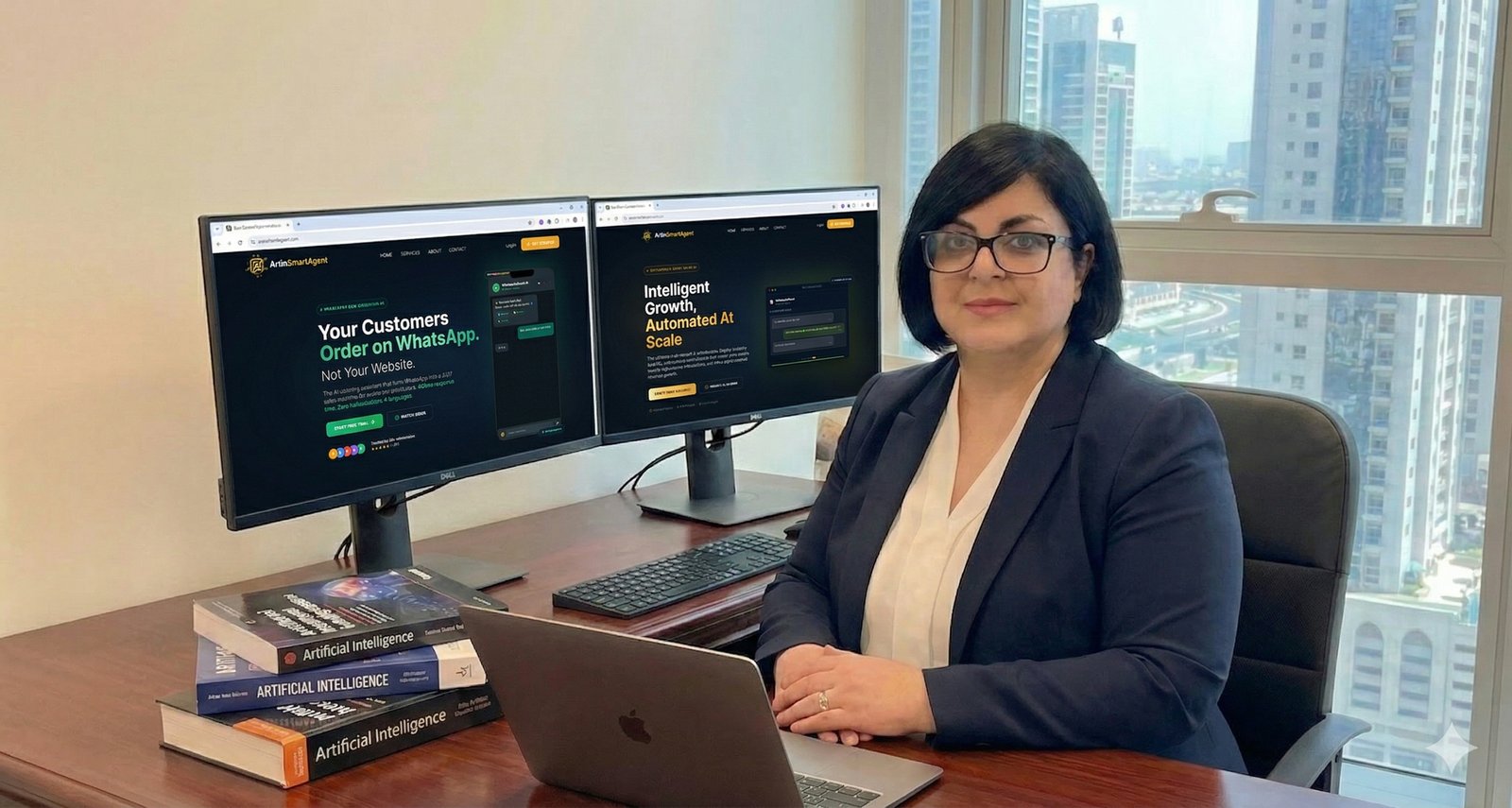
The vibrant hum of Dubai’s business landscape is a symphony of ambition, innovation, and relentless pace. For nearly two decades, I’ve been right in the thick of it, witnessing firsthand the incredible growth and the unique challenges faced by small and medium-sized businesses here. At ArtinWebs.com, our journey began not just with a passion for technology, but with a deep understanding of the pulse of this market. We saw businesses striving for excellence, yet often bogged down by manual processes, struggling to keep pace with demand, and missing out on opportunities simply because they lacked the right tools. This isn’t just about efficiency; it’s about survival and thriving in a city that never sleeps. This article is my story, our story, and hopefully, a blueprint for yours – a deep dive into how AI automation isn’t just a buzzword, but the strategic imperative for scalable business growth in Dubai. Consider this your essential AI automation tutorial for navigating the future.
From Chaos to Clarity: The Dubai SMB’s Journey to Scalable Automation
In Dubai, the phrase “time is money” isn’t a cliché; it’s a daily reality. The market moves at an exhilarating speed, and what works today might be obsolete tomorrow. I’ve seen countless promising SMBs grapple with the same fundamental issue: growth brings complexity, and complexity, if unchecked, breeds chaos. Imagine a burgeoning trading company in Deira, receiving hundreds of WhatsApp inquiries daily, each needing a personalized response, a price quote, inventory check, and eventually, an order processed. Or a new real estate agency in Business Bay, drowning in lead qualification calls, follow-up emails, and appointment scheduling, all while trying to close deals. The staff are stretched thin, working long hours, and still, leads fall through the cracks, customer service suffers, and the owner feels trapped on a hamster wheel, constantly busy but struggling to scale effectively. This isn’t a failure of effort; it’s a failure of system.
My 18+ years in this space have taught me that the bottleneck isn’t usually a lack of talent or opportunity, but an over-reliance on manual, repetitive tasks that consume valuable human capital. In a competitive market like Dubai, where customer expectations are high and margins can be tight, inefficiency is a luxury no SMB can afford. This is precisely where AI automation steps in – not to replace humans, but to empower them, to transform the operational chaos into strategic clarity. It’s about building intelligent systems that handle the grunt work, allowing your team to focus on what truly matters: building relationships, innovating, and driving the business forward. The promise of AI automation for overcoming these challenges and achieving scalable growth is immense, especially when you consider Dubai’s unique blend of local and international clients, often demanding multilingual support and instant gratification. It’s about leveraging technology to create a sustainable competitive edge. At its core, this is about implementing robust ‘business process automation’ – the strategic application of technology to automate routine tasks and optimize workflows for long-term success. This AI automation tutorial will guide you through the process.
The Unseen Hurdles: Why Dubai Businesses Need AI Automation Now
From my vantage point, having worked with hundreds of businesses across industries – from logistics and F&B to real estate and retail – the challenges often manifest in predictable patterns. There’s the customer service manager who spends half her day answering the same five questions; the sales team that misses follow-ups because their CRM is just a glorified spreadsheet; the accounting department buried under a mountain of invoices. These aren’t just minor inconveniences; they are significant drag factors on scalability. In Dubai, the expectations are amplified. Customers expect instant responses, personalized service, and seamless transactions. If your competitor can offer a faster quote or respond to a WhatsApp query at 2 AM, you’re already behind. The sheer volume of international communication, often across multiple platforms and languages, adds another layer of complexity.
Moreover, the regulatory landscape, while supportive of business growth, also demands meticulous record-keeping and compliance, which can be incredibly time-consuming if handled manually. The rapid pace of the market means that if you’re not constantly optimizing, you’re effectively falling behind. AI automation isn’t just about cutting costs; it’s about freeing up your most valuable asset – your people – to think strategically, build relationships, and innovate. It’s about enabling a small team to achieve the output of a much larger one, giving you the agility to adapt to market shifts and seize new opportunities faster than your competitors. This transformation from manual drudgery to intelligent, automated workflows is not just a luxury; it’s a strategic imperative for any Dubai SMB aiming for sustainable growth in this dynamic environment through effective business process automation.
Defining Your Automation North Star: Strategic Planning for Impact
Before diving headfirst into implementing any AI automation, the most crucial step is strategic planning. Think of it as mapping your journey before you set sail. Where are your biggest pain points? Where are you losing time, money, or customers? Is it lead qualification, where your sales team spends hours sifting through unqualified inquiries? Is it customer support, where repetitive questions overload your agents? Perhaps it’s data entry, where manual input leads to costly errors and delays. Or maybe it’s compliance checks, which consume significant administrative effort. Identifying these specific areas is your first step in any AI automation tutorial.
Once you’ve pinpointed the ‘what,’ you need to define the ‘why’ and the ‘how.’ What does success look like? This means setting clear, measurable Key Performance Indicators (KPIs). For instance, if you’re automating lead qualification, your KPIs might be “reduce sales team’s time spent on unqualified leads by 40%” or “increase qualified lead conversion rate by 15%.” If it’s customer support, it could be “decrease average response time on WhatsApp by 60%” or “improve customer satisfaction scores by 10%.” These aren’t arbitrary numbers; they are the benchmarks against which you’ll measure your automation’s effectiveness. My experience has shown that a phased, iterative approach works best. Start with one or two high-impact areas where the ROI is clear and achievable. Get those right, learn from the process, and then systematically scale up. This minimizes risk, builds confidence within your team, and ensures that your AI automation efforts are always aligned with your overarching business objectives, creating tangible value every step of the way.
Laying the Foundation: Essential Platforms for Streamlined Operations
Any robust building needs a strong foundation, and the same applies to your automated business. You can’t simply layer AI tools on top of a chaotic, disconnected system and expect magic. The core of your operations – how you manage customer data, sales, marketing, and finances – must first be organized and integrated. This is where foundational platforms come into play, acting as the central nervous system and skeletal structure of your automated enterprise. Ignoring this step is like trying to build a skyscraper on sand; it will inevitably crumble under the weight of increased demand. In Dubai’s highly interconnected market, having a unified view of your operations isn’t just an advantage, it’s a necessity. From understanding customer preferences to managing inventory and financial flows, these platforms are the bedrock upon which all subsequent AI automation efforts will stand, ensuring data integrity, seamless communication, and efficient business process automation across your entire organization.
Need to generate WhatsApp QR Codes for your sales team?
Create instant click-to-chat QR codes with our free Business Generator.
Create WhatsApp QRThe CRM as Your Central Nervous System: Automating Customer Data Flows
At the heart of every successful business lies its customer relationships. For any Dubai SMB, a robust Customer Relationship Management (CRM) system is not merely a contact database; it’s the central nervous system that orchestrates all customer interactions and data. Whether you opt for global giants like Salesforce and HubSpot, or more localized solutions like Zoho CRM, the choice itself is less critical than its effective implementation and integration. A well-configured CRM becomes the single source of truth for all customer information, from initial inquiry to post-sale support.
Consider a B2B distribution company in Jebel Ali. Before AI automation, their sales reps manually entered leads from trade shows into spreadsheets, leading to errors and delays. With a CRM, new leads from web forms or even LinkedIn Navigator can be automatically captured, assigned to the right sales rep based on territory or product interest, and immediately enrolled in a personalized email follow-up sequence. The CRM can track every interaction, every email opened, every call made, providing intelligent data enrichment by pulling company information from public databases. This not only streamlines pipeline management but also ensures that no lead falls through the cracks. We’ve helped clients integrate their CRMs with their sales ordering systems, for instance, linking directly to platforms like our own B2B Smart Ordering system. This creates a seamless flow: a sales rep updates a deal stage in the CRM, and the system automatically generates a quote or even an order in the B2B ordering platform, complete with customer-specific pricing and inventory checks. This unified customer view empowers sales, marketing, and support teams to work collaboratively, delivering consistent and exceptional customer experiences, which is paramount in Dubai’s discerning market, thanks to effective business process automation.
Beyond Spreadsheets: ERP & Accounting Automation for Financial Health
One of the most common struggles I’ve observed in growing Dubai businesses involves the back office – the labyrinth of manual invoicing, expense tracking, payroll processing, and financial reporting. Many SMBs start with spreadsheets, and they work fine for a while. But as transaction volumes increase, the risk of errors skyrockets, compliance becomes a nightmare, and gaining real-time insights into cash flow feels like searching for a needle in a digital haystack. This lack of financial clarity can severely hinder growth, making it difficult to make informed decisions about investments, staffing, or even inventory.
Introducing AI automation solutions for financial processes, such as cloud-based accounting software like Xero or QuickBooks, or comprehensive Enterprise Resource Planning (ERP) systems like Odoo, can be a game-changer. These platforms integrate core financial functions, from accounts payable and receivable to general ledger and payroll, ensuring accuracy and compliance with local regulations. I recall a Dubai-based trading company we worked with that was processing hundreds of invoices manually each week. This led to a 3-5 day delay in payment collection and significant human error. By implementing an integrated accounting automation system, we connected their sales platform to Xero. Now, as soon as an order is confirmed, an invoice is automatically generated, sent to the customer, and reconciled upon payment. This reduced invoice processing time by a remarkable 70%, drastically improved cash flow visibility, and freed up their accounting team to focus on strategic financial analysis rather than data entry. The system could also automatically track expenses, reconcile bank statements, and generate real-time financial reports, providing the ownership with an accurate, up-to-the-minute picture of their financial health, critical for navigating Dubai’s fast-paced economy through advanced business process automation.
Engaging Smarter: Crafting Seamless Customer Experiences with AI Bots
In Dubai, customer engagement isn’t just about being present; it’s about being instantly accessible, culturally aware, and incredibly efficient. The digital native population, combined with a diverse expatriate community, demands immediate answers and personalized interactions. This is where AI-powered bots move from being a novelty to an indispensable tool for crafting seamless customer experiences. From the bustling souks to the towering skyscrapers, communication is key, and if you’re not meeting your customers where they are, you’re missing out. The rise of messaging apps, particularly WhatsApp, has fundamentally reshaped how businesses interact with their clientele in the GCC, making intelligent AI automation in this channel not just important, but absolutely essential for staying competitive and delivering the kind of service that builds loyalty. A robust WhatsApp business bot setup is key here.
The Power of Instant Replies: A WhatsApp Business Bot Setup Tutorial
Let’s be unequivocally clear: in the GCC market, WhatsApp is not merely a messaging app; it is the dominant communication channel for both personal and business interactions. Ignoring it is akin to ignoring email in other markets. For Dubai businesses, leveraging WhatsApp for customer engagement, sales inquiries, and support is absolutely essential. A ‘WhatsApp business bot setup’ can transform your customer service and lead generation capabilities, ensuring you never miss an inquiry, even outside business hours. This comprehensive WhatsApp business bot setup tutorial will walk you through the steps.
Here’s a simplified workflow for building a basic multilingual lead qualification bot or an automated appointment scheduling bot for a local service provider:
1. Understand API Access: First, you need access to the WhatsApp Business API. This typically involves working with a Business Solution Provider (BSP) like Twilio, MessageBird, or a custom integration partner like ArtinWebs.com. They help you get your WhatsApp Business Account approved and connect to the API.
2. Define Your Goal & Flow: What do you want the bot to do? For a lead qualification bot:
* Greeting: “Hello! Welcome to [Your Business Name]. How can I help you today? (Please select a language: 1 for English, 2 for Arabic).”
* Language Selection: Based on selection, switch to corresponding language.
* Menu/Options: “Are you interested in our services, looking for a quote, or need support?”
* Lead Capture: If “services” or “quote,” ask qualifying questions: “What service are you interested in?\