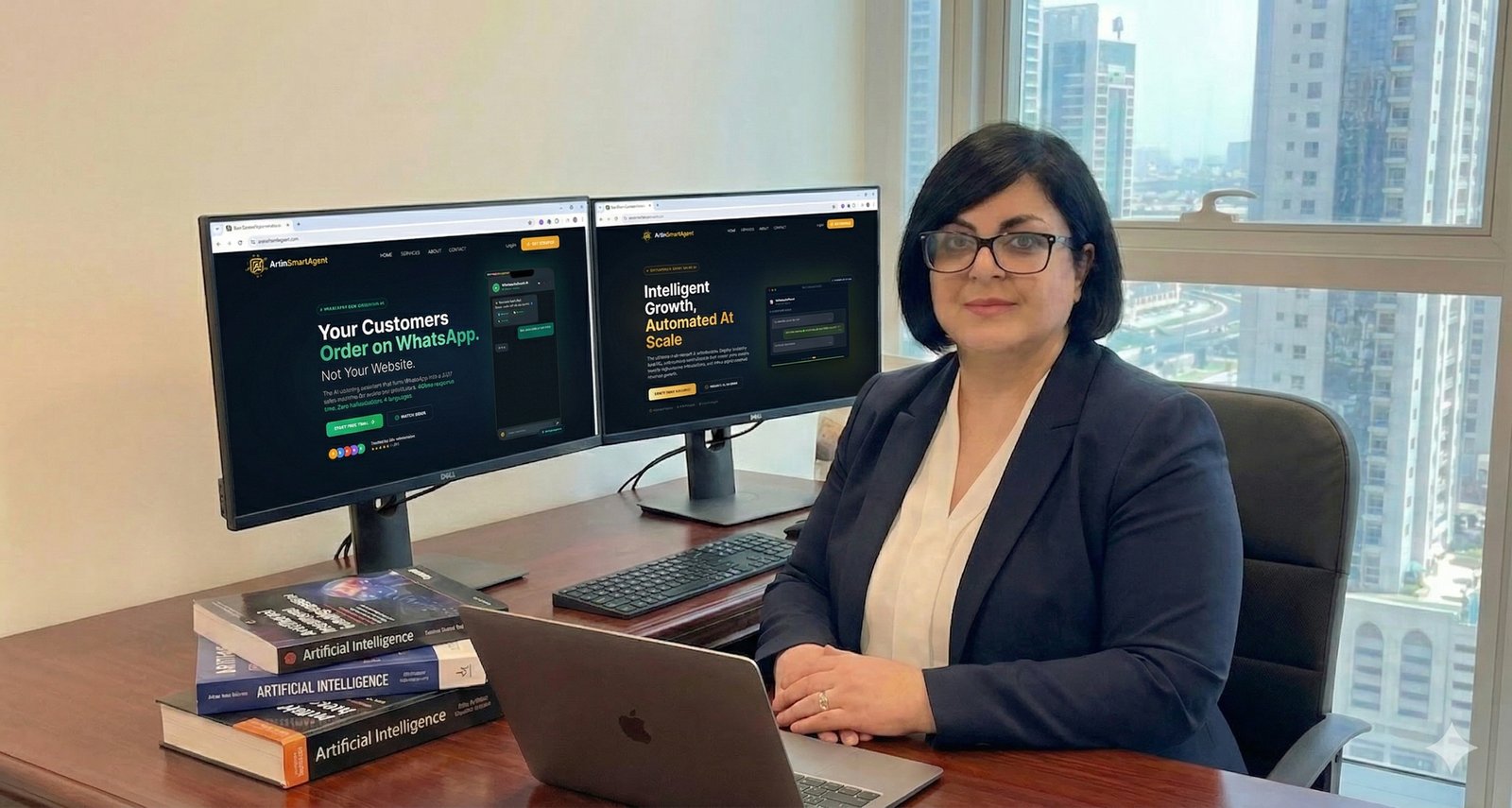
The arid air of Dubai, often thick with the scent of spices and the hum of construction, has always been a backdrop for ambition. For nearly two decades, I’ve watched this city evolve, not just in its skyline but in the very pulse of its commerce. From the bustling souks to the gleaming towers of DIFC, one constant remains: the relentless pursuit of efficiency and growth. My journey with ArtinWebs.com began with a simple belief – that the power of technology, particularly AI and automation, shouldn't be exclusive to mega-corporations. It should be a transformative force accessible to every small and medium business (SMB) striving to make its mark in this dynamic ecosystem. This isn't just a guide; it's a culmination of 18 years of navigating the digital currents, witnessing shifts, and helping Dubai businesses thrive by making their processes smarter, faster, and more resilient through strategic business process automation.
The Echo of Innovation: Why Global B2B Partnerships Matter for Your Dubai Business
I still remember the morning I scrolled through my news feed, coffee in hand, and saw the headline: "Tech Mahindra and Mastercard Join Forces to Transform B2B Payments." It was one of those moments that sends a shiver down your spine, an "aha!" that crystallizes years of observation. For the uninitiated, it might have seemed like just another corporate announcement. But for someone like me, who’d been deep in the trenches of business process automation, it was a giant leap. It signaled a future where enterprise-level B2B transactions, traditionally mired in complexity and manual labor, would become as seamless as a consumer tapping their card. This wasn't just about two global giants; it was about setting a new benchmark, a new expectation for digital efficiency that would inevitably ripple down, eventually touching every SMB in Dubai.
These global partnerships, whether it's Tech Mahindra streamlining supply chain finance or a major logistics firm integrating with a cross-border payment provider, are the leading edge of digital transformation. They're investing billions to solve problems that, in miniature, plague almost every B2B operation. Think about it: robust security protocols, instant reconciliation, real-time tracking – these aren't luxuries; they're becoming the bedrock of modern commerce. What starts in the boardrooms of New York or Bangalore inevitably influences the strategic decisions made in the boardrooms – or even the back offices – of Dubai. The challenge, and indeed the opportunity, for local businesses is to understand these trends, adapt them to their unique context, and leverage the readily available tools to implement similar efficiencies. The myth that advanced automation is solely for multinational corporations is just that – a myth. The technology is here, and it's more accessible than ever.
The gap between these enterprise efficiencies and the daily grind of an SMB often feels vast, but it’s entirely bridgeable. Imagine the concept of seamless B2B payments and ERP integration applied to a local Dubai-based import-export company. Instead of a clerk spending hours manually matching bank statements to supplier invoices, an automated system performs it in minutes. Instead of chasing overdue payments with calls and emails, automated reminders are dispatched with precision. This isn't science fiction; it's the practical application of principles demonstrated by the big players. The critical need for SMBs in Dubai to adopt similar efficiencies isn't just about keeping up; it's about staying competitive, unlocking new growth, and attracting the best talent. The market moves fast here, and those who cling to outdated, manual processes will find themselves increasingly marginalized.
Consider the hidden costs of manual B2B operations, a silent drain on resources that I've seen cripple many promising businesses in Dubai. Take a bustling trading house in Deira, handling hundreds of transactions daily. Manual invoicing, often done in spreadsheets or basic accounting software, is prone to typos. Reconciliation of payments, especially cross-border transfers involving multiple currencies, can consume days of a finance team's time. Following up on overdue invoices? That's a full-time job for someone, taking them away from more strategic activities. I’ve seen businesses lose 5-10% of their revenue annually due to these unseen drains: human error leading to incorrect invoices, delayed payments impacting cash flow, and valuable employee time spent on repetitive tasks rather than growth-oriented initiatives. These aren't just minor inefficiencies; they're significant impediments to scaling. The strategic imperative for business process automation becomes undeniable when you quantify these losses. It's not just about saving money; it's about unlocking the true potential of your team and your business.
Beyond Buzzwords: Unpacking Business Process Automation (BPA) for Dubai SMBs
When I talk about business process automation with SMB owners in Dubai, I often see a mix of curiosity and apprehension. Some envision complex robots, others fear job losses. My goal is always to demystify it. At its core, BPA for an SMB isn't about replacing people; it's about empowering them by making your business work smarter, not harder. It’s the application of technology to automate repetitive, rule-based tasks that consume valuable human time and are prone to error. This comprehensive AI automation tutorial will guide you through practical steps. Think about the processes in your business that, if you had a magic wand, you'd make disappear from your team’s daily to-do list: data entry, sending routine emails, generating standard reports, chasing approvals, or even managing inventory levels. These are the prime candidates for automation across various departments – finance, sales, operations, and HR.
The beauty of BPA lies in its tangible benefits. We're talking about real-world improvements to your bottom line. Firstly, cost savings. By automating tasks, you reduce the need for excessive manual labor, allowing your existing team to handle more volume without increasing headcount. Secondly, increased speed. Tasks that once took hours or days can be completed in minutes, accelerating your sales cycle, payment processing, and customer service response times. Thirdly, improved accuracy. Machines don't make typos or forget steps; they follow rules precisely, drastically reducing human error rates. Finally, and perhaps most importantly, better employee morale. Imagine your team freed from the soul-crushing monotony of repetitive tasks, able to focus on creative problem-solving, strategic thinking, and genuine customer engagement. That's a significant morale booster and a powerful driver of innovation. If you're looking to explore how these principles can be applied to your business, our AI automation services are designed to pinpoint these opportunities.
Dubai presents a unique landscape for identifying high-impact automation opportunities. Our vibrant trading sectors, for instance, are rife with manual processes around cross-border transactions, customs documentation, and logistics coordination. I've worked with numerous clients who spend days just managing import/export paperwork, coordinating with freight forwarders, and ensuring compliance. Automating the generation of shipping documents, integrating with customs platforms, or tracking cargo via API can transform these bottlenecks. In the service delivery sector, from event management to facility services, things like automated scheduling, client onboarding, and feedback collection can dramatically improve efficiency. Consider supplier management: automating purchase order generation, invoice matching, and payment approvals can streamline your entire procurement cycle, especially crucial for businesses relying on a global supply chain. This is where AI automation tutorial principles become invaluable – they show you not just what to automate, but how to approach even complex, multi-party processes systematically. Our WholesaleOS platform, for example, directly addresses many of these B2B operational challenges, particularly for distributors and wholesalers.
Curious how much an AI Agent could save your UAE business?
Calculate your exact Visa, Gratuity, and workspace savings compared to hiring a human.
Launch AI ROI CalculatorYour first step into AI automation doesn't need to be a massive overhaul. It should be a targeted, practical exercise. I always advise clients to start with a single, high-pain-point process. Let's take vendor invoice processing as an example – a common headache for many Dubai SMBs.
Your First AI Automation Tutorial: Mapping a Process for Transformation
- Select a Process: Identify a repetitive, rule-based process that causes significant manual effort, delays, or errors. Vendor invoice processing is a great candidate.
- Flowchart the Current Process: Grab a whiteboard or a digital tool (like Miro or Lucidchart) and map out every step of your current manual process.
- Input: Invoice received (email, physical mail).
- Steps:
- Open email/mail.
- Download/scan invoice.
- Manually enter details (vendor name, invoice number, amount, due date, line items) into accounting software/ERP.
- Match against purchase order (if applicable).
- Obtain internal approval (email, physical signature).
- Schedule payment.
- File invoice.
- Bottlenecks: Manual data entry errors, delays in approval, difficulty tracking status.
- Decision Points: Is PO matched? Is approval needed? Is it within budget?
- Output: Approved, paid, and filed invoice.
- Define Desired Outputs & Metrics: What does a successful automated process look like?
- Output: Invoice automatically entered, matched, approved (based on rules), scheduled for payment, and archived.
- Metrics: Reduce manual data entry time by 80%, reduce approval time by 50%, decrease data entry errors by 90%.
This exercise forces you to understand your current process intimately, making it clear where automation can have the most impact. It’s about building a solid foundation before you even think about specific tools or code.
Powering Up with n8n: Your Gateway to Intelligent Workflows
When I think about the secret weapon for resourceful Dubai businesses looking to automate without breaking the bank, n8n immediately comes to mind. For years, SMBs here have been caught between expensive, proprietary enterprise solutions and basic, limited online tools. n8n, a powerful, open-source workflow automation tool, offers a compelling third path. It's like having a digital assistant that connects all your apps and services, making them talk to each other, without needing a team of developers. Its visual workflow builder is incredibly intuitive, allowing non-technical business users – with a bit of guidance – to design and implement sophisticated automations. This means you don't need to hire a full-time programmer to start your automation journey.
The advantages of n8n are particularly relevant for the Dubai market. Firstly, its open-source nature means greater transparency, flexibility, and a thriving community support network. Secondly, its extensive integrations allow it to connect with hundreds of popular apps – from Google Sheets and Salesforce to local accounting software (via API) and messaging platforms. Crucially for businesses in the UAE, n8n offers self-hosting options. This means you can host your n8n instance on your own servers, giving you complete control over your data, which is a significant consideration for data privacy and compliance in the region. This is a stark contrast to many cloud-based integration platforms where your data passes through third-party servers. Finally, its cost-effectiveness makes it an incredibly attractive option for SMBs looking to maximize their ROI on automation initiatives. This is how n8n workflow automation democratizes digital transformation, empowering local businesses to build enterprise-grade efficiencies.
Let’s walk through a conceptual example of building your first B2B payment integration workflow with n8n. Imagine a scenario where you receive a payment confirmation from a client, and you want to automatically create a corresponding invoice in your accounting system (like Zoho Books or a custom ERP).
Conceptual n8n Workflow for B2B Payment Integration:
- Trigger: The workflow begins. This could be a webhook from your payment gateway (e.g., Stripe, Telr, or even a custom payment portal for a B2B Smart Ordering solution) that sends data upon successful payment. Alternatively, it could be a scheduled check of a bank statement export or an email parser.
- Data Transformation Node: The raw data from the payment gateway might contain more information than you need, or it might be in a format your accounting system doesn't directly understand. An n8n "Code" node or "Set" node can parse this data, extract essential details like customer ID, invoice number, amount paid, and transaction date, and format it correctly.
- Example Snippet (Conceptual – in a "Code" node):
        const paymentData = $json.paymentDetails; // Assuming payment details are in $json.paymentDetails
        const formattedData = {
          customer_id: paymentData.customerRef,
          invoice_id: paymentData.invoiceRef,
          amount_paid: paymentData.amount,
          payment_date: new Date(paymentData.timestamp).toISOString().split('T')[0],
          status: 'Paid'
        };
        return [{ json: formattedData }];
- Action Node (ERP Integration): Now, with the data properly formatted, an "HTTP Request" node or a dedicated connector (if available for your specific ERP) sends an API call to your accounting system (e.g., Zoho Books API, SAP Business One API). This call instructs the ERP to mark the existing invoice as paid or create a new payment record linked to the invoice.
- Example (Conceptual HTTP Request for Zoho Books):
- Method: POST
- URL:
https://books.zoho.com/api/v3/payments?organization_id=YOUR_ORG_ID - Headers:
Authorization: Zoho-oauthtoken YOUR_ACCESS_TOKEN - Body (JSON):
            {
              "customer_id": "{{$json.customer_id}}\