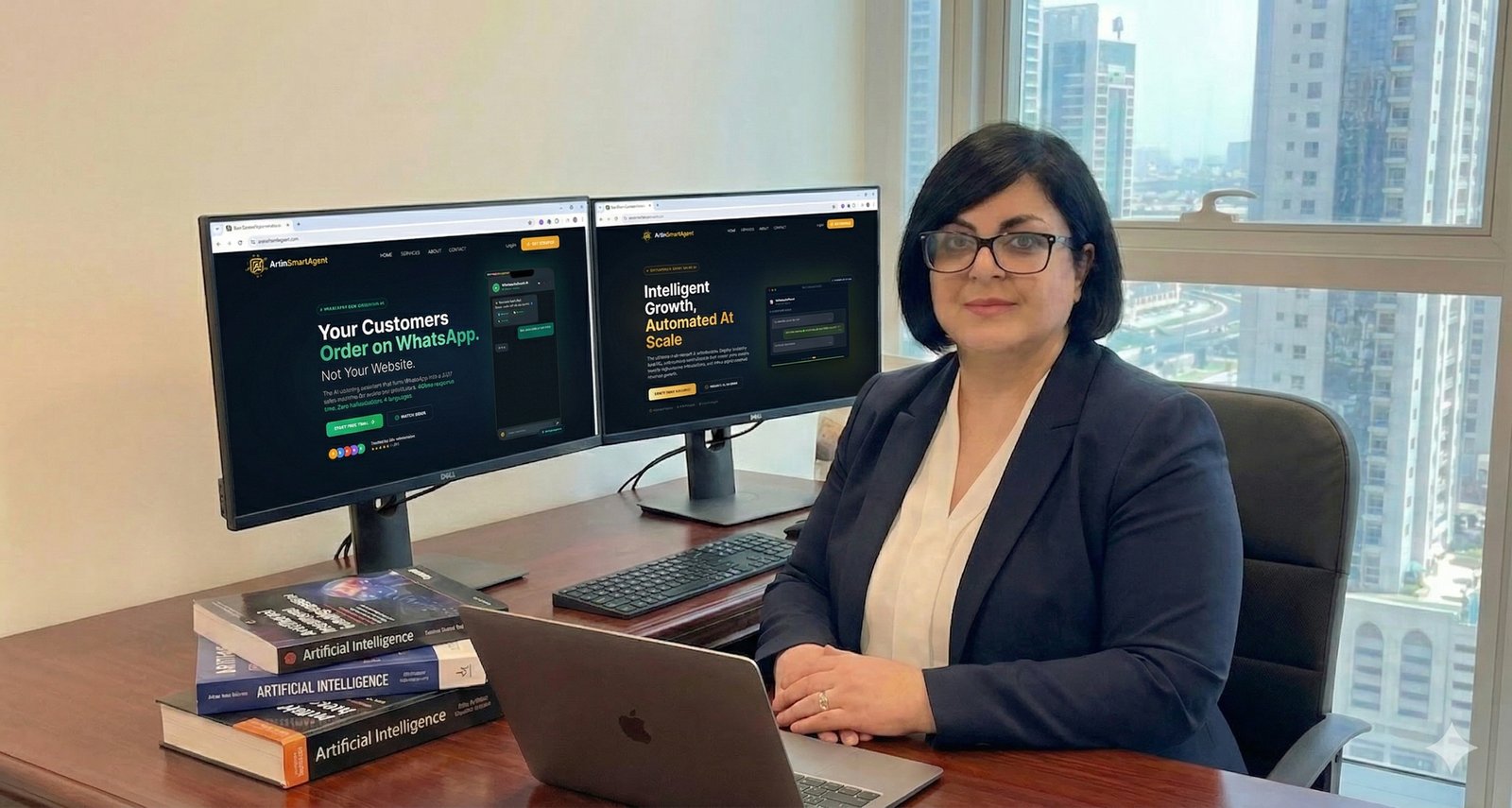
The air shimmered with the promise of a new millennium when I first dipped my toes into the nascent waters of digital technology here in Dubai. Back then, "broadband" was a luxury, "e-commerce" a whispered dream, and the idea of a machine handling customer queries without human intervention was pure science fiction. Fast forward nearly two decades, and the landscape is unrecognizable. From dusty souks now powered by digital transactions to towering skyscrapers housing AI-driven enterprises, Dubai has always been a city of ambition, constantly pushing the boundaries of what's possible. My journey, from those early days of dial-up modems and clunky websites to spearheading AI automation for businesses across the UAE, has been nothing short of a thrilling ride. And today, I want to share that journey with you, not as a historical anecdote, but as a practical AI automation tutorial for every Small to Medium Business (SMB) owner in Dubai looking to transform their operations from manual struggle to automated marvel. This isn't just about technology; it's about unlocking potential, recapturing time, and fundamentally rethinking how your business thrives through business process automation in an increasingly intelligent world.
The Genesis of Automation: My Journey from Dubai’s Early Digital Frontier
My story in Dubai's digital realm began long before "AI" became a household term. It was 2005, and the internet was still a wild, untamed frontier for many businesses. I remember working with a local textile wholesaler in Deira, a cornerstone of Dubai's commerce. Their entire order process was manual: faxes, phone calls, handwritten invoices, and a dizzying array of spreadsheets that rarely matched. They were efficient for their time, but even then, I could see the cracks forming under the pressure of a rapidly globalizing market. The problem wasn't a lack of effort; it was a lack of scalable systems. Their biggest challenge? The sheer volume of repetitive tasks, from order processing to inventory checks, eating into their profit margins and stifling any real growth. This scenario wasn't unique; it was the norm across countless SMBs, highlighting the urgent need for effective business process automation, whether it was a small logistics company juggling deliveries or a boutique real estate agency managing client inquiries.
The digital revolution, initially slow, began to accelerate around 2010. Social media emerged, mobile phones became smart, and the global marketplace truly opened up. Dubai, always a leader, embraced this transformation with characteristic fervor. Businesses that once relied solely on word-of-mouth found themselves needing an online presence, a responsive customer service channel, and faster operational speeds just to keep pace. The demand for efficiency wasn't just a luxury anymore; it was a survival imperative. I saw firsthand how businesses struggled to adapt. They'd invest in a flashy website, only to find their backend processes couldn't handle the increased lead flow. They'd hire more staff to manage customer queries, only to discover those staff were quickly overwhelmed by repetitive questions. This is where the nascent idea of automation, born from the simple desire to help these businesses thrive, began to take root in my mind. It wasn't about replacing people; it was about empowering them to do more meaningful, impactful work. It was about creating systems that could handle the mundane, allowing human ingenuity to flourish.
From Dial-Up to Digital Dominance: An 18-Year Retrospective
My personal entry into the tech world was less about grand vision and more about solving immediate problems. My first "automation" projects were simple scripts to pull data from disparate sources or to send out automated email responses. They were crude by today's standards, but they delivered immediate, tangible relief. A small trading company reduced their data entry errors by 30% simply by automating the transfer of supplier invoices into their internal system. A local clinic cut patient no-shows by 15% with automated appointment reminders. These small wins, repeated across dozens of clients, illustrated a profound truth: even basic automation could be a superpower for SMBs. The biggest challenge then, as now, was convincing owners that the initial investment in time and resources would yield exponential returns. They were comfortable with their existing (albeit inefficient) processes. "If it ain't broke, don't fix it," was a common refrain, even as their competitors slowly but surely outpaced them.
Dubai's business landscape has always been characterized by its dynamism and global outlook. From the humble beginnings of trading ports to a global financial and tourism hub, the city mandates agility. This rapid evolution meant that businesses, particularly SMBs, were under constant pressure to innovate. The increasing demand for efficiency wasn't just about saving money; it was about serving a more demanding, globally connected customer base. Customers expected instant responses, personalized service, and seamless transactions. The pain points I identified early on – manual data entry, slow customer service, inconsistent lead follow-ups, and inefficient internal communication – only intensified with time. It became clear that traditional, human-intensive methods were simply not sustainable. This realization was the crucible in which the idea of intelligent automation, specifically leveraging AI for comprehensive business process automation, truly solidified for me. It wasn't just about automating tasks; it was about automating intelligence.
The ‘Why’ Behind the ‘How’: Why AI Automation is Non-Negotiable for SMBs Today
In today's Dubai, the question is no longer "should we automate?" but "how quickly can we automate, and how intelligently?" The competitive advantage in this fast-paced market hinges on your ability to respond swiftly, operate leanly, and personalize experiences at scale. Imagine a competitor who can qualify leads, answer FAQs, and even process initial orders 24/7, without human intervention, while your team is still sifting through emails manually. That's the power of AI automation. It frees up your most valuable asset – your human team – from the tyranny of repetitive, soul-crushing tasks. Instead of spending hours copying data from one spreadsheet to another, your sales team can focus on building relationships and closing deals. Your customer service agents can tackle complex, high-value issues that truly require empathy and critical thinking, rather than answering the same five questions repeatedly.
The hidden cost of inaction and resistance to digital transformation is immense, yet often invisible. It's the lost sales opportunity because a lead wasn't followed up promptly. It's the high employee turnover due to burnout from monotonous work. It's the customer churn resulting from slow, inconsistent service. In a market as dynamic and competitive as Dubai, these seemingly small inefficiencies compound into significant losses. The businesses that embrace AI automation aren't just staying afloat; they're surging ahead, redefining what's possible in their respective sectors. This isn't about futuristic robots taking over; it's about smart, practical applications of technology that deliver tangible ROI today. This article is designed to be your compass, guiding you through the practical steps of leveraging AI to transform your SMB. We're going to move beyond the hype and into actionable strategies, beginning with the foundations of this AI automation tutorial itself.
Demystifying AI Automation: A Practical Guide for Dubai’s Entrepreneurs
When I first started talking about AI automation, I often saw a mix of awe and skepticism in the eyes of business owners. Some imagined scenes from sci-fi movies, others dismissed it as an expensive luxury only for multinational corporations. My job, then and now, is to cut through that noise. What is AI automation, really, for an SMB in Dubai? It’s not about building sentient robots; it’s about intelligent software that can learn, adapt, and make decisions to streamline your business process automation efforts. Think of it as empowering your existing digital tools with a brain. Traditional automation follows strict, predefined rules – "If A, then do B." AI automation, however, can interpret A, understand its context, infer intent, and then decide the best B, C, or D course of action. For example, a traditional bot might respond to "What are your hours?" with a fixed answer. An AI-powered bot could understand a nuanced query like "Are you open on Friday morning?" and provide an accurate, context-aware response, even factoring in public holidays in the UAE.
The focus for SMBs isn't on groundbreaking research, but on practical, tangible applications. We've seen incredible success with local businesses automating lead qualification, where an AI can sift through inquiries from a website or social media, identify high-potential prospects based on predefined criteria (e.g., industry, budget range, specific product interest), and instantly route them to the right sales agent. For customer support, AI can handle up to 80% of routine queries, freeing human agents to focus on complex issues requiring empathy and problem-solving. Consider a Dubai-based e-commerce store that used to have 10 customer service agents answering repetitive questions about shipping costs, return policies, and delivery statuses. By implementing a simple AI automation layer, they reduced their support team to 3, with the remaining 7 focusing on proactive customer outreach and high-value problem resolution, directly impacting customer loyalty and repeat purchases. This isn't just theory; these are real-world scenarios playing out in businesses right here in Dubai.
What is AI Automation, Really? Cutting Through the Hype for SMBs
Let's break it down simply. Traditional automation is like a well-programmed vending machine: you press a button, you get a specific item. It's efficient for repetitive, predictable tasks. AI automation, on the other hand, is like a highly trained personal assistant who not only follows instructions but also anticipates needs, learns from interactions, and can handle variations in requests. It leverages technologies like Machine Learning (ML), Natural Language Processing (NLP), and computer vision to perform tasks that typically require human intelligence. For a Dubai SMB, this means:
- Lead Qualification: An AI can analyze incoming inquiries from your website, WhatsApp, or social media, understand what the customer is asking for, and score their potential based on historical data. It can then automatically route high-priority leads to your sales team for immediate follow-up, a key component of effective business process automation.
- Customer Support: AI-powered chatbots can understand natural language, answer FAQs, guide customers through troubleshooting steps, and even process basic transactions 24/7. This dramatically reduces response times and improves customer satisfaction.
- Data Entry & Processing: Instead of manually typing information from invoices, contracts, or application forms, AI can extract relevant data, validate it, and automatically input it into your CRM or ERP system, reducing errors and saving countless hours, further enhancing business process automation.
- Personalized Marketing: AI can analyze customer behavior and preferences to deliver highly targeted marketing messages, product recommendations, and promotions, leading to higher conversion rates.
We’ve seen a local automotive spare parts distributor in Al Quoz implement AI-driven inventory management. Instead of manual stock checks and reordering based on best guesses, their AI system analyzes sales data, seasonality, and even external factors like shipping delays to predict demand with remarkable accuracy, optimizing stock levels and reducing carrying costs by 18% in the first year. These are not complex, multi-million dollar projects; these are smart, focused applications that deliver clear ROI.
Identifying Your Automation Sweet Spots: Where to Begin for Maximum Impact
The biggest mistake SMBs make is trying to automate everything at once, or automating the wrong things. The key is to start small, identify high-impact areas, and build momentum. So, where do you begin? A thorough audit of your current business processes is the essential first step. Grab a pen and paper, or open a spreadsheet, and list every single task performed by your team over a typical week or month. Be brutally honest.
Here's a step-by-step guide to auditing your processes:
- List All Tasks: From answering phones to sending invoices, making coffee to managing social media – write it all down.
- Identify Repetitive Tasks: Which tasks are done repeatedly, day in and day out, with little variation? These are prime candidates.
- Pinpoint Bottlenecks: Where do processes slow down? Is it manual data entry? Waiting for approvals? Slow customer query responses?
- Estimate Time & Cost: How much human time is spent on these tasks? What is the associated labor cost? What is the cost of errors?
- Assess Business Impact: Which tasks, if automated, would have the biggest positive impact on your revenue, customer satisfaction, or employee morale?
Common bottlenecks in Dubai SMBs that are ripe for automation include:
- Manual Data Entry: Copying customer details, order information, or financial data between systems. This is a time sink and error-prone.
- Slow Customer Query Responses: Customers in Dubai expect immediate gratification. Delays in responding to inquiries, especially via WhatsApp or social media, can lead to lost business.
- Inconsistent Lead Follow-ups: Sales teams often struggle to follow up with every lead promptly and consistently, especially when juggling multiple prospects.
- Invoice & Payment Processing: Manual generation, sending, and tracking of invoices, and reconciliation of payments.
- HR Onboarding: Repetitive paperwork and administrative tasks for new hires.
Prioritizing high-ROI areas for your first business process automation projects is crucial. Don't try to automate a complex, highly variable task initially. Start with something simple, repetitive, and impactful. For instance, automating your basic customer FAQs on WhatsApp can free up hours of support staff time almost immediately. Once you see the tangible benefits and gain confidence, you can tackle more complex workflows. If you're struggling to identify these opportunities or need a strategic partner to guide you, exploring professional AI automation services can provide invaluable insights and a clear roadmap. Remember, the goal is not just to automate, but to automate smartly, ensuring every step brings you closer to operational excellence through effective business process automation.
Boosting Customer Engagement: Your First WhatsApp Business Bot Setup
In Dubai, if you're not on WhatsApp, you're practically invisible to a significant portion of your customer base. This isn't an exaggeration; it's a cultural truth. From ordering groceries to confirming appointments, discussing business deals to coordinating family outings, WhatsApp is the undisputed king of communication in the MENA region. Its unparalleled prevalence means that customers expect to engage with businesses on this platform. They want instant replies, convenience, and a personal touch – all within the familiar interface of their favorite messaging app. For an SMB, leveraging WhatsApp isn't just about presence; it's about meeting your customers where they are, building trust through accessibility, and fostering a sense of immediate connection that traditional channels often fail to deliver. Ignoring WhatsApp is akin to not having a phone number a decade ago – it's a fundamental barrier to communication.
I've seen countless local businesses, from small cafes in JLT to bespoke fashion boutiques in City Walk, transform their customer service and sales pipelines simply by embracing WhatsApp Business. One of our clients, a property management company in Business Bay, was overwhelmed with inquiries about vacant units, maintenance requests, and rental agreements. Their phone lines were jammed, and emails piled up. By implementing an intelligent WhatsApp business bot setup, they managed to offload over 60% of these routine queries to the bot, allowing their human agents to focus on complex negotiations and urgent tenant issues. The result? A 40% reduction in average response time and a significant uplift in tenant satisfaction scores within three months. This wasn't a magic trick; it was strategic automation meeting a critical customer need on their preferred platform.
The Dubai Connection: Why WhatsApp is King for Local Business Communication
Let’s be frank: in the UAE, WhatsApp isn't just an app; it's an ecosystem. Its role in the MENA region is deeply ingrained in daily life, both personal and professional. People here communicate more via WhatsApp than traditional SMS or even direct calls. This means that if you want to connect with your customers, build rapport, and be easily accessible, you must have a robust WhatsApp strategy.
Here's why WhatsApp's dominance is particularly relevant for Dubai businesses:
- Ubiquitous Adoption: Almost everyone has it. It’s the default messaging app for personal and business communication.
- Instant Gratification: Dubai’s fast-paced lifestyle translates into a demand for instant responses. WhatsApp provides that immediacy.
- Personal & Informal: It allows for a more personal, less formal interaction than email, fostering stronger customer relationships.
- Rich Media Support: Share images, videos, documents, and voice notes seamlessly, enhancing communication.
- Cost-Effective: For international communication, it’s often preferred over traditional calls or SMS, appealing to Dubai’s diverse expatriate population.
Imagine a luxury car rental service in Dubai Marina. Before, clients would call during business hours, or send emails that might get lost. With a robust WhatsApp business bot setup, potential clients can instantly check car availability, get quotes, and even start the booking process 24/7, from anywhere in the world. This builds trust and accessibility, ensuring you capture leads even when your office is closed.
Step-by-Step: Crafting an Intelligent WhatsApp Business Bot (No Code/Low Code Approach)
The good news is you don't need to be a coding wizard to set up a powerful WhatsApp Business Bot. Many accessible platforms offer low-code or no-code solutions, making it feasible for any SMB. Platforms like Twilio, MessageBird, or dedicated WhatsApp Business API providers with visual flow builders (such as Wati, Chatfuel, or directly through solutions offered by ArtinWebs) make the process remarkably intuitive.
Here’s a simplified approach to crafting your first intelligent WhatsApp business bot setup:
- Define Your Bot’s Core Purpose: Start simple. What’s the most common customer interaction you want to automate?
- FAQs (e.g., “What are your business hours?”, “Where are you located?”, “What are your delivery options?”)
- Appointment Booking (e.g., “Book a consultation,” “Schedule a service”)
- Lead Capture (e.g., “Tell us about your project,” “Request a quote”)
- Basic Support (e.g., “Track my order,” “Check my account balance”)
For a real estate agency, the core purpose might be “Property Inquiry & Appointment Booking.”
- Choose Your Platform: Research platforms like Twilio, MessageBird, or dedicated WhatsApp API partners. Look for one with a visual flow builder, robust analytics, and good support.
- Map Out the Conversation Flow: This is crucial. Imagine a customer interacting with your bot. What questions will they ask? What information do they need? How should the bot respond?
Practical Example: Simple Flow for a Dubai Restaurant Bot
User: "Hi"
Bot: "Welcome to [Restaurant Name]! How can I help you today?
1. View Menu
2. Make a Reservation
3. Find Our Location
4. Talk to a Human"User: "1" (View Menu)
Bot: "Great! Here's our menu link: [Link to online menu]. Anything else?"
User: "2" (Make a Reservation)
Bot: "Sure! What date and time are you planning to visit? And for how many people?"
User: "Tomorrow, 8 PM, 4 people"
Bot: "Excellent! Let me check availability. Could I get your name and phone number please?"
(Bot collects info and sends to a human for confirmation, or integrates with a booking system.)
User: "4" (Talk to a Human)
Bot: "No problem! Connecting you to our team now. Please wait a moment."
(Bot automatically transfers conversation to a live agent via the platform's dashboard.)
This pseudocode outlines the journey. Use a whiteboard or a tool like Miro to draw your flow diagram.
- Craft Your Bot’s Responses: Write clear, concise, and friendly messages. Use emojis to make it more engaging. Ensure your brand’s tone of voice is reflected.
- Integrate (Optional but Recommended): For maximum impact, integrate your bot with existing tools.
- CRM: Automatically log lead information or support tickets.
- Booking System: Directly check availability and book appointments.
- Google Sheets: Export lead data for simple tracking.
Many low-code platforms offer direct integrations or use webhooks for custom connections.
- Test, Launch, and Iterate: Test your bot thoroughly with colleagues. Once confident, launch it! Monitor its performance, analyze common queries, and continuously refine its responses and flows. AI thrives on data and iteration.
A well-crafted WhatsApp Business Bot isn't just about automation; it's about providing instant, convenient, and personalized service that sets your Dubai business apart. It's often the first touchpoint, and a positive experience here can significantly boost lead conversion and customer loyalty.
The Workflow Powerhouse: Mastering n8n for Seamless Business Process Automation
Moving beyond individual bots, the real magic of AI automation for SMBs in Dubai lies in connecting disparate systems and automating entire workflows. This is where tools like n8n become indispensable. While many businesses start with simple integrations using tools like Zapier or Make (formerly Integromat), n8n offers a level of flexibility and power that is truly a game-changer, especially for businesses with unique or complex operational needs. Its open-source nature means greater control, more customization options, and often, a more cost-effective solution for scaling automation efforts without being locked into proprietary ecosystems. Imagine your CRM, ERP system, marketing tools, spreadsheets, and even local payment gateways all speaking to each other, automatically transferring data, triggering actions, and ensuring every process runs like a well-oiled machine. This is the promise of n8n workflow automation.
I've worked with numerous Dubai-based B2B companies that were drowning in manual data transfers between their sales, accounting, and logistics departments. A wholesale distributor in JAFZA, for instance, had separate systems for order entry, inventory management, invoicing, and shipping. Every order required manual data input into at least three different platforms, leading to delays, errors, and frustrated staff. By implementing n8n, we created a seamless workflow: an order placed on their website automatically updated inventory, generated an invoice in their accounting software, created a shipping label, and notified the customer with tracking information – all without a single manual touchpoint after the initial order. This reduced processing time by 80%, minimized errors to almost zero, and allowed their team to focus on strategic supplier relationships and customer acquisition. This level of comprehensive business process automation is not just about efficiency; it's about unlocking new levels of operational excellence and competitive advantage.
Beyond Simple Integrations: Why n8n is a Game-Changer for SMBs in Dubai
While Zapier and Make are fantastic for simple, point-to-point integrations and are often sufficient for basic needs, n8n steps in when your workflows become more complex, offering advanced n8n workflow automation capabilities requiring conditional logic, custom code execution, or deep integration with various APIs without recurring costs per task. Its open-source advantage means you can self-host it, giving you complete data sovereignty – a significant consideration for many businesses in the UAE dealing with sensitive customer or financial data.
Calculating End of Service for your employees?
Use our 100% free, private Gratuity Calculator updated for UAE Decree 33.
Calculate GratuityHere's why n8n stands out for Dubai's diverse B2B landscape:
- Open-Source Flexibility: You own your data and infrastructure. Customize nodes, build unique integrations, and scale without vendor lock-in.
- Unparalleled Connectivity: Connects to hundreds of apps and services out-of-the-box, but also allows for custom HTTP requests, enabling integration with almost any API, including bespoke local systems.
- Complex Logic Handling: Go beyond “if this, then that.” n8n allows for intricate conditional branching, parallel processing, and error handling, mimicking complex human decision-making processes.
- Cost-Effective Scaling: While there’s an initial setup effort, self-hosting n8n can be significantly more cost-effective in the long run compared to subscription-based services that charge per task, especially as your automation scales.
- Visual Workflow Builder: Drag-and-drop interface makes building complex workflows accessible, even for non-developers, once the core concepts are understood.
Consider a Dubai-based marketing agency managing campaigns across multiple platforms for various clients. They needed to automatically pull campaign data from Facebook Ads, Google Ads, and LinkedIn, compile it into custom reports, and then send personalized performance summaries to each client weekly. Doing this manually was a full-time job. With n8n, we built a workflow that fetched data, transformed it using custom JavaScript functions, generated branded PDF reports, and emailed them out – all autonomously. This allowed their team to focus on strategy and client relationships, rather than data aggregation, ultimately boosting client satisfaction and retention.
Building Your First Automated Workflow: An n8n Walkthrough Example
Let's walk through a common, yet impactful, scenario: automating lead qualification from a web form, updating a CRM, and sending a personalized follow-up using n8n workflow automation. This is a workflow that every sales-driven business in Dubai can benefit from.
Scenario: A potential client fills out a "Request a Quote" form on your website. You want to:
- Capture the lead data.
- Add it to your CRM (e.g., HubSpot, Salesforce, Zoho CRM).
- Send an internal notification to the sales team.
- Send a personalized "Thank You" email to the prospect with relevant information.
- If it's a high-value lead (e.g., specific industry or budget), assign it to a senior sales agent immediately.
Here's a simplified textual description of how this would look in an n8n workflow:
N8N Workflow: Web Form Lead Automation
- Webhook Node (Trigger): This is the starting point. When a user submits your “Request a Quote” web form (e.g., Typeform, Google Forms, or your website’s custom form), it sends data to this unique webhook URL.
- Set Node (Data Cleaning/Standardization): Clean and standardize the incoming data. For example, ensure names are capitalized, phone numbers are in a consistent format, or extract specific keywords from the “message” field.
- If Node (Conditional Logic – Lead Scoring): This is where the “intelligence” comes in.
- Condition 1 (High-Value Lead): If
{{$json.industry}}contains “Real Estate” OR{{$json.budget}}> 50000 AED, then proceed down one path.- Condition 2 (Standard Lead): Otherwise, proceed down another path.
- CRM Node (e.g., HubSpot Create Contact):
- Path 1 (High-Value): Create a new contact in HubSpot, assign it to “Senior Sales Agent,” and set a priority flag.
- Path 2 (Standard): Create a new contact, assign it to “General Sales Queue.”
- Email Node (Internal Notification): Send an email to
sales@yourcompany.aewith details of the new lead, including the priority level, using data from the Webhook node.- Email Node (Customer Follow-up): Send a personalized “Thank You” email to
{{$json.email}}.
- Path 1 (High-Value): “Thank you for your inquiry! Our senior specialist will be in touch shortly…”
- Path 2 (Standard): “Thank you for your inquiry! We’ve received your details and will get back to you within 24 hours…”
This structured approach ensures that every lead is captured, categorized, and followed up with appropriate speed and personalization, enhancing customer experience and improving conversion rates. For businesses dealing with a high volume of orders or inquiries, like those using a B2B Smart Ordering system, integrating such an n8n workflow can dramatically streamline operations and reduce manual workload.
Common Pitfalls to Avoid:
- Over-complicating early: Start with a simple workflow, get it working, then add complexity.
- Ignoring error handling: What happens if an API call fails? Ensure your workflow gracefully handles errors.
- Lack of testing: Thoroughly test every path of your workflow before deploying it live.
- Poor documentation: Document your workflows so others can understand and maintain them.
By mastering n8n, you're not just automating tasks; you're building a resilient, intelligent backbone for your Dubai business that can adapt and grow with your needs.
Empowering Your Business with Intelligent AI Agents: A Development Guide
As we evolve beyond simple rule-based automation and even sophisticated n8n workflows, the next frontier for Dubai's SMBs is the realm of intelligent AI agents. This is where AI truly begins to feel like an extension of your team, capable of understanding nuances, learning from interactions, and even autonomously executing complex tasks. An AI agent isn't just a chatbot; it's a sophisticated piece of software designed to perform specific functions with a degree of autonomy and intelligence that transcends predefined scripts, a core concept in any AI agent development guide. It's about moving from systems that react to systems that anticipate and act. This capability is becoming increasingly crucial in a market that demands not just efficiency, but also predictive insights and highly personalized experiences.
Imagine an AI agent that monitors market trends in real-time, identifies emerging opportunities for your business, and even drafts initial outreach strategies for your sales team. Or an agent that analyzes customer feedback across multiple channels, identifies sentiment patterns, and proactively suggests product improvements or service adjustments. These are no longer futuristic concepts; they are tangible applications that can redefine how your business operates. We've helped Dubai logistics companies implement AI agents that optimize delivery routes based on live traffic data, fuel prices, and driver availability, saving significant operational costs and improving delivery times. For a financial consultancy, an AI agent analyzes global market data to provide personalized investment recommendations to clients, enhancing their service offering and client retention. These agents act as force multipliers, empowering your human team to focus on innovation, strategic growth, and high-touch customer relationships.
What Defines an ‘AI Agent’ in Today’s Business Landscape?
The distinction between a rule-based bot and an AI agent is fundamental, and understanding this is key to any AI agent development guide. A rule-based bot operates on "if-then" statements; it's a decision tree. An AI agent, on the other hand, leverages advanced AI capabilities – particularly machine learning (ML) and natural language processing (NLP) – to:
- Understand Intent & Context: It can grasp the underlying meaning of a query, even if phrased unconventionally, and remember past interactions to provide contextually relevant responses.
- Learn from Interactions: Through continuous training data and feedback loops, it improves its performance over time, adapting to new information and changing user behaviors.
- Make Decisions: Based on its understanding and learned patterns, it can make autonomous decisions within its defined scope, rather than just following a script.
- Perform Complex Tasks: It can execute multi-step processes, interact with various internal and external systems, and even initiate new workflows without constant human supervision.
- Exhibit a “Persona”: While not truly sentient, it can be designed to maintain a consistent tone and personality, enhancing user experience.
Examples of advanced AI agent applications relevant to Dubai SMBs:
- Personalized Recommendations: For e-commerce or hospitality, an AI agent can analyze customer preferences and past behavior to suggest products, services, or experiences tailored to individual needs, boosting cross-selling and up-selling.
- Predictive Analytics for Sales: An AI agent can analyze historical sales data, market trends, and lead interactions to predict which leads are most likely to convert, allowing sales teams to prioritize their efforts.
- Autonomous Task Execution: Imagine an AI agent that automatically monitors customer support tickets, identifies urgent issues, escalates them to the right department, and even drafts initial responses based on common solutions.
- Dynamic Pricing Optimization: For businesses with variable demand (e.g., hotels, airlines, event tickets), an AI agent can adjust pricing in real-time based on supply, demand, competitor pricing, and external events.
These AI agents effectively act as extensions of your team, handling tasks that require a level of dynamic intelligence and adaptability that goes far beyond traditional automation. They are not just tools; they are strategic assets that empower your business to operate smarter and more competitively.
Practical Steps to Cultivate Your Own AI Agent Ecosystem
Developing and integrating AI agents might sound daunting, but with the right approach and accessible tools, it's well within reach for ambitious SMBs, as this AI agent development guide aims to show.
- Define the Agent’s Mission: What specific problem will this AI agent solve? Be extremely clear. Is it to reduce customer support calls by 30%? Increase lead qualification accuracy by 20%? Automate order processing from multiple channels? A well-defined mission is your North Star.
- Choose the Right Underlying AI Services:
- For Conversational Agents: Platforms like Google Dialogflow, IBM Watson Assistant, or Microsoft Bot Framework provide powerful NLP capabilities for understanding user intent.
- For Predictive/Analytical Agents: Leverage cloud-based Machine Learning services (e.g., Google AI Platform, AWS SageMaker, Azure Machine Learning) if you have specific data science needs, or simpler APIs for specific tasks like sentiment analysis or recommendation engines.
- For Task Automation with Intelligence: Integrate large language models (LLMs) like those from OpenAI (GPT series) or custom fine-tuned models to enable more nuanced understanding and content generation.
For many SMBs, starting with a powerful LLM API combined with a workflow orchestrator like n8n offers a fantastic balance of capability and accessibility.
- Design the Agent’s Scope and Persona:
- Scope: What can it do? What can’t it do? Clearly define its boundaries to manage user expectations.
- Persona: Give it a name, a tone of voice, and a consistent communication style that aligns with your brand. This makes interactions more engaging.
- The Iterative Development Process:
- Data Collection & Training: The agent needs data to learn. For conversational agents, this means examples of customer queries and ideal responses. For predictive agents, it’s historical operational data.
- Building & Integration: Use your chosen platforms to build the agent’s logic. Connect it to your existing systems (CRM, ERP, internal databases) using APIs or integration tools.
- Testing & Refinement: Rigorously test the agent in various scenarios. Gather feedback from early users. AI agents are rarely perfect on day one; continuous refinement is key. Analyze misinterpretations, optimize responses, and expand its knowledge base.
- Monitoring & Improvement: Once live, continuously monitor its performance. Track key metrics (e.g., resolution rate, accuracy, task completion time). Use this data to retrain and improve the agent over time.
- Ethical Considerations & Responsible AI: As an SMB in Dubai, deploying AI responsibly is paramount. Ensure your AI agents are fair, transparent, and respect user privacy. Avoid biases in data or decision-making. Clearly communicate when users are interacting with an AI. This builds trust and maintains your brand reputation. For comprehensive solutions that integrate AI agents into larger B2B ecosystems, platforms like our own WholesaleOS platform leverage these principles to deliver robust, intelligent automation.
Cultivating your own AI agent ecosystem is an investment in the future of your business. It's about building intelligent capabilities that grow with you, providing unprecedented efficiency, customer insights, and a competitive edge in Dubai's dynamic market.
Measuring Success & Scaling Your Automation Efforts in Dubai’s Market
Implementing AI automation is not a one-time project; it's a continuous journey of improvement and expansion. Once you've successfully deployed your first WhatsApp bot or n8n workflow, the crucial next step is to measure its impact and strategize for scaling. In Dubai's results-oriented business environment, demonstrating tangible ROI is paramount. Without clear metrics, your automation efforts risk being perceived as costly experiments rather than strategic investments. Moreover, the initial success should serve as a springboard for further automation, but this scaling must be done smartly, avoiding the pitfalls of over-ambition or fragmented efforts. It's about building a robust, automated infrastructure that supports your business growth, rather than creating isolated, disparate tools.
I've seen businesses in Dubai make the mistake of implementing a cool new bot, only to realize months later they couldn't quantify its value. They "felt" more efficient, but couldn't point to specific savings or revenue increases. Conversely, those who meticulously tracked their KPIs before and after automation were able to showcase compelling success stories, which then fueled further investment and enthusiastic adoption across their teams. This meticulous approach is what separates fleeting innovation from sustainable transformation. Whether you're a small retailer in Al Barsha or a large trading company in Jebel Ali, the principles remain the same: measure, learn, and then strategically expand.
Quantifying ROI: How to Track the Impact of Your AI Automation Initiatives
To truly understand the value of your AI automation, you must establish clear baselines before you implement any changes. This means knowing your current performance metrics.
Key metrics to monitor for your AI automation initiatives:
- Time Saved:
- Measure the hours employees previously spent on the automated task. E.g., if a WhatsApp bot handles 100 FAQs per day, and each FAQ took 2 minutes for a human, that’s 200 minutes saved daily.
- Track average response times to customer inquiries before and after bot implementation.
- Operational Cost Reduction:
- Calculate salary costs associated with the time saved.
- Reduce errors (e.g., fewer shipping errors, billing mistakes) and quantify the cost savings from these reductions.
- Lower infrastructure costs (e.g., less need for physical call center space if many queries are handled by bots).
- Increased Sales Conversions:
- Track lead-to-customer conversion rates for leads handled by automated qualification vs. manual.
- Monitor average order value (AOV) if AI agents are providing personalized recommendations.
- Measure the speed of lead follow-up and its correlation with conversion rates.
- Enhanced Customer Satisfaction (CSAT):
- Implement post-interaction surveys for bot-handled queries vs. human-handled queries.
- Monitor Net Promoter Score (NPS) or Customer Effort Score (CES) changes.
- Track the volume of positive customer feedback related to speed and efficiency.
- Employee Productivity & Morale:
- Survey employees on job satisfaction related to repetitive tasks.
- Track time spent by employees on high-value, strategic tasks vs. administrative tasks.
For instance, a Dubai real estate agency using an AI agent for lead nurturing saw their lead-to-viewing conversion rate jump from 15% to 22% in six months, directly attributing it to the agent's 24/7 personalized follow-ups and rapid information dissemination. This isn't just about saving money; it's about making more money and creating a more efficient, happier workforce. The long-term vision should always be sustainable business process automation, where continuous improvement is baked into your strategy, ensuring your systems evolve with your business.
Scaling Smart: Growing Your Automation Footprint Without Overwhelm
Once you've proven the value of your initial automation projects, the natural inclination is to scale. However, haphazard scaling can lead to new complexities. A phased implementation strategy is key:
- Start Small, Prove Value, Then Expand: Don’t try to automate your entire business at once. Pick a high-impact, low-complexity process, automate it, measure its success, and use that success story to gain buy-in for the next project.
- Document Everything: As you build workflows and agents, document their purpose, how they work, and their dependencies. This is crucial for maintenance and future scaling.
- Re-evaluate Processes Regularly: Business needs change. Regularly audit your processes (e.g., quarterly) to identify new automation opportunities or areas where existing automations can be improved.
- Train Your Team: Automation isn’t about replacing people; it’s about empowering them. Train your team on how to interact with new AI tools, how to leverage them for their work, and how to provide feedback for continuous improvement. Embrace a culture of digital literacy.
- Centralize Management: As your automation footprint grows, consider a centralized platform or dashboard to monitor all your workflows and agents. Tools like n8n’s dashboard or custom solutions can provide this oversight.
- Partner with Experts: The journey of AI automation can be complex. The invaluable role of an experienced AI automation partner cannot be overstated. An agency like ArtinWebs, with deep understanding of the Dubai market and years of hands-on experience, can help you navigate challenges, avoid common pitfalls, and ensure your scaling efforts are strategic and sustainable. We can provide tailored AI automation services, from initial consultation to full-scale implementation and ongoing support.
Scaling smart means building a foundation of automation that is flexible, robust, and aligned with your strategic business goals. It’s about creating a future-proof business that thrives on efficiency, intelligence, and a relentless pursuit of excellence in the heart of Dubai, guided by this AI automation tutorial.
The journey from manual operations to an automated marvel isn’t just a technological upgrade; it’s a fundamental shift in how you envision and execute your business strategy. For Dubai’s SMBs, embracing AI automation isn’t just about keeping pace; it’s about setting the pace. It’s about reclaiming valuable time, unlocking human potential, and building a resilient, intelligent enterprise ready for tomorrow’s challenges. If you’re ready to take the leap and transform your business with intelligent automation, guided by this AI automation tutorial, we’re here to guide you every step of the way. Let’s discuss how AI can revolutionize your operations and drive unparalleled growth. Contact ArtinWebs today for a personalized consultation.
Frequently Asked Questions (FAQ)
What’s the difference between traditional automation and AI automation for SMBs?
Traditional automation follows predefined rules, executing repetitive tasks predictably (e.g., scheduled emails). AI automation, however, involves systems that can learn, adapt, and make decisions based on data, allowing for more complex, dynamic, and intelligent process handling, like understanding natural language in customer queries or optimizing marketing campaigns autonomously.
Is setting up a WhatsApp Business Bot difficult for someone without coding knowledge?
Not at all! Many platforms today offer low-code or no-code solutions that allow SMBs to set up powerful WhatsApp Business Bots with intuitive drag-and-drop interfaces. While some advanced functionalities might require technical assistance, basic FAQ, lead capture, and appointment booking bots are highly accessible and can be deployed quickly.
How can n8n workflow automation specifically benefit my business in Dubai?
n8n’s flexibility allows Dubai businesses to connect disparate local and international tools (CRMs, payment gateways, marketing platforms) to automate unique business processes. This means faster lead responses, streamlined operations compliant with local regulations, improved data flow across your entire digital ecosystem, ultimately saving significant time and resources.
What’s the first step an SMB should take when considering AI agent development?
The very first step is to identify a clear business problem or opportunity that an AI agent could solve. Instead of starting with the technology, focus on a specific pain point – e.g., reducing customer support wait times, automating sales outreach, or personalizing customer experiences – and then explore how an AI agent can address it most effectively.
How long does it typically take to see ROI from business process automation?
The timeline for ROI varies greatly depending on the complexity of the automated process and the initial investment. Simple automations, like a WhatsApp FAQ bot, can show immediate returns in reduced staff time. More complex business process automation projects might take a few months to fully optimize and demonstrate significant cost savings or revenue increases, but most SMBs report seeing positive impacts within the first 3-6 months.