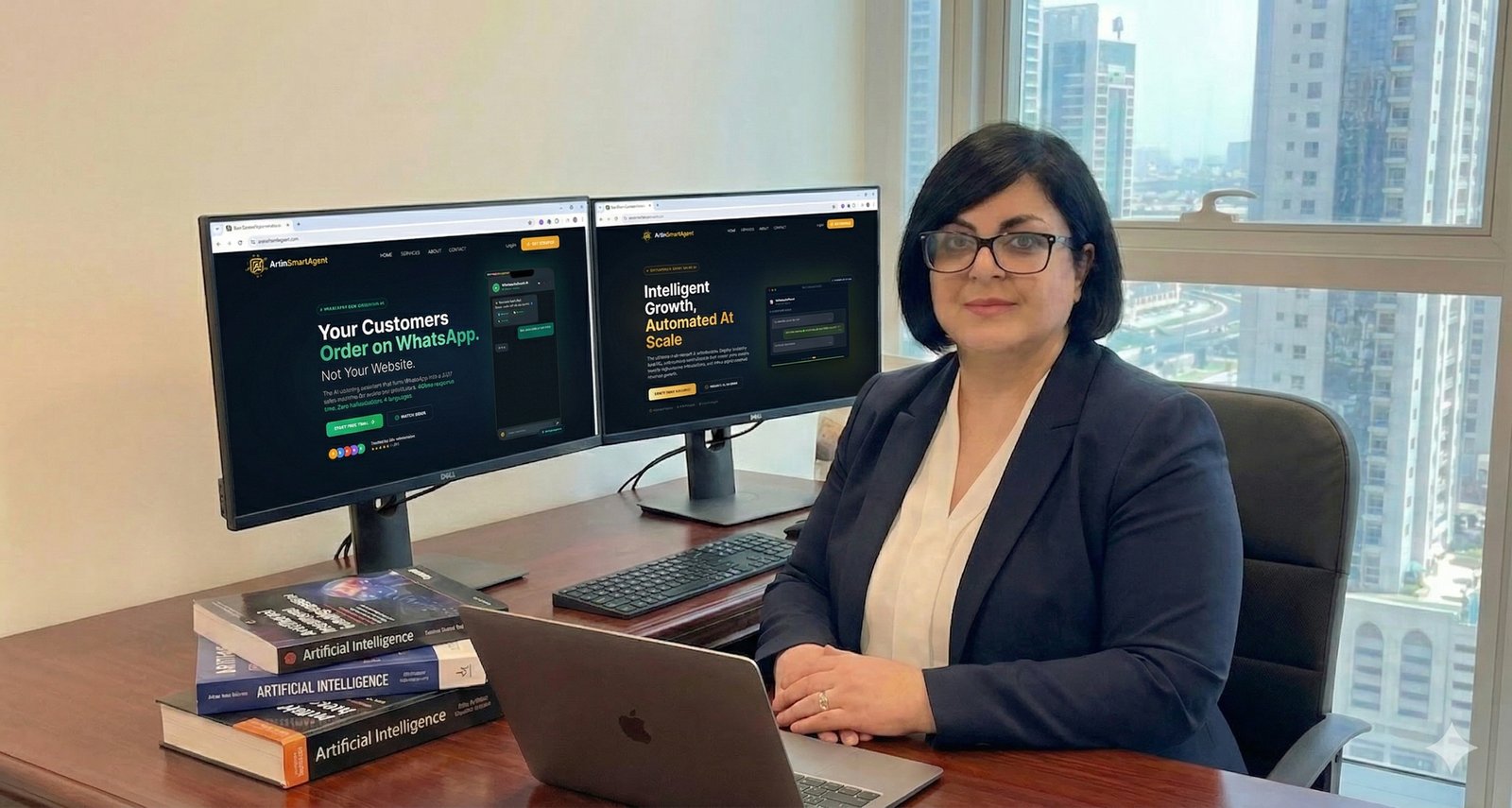
Imagine a global market valued at an astonishing $802 billion by 2031 for system integration services alone. Now, picture that immense wave of innovation crashing onto the vibrant, ever-evolving shores of Dubai. This isn’t just about massive corporations; this is about your Dubai business, whether you’re a burgeoning e-commerce venture in JLT, a logistics powerhouse in Jebel Ali, or a specialized service provider in Business Bay. I’ve spent over 18 years navigating the digital currents of this city, and what I’ve learned is this: the businesses that thrive aren’t just adopting technology, they’re seamlessly integrating it. They’re making their systems talk to each other, automating the mundane, and unleashing their human potential. This isn’t just an AI automation tutorial; it’s an invitation to unlock unprecedented growth, driven by smart, integrated automation that positions you at the forefront of Dubai’s dynamic economy.
The $802 Billion Opportunity: Why System Integration Matters for Your Dubai Business
From Global Market Reports to Local Impact: A Founder’s Perspective
When I first read the MarketsandMarkets™ report predicting the System Integration Services Market to reach $802.09 billion by 2031, my mind immediately went to the bustling streets of Dubai. It wasn’t about the abstract numbers; it was about the tangible opportunities this represented for the hundreds, if not thousands, of small and medium-sized businesses (SMBs) right here in the UAE. For nearly two decades, I’ve had a front-row seat to the dramatic evolution of business process automation in this region. I remember the early 2000s, a time when many businesses operated on a patchwork of Excel sheets and disparate, often manual, systems. The idea of “system integration” felt like a luxury reserved for multinational giants.
But the world, and especially Dubai, moves at an incredible pace. What was once a luxury is now a necessity. I’ve personally witnessed businesses struggling with the same fundamental challenges: customer data scattered across a CRM, an accounting package, and a separate marketing platform. Orders manually transcribed from WhatsApp to an ERP. Leads falling through the cracks because the sales team wasn’t instantly notified. These aren’t isolated incidents; they’re symptoms of disconnected systems. The global trend towards integration isn’t just a forecast; it’s a reflection of businesses worldwide realizing that their individual digital tools are only as powerful as their ability to work together. For a Dubai-based SMB, embracing this trend isn’t just about keeping up; it’s about gaining a decisive competitive edge in a market that rewards agility and efficiency.
My journey started with a deep understanding of these pain points, building custom solutions for clients who were drowning in manual tasks. Over the years, the tools evolved, from rudimentary scripting to sophisticated integration platforms and now, to AI-powered automation. But the core problem remains: how do you get all your business applications to communicate seamlessly, automate repetitive tasks, and free up your team to focus on what truly matters? The $802 billion market isn’t just about big projects; it’s about the collective value created when every business, regardless of size, unlocks its potential through intelligent integration. This is the foundation upon which ArtinWebs.com was built, specifically to bring this level of sophistication and efficiency to Dubai’s dynamic SMB landscape.
Dubai’s Digital Pulse: The Urgent Need for Seamless Automation
Dubai’s B2B market is a crucible of innovation and competition. From the free zones teeming with startups to established trading houses in Deira, every business is vying for attention, market share, and customer loyalty. In such an environment, waiting even an hour to respond to a customer inquiry can mean losing a deal. Manual data entry isn’t just tedious; it’s a source of errors that can lead to costly mistakes and damaged reputations. Disconnected systems create operational silos, hindering collaboration and slowing down decision-making. I’ve seen countless businesses struggle with these issues – a fashion wholesaler meticulously updating inventory across multiple spreadsheets, a real estate agency manually sending out property listings, or a logistics company painstakingly tracking shipments across various portals.
These aren’t just minor inconveniences; they are significant drag factors on growth. The digital pulse of Dubai demands speed, accuracy, and personalized engagement. Customers, whether B2B or B2C, expect instant communication and seamless experiences. This is where AI automation steps in, not as a futuristic fantasy, but as a practical, strategic imperative for survival and growth today. Imagine an AI bot instantly qualifying leads from your website, directing them to the right sales person, and even scheduling an initial meeting, all while your team focuses on closing deals. Or consider an automated workflow that processes orders from your e-commerce platform, updates your inventory, notifies your warehouse, and generates an invoice, all without a single manual touch. This isn’t just about saving time; it’s about optimizing resources, reducing operational costs, minimizing human error, and crucially, enhancing the overall customer experience.
For Dubai businesses, AI automation offers a pathway to not just compete, but to lead. It enables you to scale operations without proportionally increasing headcount, respond to market changes with unparalleled agility, and deliver a consistently superior service that differentiates you from the competition. In a city that never sleeps, your business shouldn’t either, at least not in terms of its core processes. Seamless automation ensures that your business operates efficiently 24/7, providing consistent value and unlocking new avenues for expansion. It’s about transforming your business from reactive to proactive, from manual to intelligent, setting the stage for sustainable success in one of the world’s most dynamic markets.
The Genesis of Automation: My Early Days Navigating Dubai’s Digital Maze
From Manual Mayhem to Automated Dreams: My First ‘Aha!’ Moment
My journey into the world of automation wasn’t born out of a strategic market analysis; it was born out of sheer frustration. Picture this: it was the mid-2000s, and our burgeoning agency in Dubai was growing rapidly. We were managing web development projects, SEO campaigns, and digital marketing for a diverse portfolio of clients. Each client had their own set of requirements, their own communication channels, and their own reporting needs. We had a project management system, a separate invoicing system, a CRM that barely talked to anything else, and a sea of spreadsheets tracking everything from client feedback to campaign performance.
The “aha!” moment hit me hard one Tuesday afternoon. I was spending hours manually compiling data from three different sources to generate a single client report. Errors were rampant, deadlines were looming, and I remember thinking, “There has to be a better way.” It wasn’t just about the time wasted; it was the mental drain, the feeling of being a human router, constantly copying and pasting, trying to force disparate systems to coexist. That’s when I realized that simply digitizing individual tasks wasn’t enough. Having a digital CRM was great, but if it didn’t automatically update our project management system when a deal closed, or trigger an invoice, then we were still doing the “glue work” manually. True efficiency, I understood, came from connecting the dots, creating a seamless flow of information and actions across our entire operational landscape.
My initial foray into automation was rudimentary – a series of custom scripts to export data from one system and import it into another, or to send automated email notifications based on specific triggers. These early tools were clunky, often broke, and required constant maintenance, but they offered a glimpse into a future where systems could communicate autonomously. It was a revelation that transformed how I viewed business operations. I saw the potential to eliminate manual drudgery, reduce errors, and, most importantly, free up our talented team to focus on creative problem-solving and strategic thinking – the kind of work that truly drives innovation and client satisfaction. This experience became the bedrock of ArtinWebs.com’s philosophy: automation isn’t just about technology; it’s about empowering people and transforming businesses from the inside out.
The Human Element: Why Automation Isn’t About Replacing, But Empowering
One of the most common misconceptions I encounter when discussing AI and automation with business owners in Dubai is the fear of job displacement. “Will a chatbot replace my customer service team?” “Will AI take over my sales reps’ roles?” These are valid concerns, often fueled by sensational headlines. However, my 18+ years in this field have shown me a different reality: automation isn’t about replacing human talent; it’s about augmenting it, empowering it, and elevating it to higher-value work. Think of it as providing your team with an incredibly efficient co-pilot.
Consider the example of a Dubai-based real estate agency we worked with. Their sales agents were spending an enormous amount of time on initial lead qualification – asking basic questions about budget, location preferences, and property type. This was repetitive, time-consuming, and frankly, unfulfilling work. We implemented an AI-powered lead qualification bot on their website and WhatsApp. Did it replace the sales agents? Absolutely not. Instead, it freed them from the grunt work. Now, when a lead reaches an agent, they are already pre-qualified, interested, and have provided key information. The agents can dive straight into building rapport, showcasing properties, and closing deals – tasks that require empathy, negotiation skills, and human intuition, none of which an AI can truly replicate. The result? Sales cycle reduced by 30%, agent satisfaction increased because they were doing more meaningful work, and client response times improved dramatically.
Another example comes from a logistics company in Jebel Ali. Their operations team spent hours manually tracking shipments, updating clients, and handling routine inquiries. We automated much of this through a system that pulled data from various carrier APIs and automatically sent status updates via SMS and email. This didn’t mean fewer jobs; it meant the existing team could now focus on resolving complex logistical challenges, optimizing routes, and building stronger relationships with key clients. Employee satisfaction soared because they were no longer bogged down by mundane tasks. Automation, when implemented thoughtfully, allows humans to be more human, to engage in creative problem-solving, strategic thinking, and empathetic interaction – areas where our unique capabilities truly shine. It’s about empowering your team to achieve more, not less, making their work more impactful and rewarding, which in turn fuels business growth and innovation.
Decoding Business Process Automation: From Vision to Value for SMBs
Identifying Your Automation Sweet Spots: Where to Start Your AI Automation Tutorial
Embarking on your AI automation journey can feel like standing at the base of the Burj Khalifa – impressive, but where do you even begin? For SMBs in Dubai, the key is to be strategic and start small, demonstrating clear return on investment (ROI) before scaling. The first step in any successful AI automation services project is a thorough audit of your existing business processes. Don’t try to automate everything at once; identify your “automation sweet spots” – those areas where automation will yield the most immediate and significant benefits.
So, how do you find these sweet spots? Look for tasks that are:
- Repetitive: Are your employees doing the same thing over and over again? Think data entry, generating standard reports, sending follow-up emails, or updating customer records.
- Rule-Based: Do these tasks follow a clear set of ‘if-then’ rules? For example, ‘If a customer buys product X, then send them an email about product Y.’ Or ‘If a lead fills out form Z, then assign them to sales team A.’
- High-Volume: Do these tasks occur frequently, consuming a significant amount of time across your team? Processing hundreds of invoices, managing thousands of customer inquiries, or onboarding dozens of new clients fall into this category.
- Prone to Human Error: Where do mistakes most often occur due to manual input or oversight? Automating these areas can dramatically improve accuracy.
Let’s take a practical example from Dubai. A local wholesale distributor was manually processing hundreds of orders daily, copying details from emails and WhatsApp messages into their ERP system. This was repetitive, rule-based (pricing, discounts, delivery zones), high-volume, and prone to errors. This was a prime automation candidate. We started by automating the order intake for their most common products, integrating WhatsApp directly with their ERP. The initial ROI was almost immediate: reduced processing time, fewer errors, and freed-up staff who could now focus on supplier relations and logistics optimization. By starting with this clearly defined problem, demonstrating value, and then gradually expanding, the business built confidence and internal champions for further automation.
The importance of starting small cannot be overstated. A quick win builds momentum and provides valuable insights. Document your current process, identify bottlenecks, envision the automated flow, and then pick a small, manageable segment to pilot. This iterative approach minimizes risk, allows for adjustments, and ensures that your automation efforts are aligned with your business goals, paving the way for strategic scaling.
The Core Pillars: Data, Decisions, and Delivery in an Automated Ecosystem
At the heart of every successful automated ecosystem are three interconnected pillars: Data, Decisions, and Delivery. Understanding these will demystify how AI automation actually works and how it creates value for your business.
- Data: The Fuel for Automation
Think of data as the lifeblood of your automated systems. It’s the information that your AI agents and workflows consume, process, and act upon. This could be anything from customer contact details in your CRM, product inventory levels in your ERP, website traffic analytics, or even the text from a customer’s WhatsApp message. The quality and accessibility of your data are paramount. If your data is siloed, inconsistent, or inaccurate, your automation efforts will falter. This is why robust system integration is so critical – it ensures that the right data is available to the right system at the right time. For instance, an AI agent qualifying a lead needs access to historical customer data to personalize its responses, or product pricing data to accurately answer queries. Clean, structured data empowers your automation to be intelligent and effective. - Decisions: The Brains of the Operation
Once your automation system has access to data, it needs to make decisions. This is where AI and defined logic come into play. These decisions can range from simple rule-based ‘if-then’ statements (e.g., “If customer query contains ‘return policy’, then direct to knowledge base”) to more complex, AI-driven choices based on learned patterns and predictive analytics (e.g., “Based on customer’s browsing history and purchase patterns, recommend product X”). An AI agent’s effectiveness is directly tied to the clarity and sophistication of its decision-making logic. This logic is either explicitly programmed (for rule-based bots) or learned through training data (for machine learning models). For SMBs, starting with clear, rule-based decision trees is often the most practical and impactful approach, gradually introducing more advanced AI as your needs evolve and your data matures. - Delivery: The Execution of Action
Finally, automation needs to deliver an action based on its decisions. This is the output, the tangible result of the automated process. Delivery mechanisms can vary widely: sending an automated email, updating a record in your CRM, creating a task in your project management system, triggering an SMS notification, generating an invoice, or even initiating a phone call. The power of an integrated ecosystem lies in its ability to deliver actions across different platforms seamlessly. For example, an automated lead qualification bot might identify a hot lead (decision), then immediately create a new contact in your CRM, assign it to a sales rep, and send an internal notification via Slack (delivery). This seamless execution across various touchpoints ensures that your business operates efficiently, responsively, and without manual intervention, transforming raw data into valuable business outcomes.
By focusing on these three pillars, you can systematically design and implement automation solutions that are not just technically sound but also strategically valuable, driving real growth for your Dubai business.
Your First AI Co-Pilot: An AI Agent Development Guide for Practical Impact
From Concept to Code (or No-Code): Choosing the Right Tools for Your AI Agent
The term “AI agent development” often conjures images of complex algorithms, deep neural networks, and teams of data scientists. While that might be true for cutting-edge AI research, the reality for SMBs in Dubai is far more accessible. You don’t need to be a tech giant to harness the power of an AI co-pilot. The democratisation of AI means that practical, impactful AI agents are now within reach, often with little to no coding required.
When thinking about your first AI agent, consider its purpose. Are you looking for a simple bot to answer frequently asked questions? Or something more sophisticated to qualify leads, schedule appointments, or even assist with internal operations? The good news is there’s a spectrum of tools available:
- Rule-Based Bots: These are the simplest form of AI agents. They operate on predefined rules and decision trees. For example, “If customer asks about shipping, respond with link to shipping policy.” Tools like ManyChat, Chatfuel, or even simple custom scripts can be used for this. They are excellent for automating FAQs, basic lead capture, and routing inquiries.
- Natural Language Processing (NLP) Bots: These agents can understand and process human language to a greater extent. They use NLP to interpret user intent even if the exact phrase isn’t in their database. Platforms like Google’s Dialogflow, IBM Watson Assistant, or Rasa allow you to build more intelligent conversational agents.
- Large Language Model (LLM)-Powered Agents: This is the cutting edge, leveraging models like OpenAI’s GPT series. These agents can generate human-like text, summarize information, translate languages, and even write code. While more complex to implement, platforms are emerging that allow SMBs to integrate LLMs into their workflows for sophisticated content generation, customer service, and data analysis.
For most Dubai SMBs, starting with no-code or low-code platforms is the most pragmatic approach. Tools like WholesaleOS platform (our own solution, for example, often incorporates AI agents for B2B ordering), Zapier, Make (formerly Integromat), or even a custom setup using n8n (which we’ll explore later) allow you to visually build complex workflows and integrate AI capabilities without writing a single line of code. These platforms provide intuitive drag-and-drop interfaces, pre-built templates, and connectors to hundreds of popular business applications. This empowers business owners and their teams to become “citizen developers,” creating powerful automation solutions tailored to their specific needs, without relying on extensive technical expertise or a dedicated development team.
Crafting the Agent’s Logic: A Simplified Workflow Example (Code/Flow Snippet)
Let’s demystify the “logic” of an AI agent with a simplified example: an AI agent designed for initial customer service inquiries or lead qualification for a Dubai-based service provider (e.g., a home maintenance company).
Scenario: Website Visitor Inquiry
The goal of our AI agent is to greet a website visitor, understand their service need (e.g., AC repair, plumbing, electrical), collect essential contact information, and then route them to the appropriate human expert or schedule an appointment.
Curious how much an AI Agent could save your UAE business?
Calculate your exact Visa, Gratuity, and workspace savings compared to hiring a human.
Launch AI ROI CalculatorSimplified Decision Logic (Conceptual Flow):
START: Website Visitor Lands on Chat Widget

1.  Agent Greets User:
    "Hello! Welcome to [Your Company Name]. How can I assist you today? Are you looking for AC repair, plumbing, electrical services, or something else?"

2.  User Input Received:
    (e.g., "My AC isn't cooling," or "I need a plumber for a leak.")

3.  Agent Processes Input (Intent Recognition):
    IF user input contains "AC", "cooling", "aircon" -> INTENT: AC_REPAIR
    ELSE IF user input contains "leak", "pipe", "toilet" -> INTENT: PLUMBING
    ELSE IF user input contains "power", "socket", "light" -> INTENT: ELECTRICAL
    ELSE -> INTENT: GENERAL_INQUIRY

4.  Conditional Branching based on Intent:

    IF INTENT is AC_REPAIR:
    "Okay, I can help with AC repair. To get started, could you please tell me your name and best contact number?"
    [COLLECT NAME, PHONE_NUMBER]
    "And what is your preferred date and time for a technician visit?"
    [COLLECT PREFERRED_DATETIME]
    "Thank you! I've noted your request for AC repair on [PREFERRED_DATETIME]. A specialist will confirm your booking shortly. Is there anything else?"

    ELSE IF INTENT is PLUMBING:
    "Understood, plumbing issues can be urgent. Please provide your name and contact number, and a brief description of the problem."
    [COLLECT NAME, PHONE_NUMBER, PROBLEM_DESCRIPTION]
    "We'll have a plumber contact you within 30 minutes. Is there anything else?"

    ELSE IF INTENT is ELECTRICAL:
    "Electrical issues require immediate attention. Could you share your name and contact number, and describe the issue briefly?"
    [COLLECT NAME, PHONE_NUMBER, PROBLEM_DESCRIPTION]
    "An electrician will call you within 15 minutes. Please stay safe. Anything else I can help with?"

    ELSE IF INTENT is GENERAL_INQUIRY:
    "I understand. For general inquiries, could you please provide your name and email, and I'll connect you to our support team."
    [COLLECT NAME, EMAIL]
    "Thank you. Our team will get back to you via email shortly."

5.  Post-Interaction Actions (Integration Points):
    - Create a new lead/ticket in CRM (e.g., HubSpot, Zoho CRM) with collected data (Name, Phone, Service, Description, Preferred_Datetime).
    - Send an internal notification to the relevant team (e.g., "New AC Repair Lead from Website - [NAME] - [PHONE]") via Slack or email.
    - If appointment scheduled, add to Google Calendar.

END: Interaction Complete
Practical Tips for Defining Agent Scope, Training, and Testing:
- Define Scope Narrowly: Don’t try to make your first agent do everything. Start with a specific, well-defined problem (e.g., initial lead qualification for 3-5 core services).
- Map User Journeys: Before building, literally draw out how a user would interact with your agent. What questions would they ask? What information do you need to collect?
- Provide Clear Prompts: Guide users with clear questions and options. Don’t make them guess what your bot can do.
- Handle Ambiguity: What if the user says “Help me”? Your agent should have a fallback like “I can help with AC, plumbing, or electrical. Which service are you interested in?”
- Integrate Human Handoff: Always provide an option for users to speak to a human. This is crucial for complex issues or frustrated customers.
- Test, Test, Test: Role-play different scenarios, intentionally trying to break your bot. Get colleagues to test it. The more rigorous your testing, the more robust your agent will be.
- Iterate: Launch, collect feedback, analyze conversations, and continuously refine your agent’s logic and responses.
This simplified workflow demonstrates how even a basic AI agent can provide immense value by automating repetitive interactions, ensuring consistent data collection, and efficiently routing inquiries, freeing your human team for more complex and empathetic engagements.
Powering Up: Real-World WhatsApp Business Bot Setup and n8n Workflow Automation Examples
The WhatsApp Bot Revolution: Enhancing Customer Engagement in Dubai
In Dubai, WhatsApp isn’t just a messaging app; it’s a primary mode of communication for business and personal interactions alike. For many SMBs, WhatsApp is where customer inquiries, orders, and support requests flood in. Managing this manually can be a nightmare. This is where a B2B Smart Ordering WhatsApp bot becomes a game-changer, revolutionizing customer engagement.
Let me share a real-world scenario from a client: a popular catering company in Dubai. They were receiving hundreds of orders and inquiries daily via WhatsApp. Their team was overwhelmed, constantly copy-pasting order details, answering the same FAQs, and often missing messages during peak hours. Response times were inconsistent, leading to lost business and frustrated customers. We implemented a sophisticated WhatsApp Business bot setup that transformed their operations.
Conceptual Guide to WhatsApp Business Bot Setup:
- WhatsApp Business API Account: First, you need access to the WhatsApp Business API, which allows programmatic sending and receiving of messages. This typically involves working with a WhatsApp Business Solution Provider (BSP) like Twilio, MessageBird, or through platforms that integrate with them.
- Define Bot Purpose & Flow: What will your bot do? For the catering company, it was:
- Greet customers and present a menu.
- Take order details (item, quantity, delivery time, location).
- Answer FAQs (delivery zones, payment options, allergy info).
- Confirm orders and provide tracking links.
- Handle simple customer support queries.
We mapped out the entire conversation flow, including fallback options for complex queries and a clear human handoff.
- Choose a Bot Building Platform: We used a platform that allowed drag-and-drop flow building, integrating with the WhatsApp API. This enabled us to design interactive messages with buttons, lists, and media.
- Integrate with Your Systems: This is crucial. For the catering company, the bot integrated with their order management system (to log new orders), their payment gateway, and a CRM (to update customer profiles). When a customer placed an order via WhatsApp, the bot automatically created an order in their system, processed payment, and notified the kitchen and delivery team.
- Rigorous Testing: We tested every possible interaction, edge cases, and error messages to ensure a seamless user experience.
The benefits for the catering company were immediate and substantial:
- Instant Responses: Customers received immediate acknowledgements and answers, improving satisfaction.
- 24/7 Availability: The bot handled orders and inquiries even outside business hours.
- Lead Capture: New inquiries were automatically captured and logged.
- Appointment Booking Automation: For specific services, the bot could even suggest and book delivery slots.
- Reduced Workload: The team was freed from repetitive tasks, allowing them to focus on food quality and complex customer needs.
- Increased Sales: The ease of ordering led to a noticeable uptick in sales.
This transformation highlights how a well-implemented WhatsApp bot isn’t just a convenience; it’s a powerful tool for customer engagement and operational efficiency in the Dubai market.
n8n to the Rescue: Orchestrating Complex Workflows Across Your Systems
While WhatsApp bots handle direct customer interaction, what about the intricate dance of data and actions behind the scenes, across all your various business applications? This is where tools like AI automation services and powerful open-source platforms like n8n come into their own. n8n (pronounced “n-eight-n”) is an exceptional workflow automation tool that empowers SMBs to connect hundreds of apps and services, automating virtually any business process without needing extensive coding knowledge. It’s like a digital orchestra conductor, ensuring all your instruments play in harmony.
Practical n8n Workflow Automation Example: Streamlining Lead Management in Dubai
Let’s imagine a Dubai-based B2B services company that generates leads from their website, social media, and WhatsApp. Their challenge: leads often get lost, follow-up is inconsistent, and data entry into their CRM is manual and time-consuming. Here’s how an n8n workflow can automate this:
n8n Workflow: Automated Lead Nurturing & CRM Integration

1.  Trigger: New Website Form Submission
    -   Node: Webhook / Typeform / Google Forms
    -   Action: Listens for new form submissions on your website.
    -   Example Data: Name, Email, Phone, Company, Service Interest

2.  Filter & Qualify Lead (Conditional Logic)
    -   Node: IF/ELSE
    -   Action: Checks if the 'Service Interest' field matches specific high-priority services (e.g., "AI Automation").
    -   If TRUE (High Priority): Proceed to Step 3a.
    -   If FALSE (Standard Lead): Proceed to Step 3b.

3a. High-Priority Lead Path:
    -   Create/Update CRM Record:
        -   Node: Salesforce / HubSpot / Zoho CRM
        -   Action: Creates a new contact and lead in the CRM, assigning it to a senior sales rep. Marks lead as "Hot."
    -   Send Internal Notification (Urgent):
        -   Node: Slack / Microsoft Teams / Email
        -   Action: Sends an instant message to the "Sales Team - Hot Leads" channel: "NEW HOT LEAD: {{ $json.name }} ({{ $json.company }}) - Interested in {{ $json.serviceInterest }}. Contact: {{ $json.phone }}."
    -   Send Personalized WhatsApp Message:
        -   Node: WhatsApp Business API (via Twilio/MessageBird)
        -   Action: Sends an automated, personalized message to the lead: "Hi {{ $json.name }}, thanks for your interest in our AI Automation services! Our specialist will contact you shortly. In the meantime, feel free to browse our resources: [Link]."

3b. Standard Lead Path:
    -   Create/Update CRM Record:
        -   Node: Salesforce / HubSpot / Zoho CRM
        -   Action: Creates a new contact and lead in the CRM, assigning it to a junior sales rep. Marks lead as "Warm."
    -   Send Internal Notification (Standard):
        -   Node: Email
        -   Action: Sends an email to the "Sales Team - New Leads" distribution list.
    -   Add to Email Nurture Sequence:
        -   Node: Mailchimp / ActiveCampaign / HubSpot
        -   Action: Adds the lead's email to a pre-defined 3-email nurture sequence tailored to their 'Service Interest'.

4.  End of Workflow
This n8n workflow automation example demonstrates how a single form submission can trigger a cascade of actions: conditional logic to prioritize, CRM updates, instant team notifications, and even personalized communication via WhatsApp and email – all without any manual intervention. The beauty of n8n lies in its flexibility and the sheer number of integrations it offers. You can connect virtually any application with an API, creating custom workflows that precisely match your business needs. For Dubai SMBs, n8n offers a cost-effective, powerful way to achieve enterprise-level automation and integration, democratizing access to efficiencies previously only available to larger corporations. It allows you to build a truly interconnected digital ecosystem, ensuring no lead is missed, no data is siloed, and every process runs with optimal efficiency.
The Future is Integrated: Scaling Your AI Automation Tutorial Journey with Confidence
Measuring ROI and Continuous Improvement in Your Automation Endeavors
Implementing AI automation isn’t a “set it and forget it” task; it’s an ongoing journey of refinement and optimization. To truly scale your efforts and ensure long-term value, you must rigorously measure the Return on Investment (ROI) and commit to continuous improvement. For Dubai SMBs, proving the tangible benefits of automation is crucial for securing further investment and internal buy-in.
Key metrics for evaluating the success of your automation projects include:
- Time Saved: Quantify the hours previously spent on manual tasks that are now automated. For our catering company client, processing orders manually took 5-7 minutes per order; the bot reduced this to seconds. Over hundreds of orders daily, this translated into dozens of hours saved per week.
- Cost Reduction: This goes beyond just saved labor. Consider reduced errors (e.g., fewer shipping mistakes, corrected invoices), lower operational overhead, and potentially reduced staffing needs for repetitive tasks.
- Improved Customer Satisfaction (CSAT): Are customers happier with faster response times, 24/7 service, and more accurate information? Track CSAT scores, review customer feedback, and monitor response rates. Our WhatsApp bot client saw a 25% increase in positive customer reviews related to ordering efficiency.
- Increased Lead Conversion Rates: If your AI agent is qualifying leads, are those leads converting at a higher rate because they are more engaged and better-qualified?
- Enhanced Employee Productivity & Satisfaction: Are your employees spending less time on mundane tasks and more on strategic, fulfilling work? Survey your team for qualitative feedback.
- Error Reduction Rate: Compare the error rate of manual processes versus automated ones. A significant drop indicates success.
The iterative process is vital. Automation is not a one-time project; it’s a dynamic system that needs monitoring, feedback loops, and refinement. This means:
- Monitor Performance: Regularly review your automation dashboards. Are the workflows running as expected? Are there any errors?
- Collect Feedback: Gather insights from both internal users (your team) and external users (your customers). What’s working well? What’s frustrating?
- Analyze Data: Use the metrics you’ve defined to identify areas for improvement. Perhaps your AI agent frequently misunderstands a certain type of query, or a workflow is taking longer than expected.
- Refine & Optimize: Based on feedback and data, make adjustments. This could involve tweaking your bot’s conversational flows, adding new conditional logic to an n8n workflow, or integrating with another system to enhance data flow.
By treating automation as an evolving capability, rather than a static solution, your Dubai business can continuously unlock new efficiencies, adapt to market changes, and ensure your AI co-pilots are always performing at their peak, driving sustainable growth and competitive advantage.
Partnering for Success: When to Call in the Experts (like ArtinWebs.com)
While this AI automation tutorial aims to empower Dubai SMBs to take charge of their automation journey, there will inevitably be moments when internal resources are stretched, expertise is lacking, or the complexity of a project demands a higher level of specialization. Recognizing when to call in the experts isn’t a sign of weakness; it’s a strategic decision that can accelerate implementation, ensure best practices, and guarantee scalability.
You might consider external partnership when:
- Complexity Exceeds Internal Capacity: Building sophisticated AI agents, integrating multiple complex systems (like an ERP with a CRM and a custom e-commerce platform), or dealing with large volumes of data requires specialized skills that most SMBs don’t have in-house.
- Time-to-Market is Critical: If you need to implement a solution quickly to capture a market opportunity or address an urgent pain point, an experienced agency can significantly reduce deployment time.
- Lack of Domain Expertise: While you know your business, an agency specializing in AI automation brings deep knowledge of various platforms, best practices, and innovative solutions that you might not be aware of. They can help you identify automation opportunities you hadn’t considered.
- Scalability is a Concern: Building a solution that works today is one thing; building one that can scale with your business growth is another. Experts design for future expansion, ensuring your automation infrastructure can handle increased demands.
- You Need Unbiased Guidance: An external partner can offer an objective assessment of your processes and recommend solutions that are truly in your best interest, rather than being limited by internal biases or existing toolsets.
At ArtinWebs.com, we’ve spent nearly two decades helping Dubai businesses navigate this exact landscape. We understand the local market nuances, the common challenges, and the specific opportunities for SMBs. We don’t just build solutions; we partner with you to understand your unique operational DNA, design bespoke automation strategies, and implement robust, scalable systems using tools like n8n, WhatsApp Business API, and custom AI agents. Our goal is to empower your business to thrive, not just survive, in Dubai’s competitive digital economy. We bridge the gap between complex technology and practical business outcomes, ensuring your investment in automation yields maximum impact.
Ready to explore your automation potential and transform your Dubai business with intelligent automation and unlock your full growth potential? Don’t let manual inefficiencies hold you back. Let’s build the future of your business, together.
Contact ArtinWebs.com today for a personalized consultation.
Frequently Asked Questions About AI Automation in Dubai
What is AI automation and why is it important for my Dubai business?
AI automation uses artificial intelligence to perform tasks automatically, from customer service to data processing. For Dubai businesses, it’s crucial for staying competitive, improving efficiency, reducing operational costs, and enhancing customer experiences in a rapidly evolving market. It helps businesses keep pace with the city’s fast-moving digital economy by enabling 24/7 operations, quick responses, and data-driven decision-making.
How can I set up a WhatsApp business bot for my company?
Setting up a WhatsApp Business bot involves several key steps: first, acquiring a WhatsApp Business API account, typically through a Business Solution Provider (BSP). Next, define your bot’s purpose and design its conversational flow, outlining how it will interact with customers. Then, choose a bot building platform (many no-code/low-code options exist) and integrate it with your existing business systems like CRM or order management. Finally, rigorously test and refine the bot before launch. ArtinWebs.com specializes in guiding Dubai businesses through this entire process.
What is n8n and how can it help with workflow automation?
n8n is a powerful open-source workflow automation tool that allows you to connect various applications and services to automate tasks and data flows. It helps businesses streamline operations by automating repetitive tasks across different platforms like CRM, email, social media, and more. For Dubai businesses, n8n provides a flexible and cost-effective way to build custom integrations and complex workflows without extensive coding, significantly boosting efficiency and reducing manual effort across departments.
Do I need coding skills to develop an AI agent for my business?
Not necessarily. While coding skills are beneficial for highly customized or advanced AI agent development, many modern platforms offer no-code or low-code solutions. These tools feature drag-and-drop interfaces, visual workflow builders, and pre-built templates, enabling business users to create sophisticated AI agents for tasks like lead qualification or customer support without writing a single line of code. This democratizes AI agent development, making it accessible for SMBs.
What are the common business processes that can be automated with AI?
Many business processes are ripe for AI automation across various industries. Common examples include customer support (chatbots, FAQs, ticket routing), lead qualification and nurturing, data entry and migration, report generation, email marketing campaigns, social media management, invoice processing, inventory management, HR tasks (onboarding, scheduling), and even complex data analysis. Any repetitive, rule-based, or high-volume task is a strong candidate for AI-driven automation.