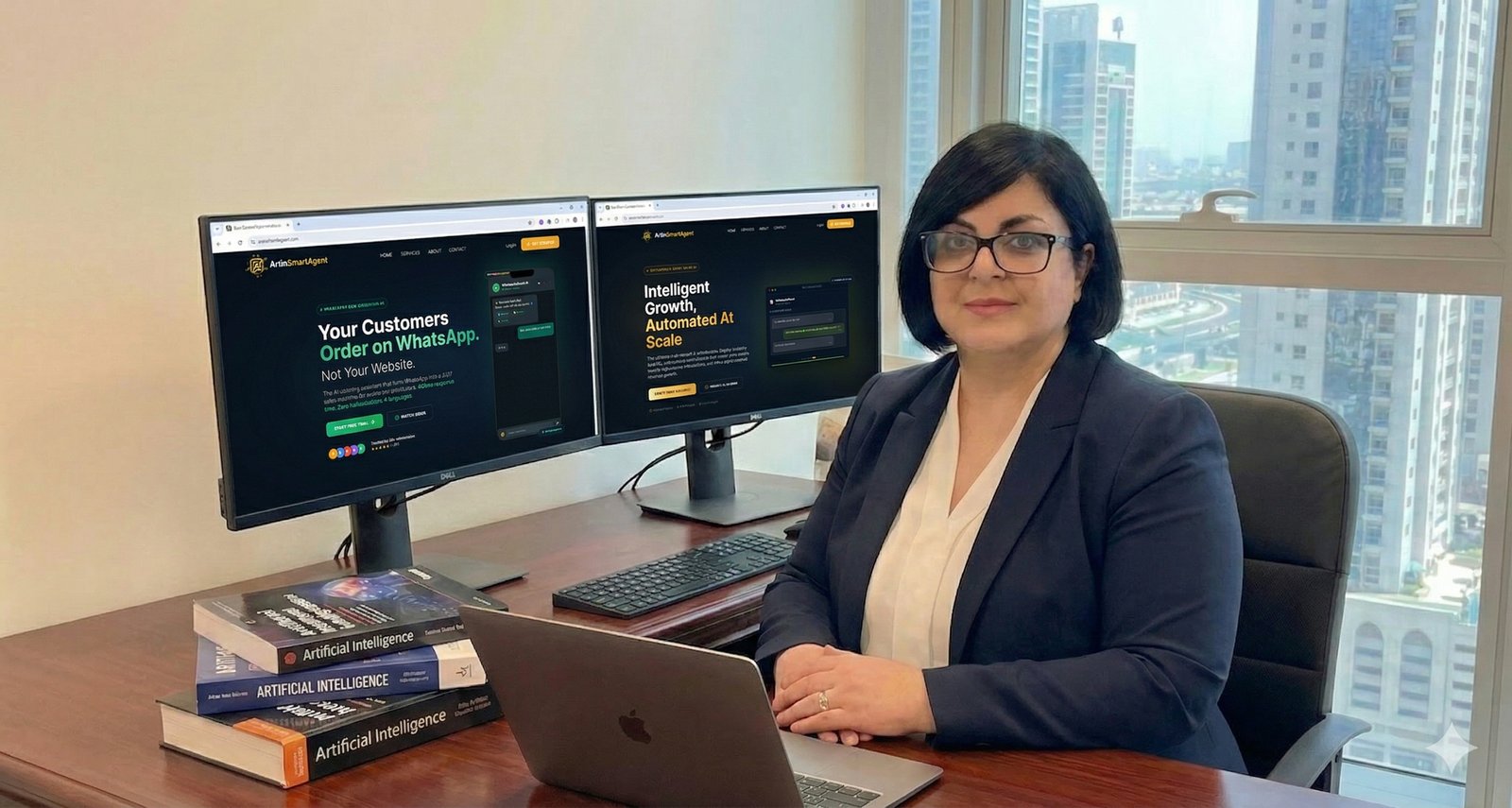
The Dubai skyline, ever-reaching, mirrors the ambitions of its entrepreneurs. For nearly two decades, I’ve had a front-row seat to this city’s relentless drive for innovation, from the early days of basic websites to the complex AI landscapes we navigate today. I’ve seen businesses rise and fall, not just on the strength of their ideas, but on their ability to adapt and scale. And in this journey, I’ve watched countless business owners grapple with a familiar foe: the endless cycle of manual tasks, the “botsitting” that drains resources and stifles growth. But what if I told you there’s a new paradigm emerging, one that frees you from this grind and propels your business into an era of true autonomy and intelligence through advanced **business process automation**? Welcome to the world of agentic AI, where your digital assistants don’t just follow rules, they think, plan, and execute, making this the ultimate **AI automation tutorial** for Dubai businesses.
The Dubai Entrepreneur’s Dilemma: From Manual Grind to AI Promise in Business Process Automation
My journey in Dubai began long before the shimmering towers dominated the horizon, back when “digital transformation” was a buzzword whispered in hushed tones, mostly about getting a basic website online. It was 2005, and I was fresh off the boat, diving into web development in a city that was just beginning to understand the internet’s power. I remember working with a local textile wholesaler in Deira, building their first online catalogue. Their biggest challenge wasn’t just getting products listed, but handling the sheer volume of inquiries, orders, and follow-ups, all done manually. Every email, every phone call, every stock check was a human touchpoint, creating bottlenecks that limited their growth, no matter how good their products were. This highlighted the urgent need for effective **business process automation**.
Fast forward a few years, and the first wave of automation tools started appearing. We built rule-based chatbots for customer service, email autoresponders, and basic CRM integrations. These were exciting times, promising to free up staff. But the reality often fell short. These early “bots” were rigid. They could answer FAQs if phrased precisely, but any deviation, any nuance, and they’d break down, requiring immediate human intervention. We called it “botsitting” – the constant monitoring, tweaking, and stepping in to save a conversation or complete a task the bot couldn’t handle. It was like having a toddler assistant; helpful for simple tasks, but demanding constant supervision. A real estate agency client, for instance, used a basic bot to answer questions about property listings. It could tell you the number of bedrooms, but if a prospect asked, “Is this property suitable for a family with two small children near a good school?”, the bot would falter, and a human agent would have to jump in, often restarting the conversation from scratch. The promise of automation was there, but the execution was still very much tethered to human oversight.
This experience, watching businesses in Dubai struggle with the limitations of early automation, fueled my drive to seek smarter solutions. The manual grind, whether it was processing invoices, qualifying leads, or scheduling appointments, was a universal pain point. I’ve seen countless SMEs hire more staff simply to keep up with the volume of repetitive tasks, rather than focusing on strategic growth. The inefficiency was palpable. Imagine a thriving logistics company, managing hundreds of deliveries daily, with their dispatch team manually updating spreadsheets and sending individual SMS notifications. Any delay, any change, and the entire system would groan under the pressure. This “botsitting” model, where automation was a fragile tool needing constant human care, was simply not scalable for the ambitious businesses I saw flourishing in Dubai. It created a ceiling on growth, turning what should have been empowering technology into another demanding taskmaster. The inherent inefficiencies and scalability issues meant that while these tools offered a glimpse of the future, they were far from the autonomous, intelligent partners businesses truly needed to thrive in a competitive market like Dubai, especially when considering comprehensive **business process automation** strategies and an effective **AI automation tutorial**.
My Journey: 18 Years Witnessing Dubai’s Digital Transformation
- From building static websites for local businesses in the early 2000s to implementing complex AI-driven solutions today, my journey has been a testament to Dubai’s rapid digital evolution.
- I remember a time when even a simple online contact form was considered cutting-edge. Now, our clients expect intelligent systems that can understand, adapt, and act.
- The concept of ‘botsitting’ emerged from these early experiences – where a basic bot would handle predefined queries, but any deviation required a human to take over, making automation a constant supervision task rather than a true liberation.
- It was the frustration of seeing clients limited by manual processes, struggling to scale beyond human capacity, that truly sparked our drive to explore more autonomous and intelligent solutions.
Understanding ‘Botsitting’: The Pre-Agentic Era
- ‘Botsitting’ refers to the era of automation where tools were rigid, rule-based, and necessitated constant human monitoring and intervention to prevent errors or handle exceptions.
- Think of a lead qualification bot that only understands “price” or “location.” If a potential customer asks about “sustainable building materials” or “community amenities,” the bot would simply respond with “I don’t understand” and hand off to a human, interrupting the flow and requiring manual follow-up.
- Common manual tasks in Dubai SMBs that exemplified ‘botsitting’ included:
- Manually sifting through hundreds of social media comments and DMs to find genuine leads.
- Scheduling and rescheduling appointments based on back-and-forth email chains.
- Basic customer service follow-ups, like sending payment reminders or checking delivery status, often done with templated emails that required manual triggering.
- Updating inventory across multiple sales channels after every sale, leading to frequent stock discrepancies.
- Lack of integrated **business process automation** leading to manual handoffs between departments.
- The inherent inefficiencies meant that while these tools offered some relief, they never truly freed up human potential. They merely shifted the burden of tedious work from one form to another, creating scalability issues as businesses grew.
The Promise of Agentic AI: Beyond Simple Automation for Business Process Automation
- Agentic AI represents a paradigm shift. It’s not just about automating ‘if X, then Y’; it’s about defining a goal ‘achieve Z’ and letting the AI agent figure out the best steps, tools, and information needed to get there, autonomously.
- These agents are goal-oriented, possess memory, can plan, execute multi-step tasks, and crucially, self-correct when faced with unexpected situations. They are context-aware and can reason through complex scenarios.
- For a real estate agent, an agentic AI wouldn’t just answer “What’s the price?”; it could understand “I’m a young professional looking for a modern apartment in Downtown Dubai, walking distance to the Metro, with a budget of 1.5M AED,” then search listings, check public transport routes, and even suggest viewing times, all without human input.
- This evolution moves us firmly into a new era of AI automation services, transforming **business process automation** from rigid scripts to dynamic, intelligent operations that truly empower businesses to scale and innovate.
Decoding Agentic AI: What It Is and Why It Matters for Your SME’s Business Process Automation
When I talk about agentic AI, I’m not just referring to a fancier chatbot. This is a fundamental shift, moving from a system that merely follows instructions to one that understands objectives and proactively works towards them. Think of it this way: a traditional script is like a simple tool, say a hammer. It does one thing, and it does it well, but you have to tell it exactly when and how to swing. An agentic AI, on the other hand, is like a trained, proactive assistant. You tell it, “I need this wall built,” and it figures out which tools to use, how to measure, when to nail, and even anticipates potential issues, adjusting its plan as it goes. It possesses memory, allowing it to recall past interactions and apply that learning to future tasks. It can plan complex sequences of actions, break down large goals into smaller steps, and critically, learn from its successes and failures, continuously improving its performance. This inherent ability to learn and adapt is what truly distinguishes it from the rigid, ‘if-then’ logic of its predecessors, making it a powerful tool for **business process automation**.
For Dubai businesses, the “why now?” for agentic AI is compelling. This is a city that never sleeps, a global hub where competition is fierce, and customer expectations for 24/7, seamless service are incredibly high. Talent scarcity in certain sectors, coupled with the demand for multilingual capabilities, means that relying solely on human capital for repetitive tasks is becoming unsustainable. I recall a client, a high-end luxury car dealership in Sheikh Zayed Road, who was losing valuable leads because their sales team couldn’t respond to after-hours inquiries fast enough. A prospect might send a WhatsApp message at 10 PM, asking about a specific model’s features or financing options. By the time a human responded the next morning, that lead might have already reached out to a competitor. We implemented an agentic approach for their initial outreach and qualification. Instead of just answering FAQs, the AI agent could engage in a multi-turn conversation, understand the prospect’s preferences, check inventory in real-time, even pre-qualify them for a test drive, and schedule it directly into the CRM. This transformed their lead conversion rate, giving them a critical competitive edge. It’s about scaling expertise and presence, ensuring your business is always on, always smart, and always ready to engage, regardless of time zones or language barriers. This capability becomes a critical differentiator for businesses looking to scale and innovate in Dubai’s dynamic market through advanced **business process automation**.
Where does agentic AI truly shine? Consider advanced customer support that goes beyond simple FAQ answers. Imagine a customer service agent that can not only answer questions about a product but also process returns, troubleshoot complex technical issues by accessing knowledge bases, and even suggest personalized upsells based on past purchase history and current needs. Or take personalized lead nurturing: instead of generic email sequences, an AI agent can analyze a lead’s interactions, interests, and industry trends to deliver hyper-relevant content and conversation points, dynamically adjusting its strategy based on real-time engagement. In data analysis, agentic AI can sift through vast datasets, identify patterns, and generate actionable insights that would take human analysts weeks to uncover. For a major logistics company in Jebel Ali, we’re exploring how an agentic system could optimize supply chain routes in real-time, reacting to traffic, weather, and even geopolitical events to reroute shipments and minimize delays. A particularly powerful example comes from a prominent real estate agency in Business Bay. Their previous lead qualification involved a human agent manually calling prospects who filled out a form. Now, an AI agent engages prospects via chat, asking nuanced questions not just about budget and desired number of bedrooms, but about lifestyle preferences, commute times, and even preferred community amenities. It can then cross-reference these against available properties, pre-qualify the lead based on a deeper understanding of their needs, and suggest specific properties or even schedule a viewing directly with the most suitable human agent. This isn’t just automation; it’s intelligent, autonomous decision-making that significantly improves efficiency and customer satisfaction.
The Core Concept: From Scripts to Smart Agents
- Traditional scripts operate on a rigid ‘if-then’ logic. They are excellent for predictable, repetitive tasks but lack flexibility and understanding.
- Intelligent AI agents, however, are goal-oriented. You give them an objective, and they plan, execute, monitor, and self-correct to achieve it.
- Key differentiating capabilities of agents include:
- Memory: They can remember past conversations and interactions, providing context for future responses.
- Planning: They can break down complex goals into a series of smaller, actionable steps.
- Tool Use: They can access and utilize external tools and APIs (e.g., CRMs, databases, booking systems) to gather information or perform actions.
- Reasoning: They can process information, draw inferences, and make decisions based on context and available data.
- Self-Correction: If a step fails or new information emerges, they can adapt their plan to stay on track towards the goal.
- The analogy is clear: a simple tool (script) requires constant human direction. A trained, proactive assistant (agent) understands the objective and largely manages itself, freeing up human capacity for higher-value work. This fundamental shift towards intelligent agents is revolutionizing **business process automation**.
The ‘Why Now?’ for Dubai Businesses
- Dubai’s hyper-competitive landscape demands speed, efficiency, and a 24/7 presence. Agentic AI allows businesses to meet these demands without unsustainable increases in overhead.
- The city’s diverse, multilingual population requires services that can cater to various linguistic needs, which AI agents can handle far more effectively than a human team.
- Talent scarcity in critical roles means businesses need to amplify their existing workforce, allowing humans to focus on strategic, creative, and empathetic tasks.
- A client in the e-commerce sector, specializing in luxury goods, was struggling with conversion rates due to delayed responses to customer queries during peak shopping hours. Implementing an agentic AI for initial customer engagement and personalized product recommendations led to a 15% increase in qualified leads and a 10% boost in sales within three months, showcasing AI automation services as a critical differentiator for modern **business process automation**.
Real-World Scenarios: Where Agentic AI Shines Brightest
- Advanced Customer Support: An AI agent can handle complex queries, process returns, provide real-time order updates by integrating with logistics systems, and even offer proactive assistance based on predictive analytics.
- Personalized Lead Nurturing: Instead of generic drip campaigns, an agent can engage prospects in dynamic conversations, answering specific questions, providing tailored content, and guiding them through the sales funnel based on their unique journey.
- Dynamic Marketing Campaigns: Agents can analyze market trends, consumer behavior, and campaign performance to suggest real-time adjustments to ad spend, targeting, and messaging for optimal ROI.
- Intricate Data Analysis: Beyond just dashboards, agents can actively monitor data streams, identify anomalies, and generate reports with actionable insights, alerting human teams to critical shifts.
- Supply Chain Optimization: An agent can monitor inventory levels, predict demand fluctuations, negotiate with suppliers, and even suggest alternative shipping routes in response to real-time events, minimizing disruptions and costs.
- A concrete Dubai example: A prominent real estate agency uses an AI agent on their website and WhatsApp to pre-qualify leads. Instead of just basic questions, the agent engages in a nuanced conversation, understanding preferences like “a quiet neighborhood, close to a park, with pet-friendly policies,” then cross-references this with their CRM and available listings, even suggesting specific properties and scheduling viewings for human agents. This moves beyond simple form fills to genuine, context-aware lead understanding, a key aspect of effective **AI agent development guide** principles.
Building Your First AI Agent: A Comprehensive WhatsApp Business Bot Setup Tutorial
In Dubai, and indeed across the entire MENA region, WhatsApp isn’t just another messaging app; it’s the digital heartbeat of daily communication. From ordering groceries to negotiating multi-million dollar deals, businesses and individuals rely on it constantly. This omnipresence makes an intelligent **WhatsApp business bot setup** not just an advantage, but a strategic imperative for any business looking to engage with its customers effectively. This **AI automation tutorial** will show you how. Imagine the convenience for your customers: instant answers, booking confirmations, or even personalized product recommendations, all within an app they already use dozens of times a day. For your business, it means unparalleled accessibility, 24/7 support, and the ability to scale customer engagement without proportional increases in staffing. When we help a client implement a WhatsApp AI agent, the immediate impact on customer satisfaction and lead response times is often dramatic. It’s about meeting your customers where they are, providing seamless support that feels personal and immediate, breaking down communication barriers that might exist with traditional channels like email or phone calls.
So, how do you go from concept to a conversational AI that truly functions as an agent? The first step is crucial: define your agent’s specific, measurable goal. Are you building a bot to handle FAQs, qualify leads, book appointments, or provide real-time order updates? Let’s say our goal is lead qualification for a luxury car rental company in Business Bay. Next, consider your platform choices. For WhatsApp, you’ll need access to the WhatsApp Business API, typically through a provider like Twilio, MessageBird, or directly via Facebook’s partners. For the AI brain, you can opt for low-code AI chatbot builders like Dialogflow, Rasa, or even custom logic integrated with Large Language Models (LLMs) like OpenAI’s GPT series. Let’s outline a conceptual workflow:
Conceptual WhatsApp AI Agent Workflow (Lead Qualification):
- Trigger: New incoming WhatsApp message to your business number.
- Intent Recognition: AI analyzes the message to understand user’s intent (e.g., “Inquiry about car rental,” “Booking a car,” “General question”).
- Information Gathering (Agentic Loop):
- If “Inquiry about car rental”: Agent asks clarifying questions (e.g., “What type of car are you looking for?”, “What are your desired dates?”, “Do you have a budget in mind?”).
- Agent uses its memory to recall previous parts of the conversation.
- Agent may use an external tool (e.g., an inventory API) to check car availability based on user input.
- Dynamic Response Generation: Based on collected information and intent, AI generates a personalized response (e.g., “We have a Mercedes S-Class available for your dates. Would you like to know more about its features or discuss pricing?”).
- Lead Qualification & Handover: If the lead meets predefined criteria (e.g., specified dates, budget within range), the agent qualifies them.
- Action: Agent updates the CRM with lead details and notifies a human sales agent to follow up.
- Feedback Loop: Monitor conversations, identify where the agent struggles, and use this data to fine-tune its understanding and responses.
This is where an AI automation tutorial truly begins to differentiate between a simple bot and an intelligent agent, laying the groundwork for a robust **WhatsApp business bot setup**.
To truly inject agentic capabilities, you need to go beyond basic FAQs. This means connecting your WhatsApp agent to external data sources and leveraging the power of LLMs. For instance, instead of just saying “We are open from 9 AM to 6 PM,” an agentic bot can connect to your inventory management system via an API. If a customer asks, “Is the latest iPhone 15 Pro Max in stock at your Dubai Mall branch?”, the bot doesn’t just give a generic answer. It queries your inventory database, checks the specific branch, and responds with real-time stock availability, even offering to reserve one for pickup. This demonstrates a true **AI agent development guide** in action. It’s about empowering the bot to not just retrieve static information, but to actively interact with your business systems, pull live data, and make informed decisions. Integrating LLMs allows for dynamic, context-aware responses, enabling the bot to handle ambiguity, understand nuanced queries, and maintain a natural, flowing conversation, even if the user deviates from a script. This capability to access and act upon real-time data is what transforms a simple chatbot into a powerful, autonomous business agent, capable of performing complex tasks with minimal human oversight, a crucial step in any successful **AI agent development guide**.
The Unparalleled Power of WhatsApp in the MENA Region
- WhatsApp isn’t just popular; it’s practically the default communication channel for personal and business interactions in Dubai and the wider MENA region. Its ubiquity means your customers are already there, making it an ideal platform for engagement.
- Implementing an intelligent **WhatsApp business bot setup** is not merely an advantage; it’s a necessity for businesses aiming for high customer engagement and accessibility in this market. For businesses in Dubai, mastering **WhatsApp business bot setup** is a game-changer for customer engagement.
- The impact is profound: 24/7 immediate support, multilingual capabilities catering to Dubai’s diverse population, and a familiar, convenient interface for customers, leading to higher satisfaction and faster issue resolution.
Step-by-Step: From Concept to Conversational AI (Practical Workflow)
- Define the Goal: Clearly articulate what you want your agent to achieve (e.g., “Automate 70% of lead qualification calls for property inquiries”).
- Platform Selection:
- WhatsApp API Provider: Twilio, 360dialog, or a Facebook partner.
- AI Brain: Google Dialogflow, IBM Watson Assistant, Rasa, or integrating directly with large language models (LLMs) like OpenAI GPT.
- Initial Conversational Flow Design: Map out typical user journeys. What questions will they ask? What information do you need from them? How should the bot respond?
// Simplified Pseudo-code for a basic WhatsApp AI Agent function handleWhatsAppMessage(message, senderId) { const userIntent = detectIntent(message); // Using an LLM or NLU service const conversationHistory = getConversationHistory(senderId); if (userIntent === "product_inquiry") { const productDetails = extractProductDetails(message); const stockInfo = queryInventoryAPI(productDetails); // External API call if (stockInfo.available) { sendMessage(senderId, `Yes, we have ${productDetails.name} in stock. Would you like to proceed?`); } else { sendMessage(senderId, `Unfortunately, ${productDetails.name} is currently out of stock.`); } } else if (userIntent === "booking_request") { const bookingDetails = extractBookingDetails(message); const availability = queryBookingSystem(bookingDetails); // External API call if (availability.slots) { sendMessage(senderId, `We have slots available on ${availability.slots[0]}. Shall I book it for you?`); } else { sendMessage(senderId, `No slots available for your preferred time. Can I suggest ${availability.alternative}?`); } } else { sendMessage(senderId, "I'm sorry, I didn't understand. Can you rephrase?"); } saveConversationHistory(senderId, message); } - Intent Recognition & Dynamic Responses: Train your AI to recognize various intents (e.g., ‘price query,’ ‘booking request,’ ‘technical support’) and craft responses that are dynamic, personalized, and context-aware.
- Iterate & Refine: Launch with a narrow scope, gather user feedback, and continuously refine your agent’s understanding, responses, and capabilities. This iterative approach is a cornerstone of any effective AI automation tutorial, especially for a successful **WhatsApp business bot setup**.
Beyond Basic FAQs: Injecting True Agentic Capabilities
- External API Integration: Connect your bot to your CRM (e.g., Salesforce, Zoho), ERP (e.g., SAP), inventory systems, booking platforms, or payment gateways. This allows the agent to fetch and update real-time data.
- LLM Integration for Context: Leverage LLMs (e.g., OpenAI’s GPT-4, Google’s Gemini) for natural language understanding, response generation, handling ambiguity, and maintaining conversational context across multiple turns.
- Example: A car dealership’s WhatsApp bot. Instead of just “What are your hours?”, an agentic bot can respond to “Is the new 2024 Land Cruiser available for a test drive this weekend at your Al Quoz branch?” It connects to the dealership’s inventory system and booking calendar, checks availability, and can even suggest alternative models or schedule the test drive directly, showcasing an advanced AI agent development guide in action, particularly for a sophisticated **WhatsApp business bot setup**.
- This level of integration transforms a simple Q&A bot into a proactive, problem-solving agent that can truly streamline complex business operations.
Orchestrating Intelligence: Mastering n8n Workflow Automation for Agentic Tasks
Building an intelligent AI agent is one thing; making it a seamlessly integrated, powerful component of your entire business ecosystem is another. This is where tools like n8n come into play. For years, I’ve seen Dubai businesses grapple with siloed systems – a CRM here, an accounting package there, a WhatsApp bot somewhere else, all operating independently. The result? Manual data entry, missed handoffs, and a fragmented customer journey. n8n is the glue, the middleware, the orchestrator that connects these disparate services, allowing your AI agents to interact with your existing tools, databases, and communication channels effortlessly. It’s self-hostable and open-source, giving businesses incredible flexibility and control over their data and workflows. For a client running a busy event management company in DIFC, their biggest headache was coordinating lead capture from various sources (website, social media, WhatsApp), updating their CRM, assigning leads to sales agents, and then triggering a personalized follow-up email sequence. Before n8n, this was a multi-person, multi-hour daily task, prone to errors. With n8n, we built a workflow that automated the entire process, reducing lead response time from hours to minutes and improving conversion rates significantly. It transformed their operational efficiency, allowing their team to focus on event planning and client relationships, not data entry. This powerful capability of AI automation services is precisely why n8n is a cornerstone of effective **business process automation**, enabling seamless **n8n workflow automation** across your enterprise.
Let’s walk through a practical **n8n workflow automation** example, demonstrating how to integrate your AI agent with backend systems. Imagine our luxury car rental AI agent, having successfully qualified a lead via WhatsApp. What happens next? This is where n8n steps in to orchestrate the backend processes. The WhatsApp message (now processed by our AI) triggers an n8n webhook. This webhook node then acts as the starting point. The flow might look something like this:
N8n Workflow: Agentic Lead Handoff & Follow-up
- WhatsApp Webhook Trigger: An incoming message from our AI agent (via Twilio or similar) signals a qualified lead. The payload contains lead details (name, contact, desired car, dates, budget).
- AI Processing (Optional, if not done externally): A “Code” node or an “HTTP Request” node calls an external LLM API (e.g., OpenAI GPT-4) to further categorize the lead or generate a personalized summary based on the conversation history.
- CRM Update: An “ActiveCampaign” or “Salesforce” node creates a new contact or updates an existing one with all the lead details, tags them as “AI Qualified – Luxury Car Rental,” and assigns them to the appropriate sales agent.
- Internal Notification: A “Slack” or “Microsoft Teams” node sends an immediate notification to the sales team channel: “New qualified lead from WhatsApp: [Lead Name] interested in [Car Type] for [Dates]. Check CRM for details.”
- Personalized Email Follow-up: An “Email Send” node (e.g., Gmail, SendGrid, Mailchimp) sends a personalized follow-up email to the lead, thanking them for their interest, summarizing their preferences, and introducing the human sales agent who will be in touch shortly. The email content can be dynamically generated using the AI output from step 2.
- Calendar Event Creation: A “Google Calendar” node (optional) can even suggest or create a provisional follow-up meeting for the sales agent to ensure timely contact.
Setting up nodes in n8n is intuitive. You drag and drop, connect them, and configure each with API keys and specific data mappings. The key is to understand how data flows from one node to the next. For instance, the output of your WhatsApp webhook (the message content) becomes the input for your AI processing node, and the AI’s output (qualified lead data) becomes the input for your CRM update. Handling data is critical; n8n’s data mapping features allow you to transform and manipulate data between different systems, ensuring compatibility. We often use “Set” nodes to structure data correctly before sending it to a CRM, or “If” nodes to create conditional pathways – for example, sending a different email if the lead budget is above a certain threshold. This ensures reliable execution and robust AI automation services, making n8n an indispensable tool for complex **business process automation** and advanced **n8n workflow automation**.
Beyond basic sequencing, n8n truly shines in advanced agentic scale. Imagine managing your AI agent’s memory. You could use n8n to integrate with a vector database (like Pinecone or Weaviate) to store and retrieve conversational history, allowing your agent to maintain context over long periods. Dynamic routing is another powerful feature. Based on an AI’s output (e.g., sentiment analysis, intent confidence), n8n can route a conversation to a human agent, trigger a specific marketing campaign, or even initiate a complex refund process. We used this for a WholesaleOS platform client where their B2B Smart Ordering system needed to handle diverse customer queries. If an AI agent detected a high-value order or a complex technical issue, n8n would automatically escalate it to a specialized account manager via a Microsoft Teams notification, ensuring VIP treatment. Building complex conditional logic within n8n means your agents aren’t just reacting; they’re making informed decisions based on a multitude of factors, interacting with multiple tools simultaneously. For persistent AI agents, n8n can manage and update a customer’s profile across various systems, ensuring that any interaction, whether via WhatsApp, email, or your website, is informed by a complete and up-to-date history. This comprehensive approach to AI automation services is what makes n8n a game-changer for Dubai businesses striving for truly intelligent operations and advanced **n8n workflow automation**.
Why n8n? The Glue for Your AI Ecosystem
- n8n is an open-source, self-hostable, and highly flexible automation tool that acts as the central orchestrator for all your AI components and existing business systems.
- It solves the problem of siloed data and disconnected applications, allowing your AI agents to seamlessly interact with CRMs, databases, communication channels, payment gateways, and more.
- For a Dubai-based trading company, their sales team struggled with manual data entry from various lead sources into their CRM, often leading to delays and errors. n8n was implemented to automatically capture leads from their website, social media, and a new WhatsApp bot, enriching the data with public company information, and then accurately populating their Zoho CRM, saving over 15 hours of manual work per week and significantly improving lead response times.
- It’s the “middleware” that brings true **business process automation** to life, enabling smooth data flow and action execution across your entire digital landscape, a critical aspect of mastering **n8n workflow automation**.
Building an Agentic Workflow: A Practical n8n Example
- Scenario: An AI agent on WhatsApp successfully qualifies a lead for a luxury car rental. n8n then takes over to manage the backend processes.
- n8n Flow Description:
- Node 1: WhatsApp Webhook Trigger: This node listens for incoming data from your WhatsApp API provider (e.g., Twilio) when the AI agent identifies a qualified lead. The payload contains all the collected lead information.
- Node 2: OpenAI (HTTP Request Node): Calls the OpenAI API (or another LLM) to take the raw conversation history and summarize key client needs or preferences, and extract structured data like desired car model, rental dates, and budget. This ensures cleaner data for the CRM.
- Node 3: CRM (e.g., Salesforce, HubSpot) Node: Uses the structured data from OpenAI to create a new lead or update an existing contact in your CRM. It can also assign the lead to a specific sales agent based on rules (e.g., region, car type).
- Node 4: Slack/Teams Notification Node: Sends an instant message to the sales team’s channel, alerting them to the new qualified lead with a summary of their requirements and a direct link to the CRM entry.
- Node 5: Email Send Node (e.g., Gmail, SendGrid): Sends a personalized “Thank You” email to the customer, confirming their inquiry, reiterating their preferences, and introducing the sales agent who will contact them shortly. The email content can dynamically pull data from the CRM and the OpenAI summary.
- Practical Tips:
- API Keys: Store sensitive API keys securely in n8n’s credentials manager.
- Error Handling: Implement error branches (e.g., “On Error” connections) to gracefully handle API failures or unexpected data.
- Data Transformation: Use “Set” or “Code” nodes to reformat data between nodes to match different API requirements.
- Testing: Use n8n’s “Test Workflow” feature extensively to ensure each step works as expected before deploying to production.
- This is a prime example of effective **n8n workflow automation** in action. This detailed example serves as a mini **AI automation tutorial** for integrating AI with your backend systems.
Advanced n8n for Agentic Scale: Data Handling and Decision Making
- Agent Memory Management: Integrate n8n with vector databases (e.g., Pinecone, Milvus) or traditional databases to store and retrieve long-term conversational memory, enabling agents to maintain context over days or weeks.
- Dynamic Routing: Based on the AI’s output (e.g., sentiment score, specific intent detected), n8n can dynamically route workflows. For example, if a customer expresses frustration, n8n can immediately escalate to a human support agent and prioritize their queue.
- Complex Conditional Logic: Build intricate ‘If/Else’ or ‘Switch’ nodes to create advanced decision trees. An agent could, for instance, check a customer’s loyalty status in your database, then offer a personalized discount via a payment gateway if certain conditions are met, otherwise route them to a human for manual review. This is crucial for truly intelligent B2B Smart Ordering systems. This level of integration is a key aspect of advanced **n8n workflow automation**.
- Example: Persistent Agent Interaction: An n8n workflow could capture every customer interaction (WhatsApp, email, website chat), use an AI to summarize it, and then store it in a centralized customer profile. When the customer interacts again, the AI agent, via n8n, retrieves this history, ensuring a seamless and informed conversation, regardless of the channel or time elapsed. This capability ensures that every interaction builds on the last, fostering deeper customer relationships and highly effective AI automation services, particularly through sophisticated **n8n workflow automation**.
The AI Agent Development Guide: Principles for Sustainable Success
Embarking on **AI agent development** isn’t just about coding; it’s about strategic foresight and ethical responsibility. This **AI agent development guide** emphasizes clarity. The first, and often most overlooked, step is clearly defining your agent’s persona, goals, and, critically, its ethical boundaries. Who is this agent? What is its voice? Is it formal, friendly, authoritative? This persona must align perfectly with your brand. More importantly, what specific, measurable problem is it solving? Don’t build an agent for the sake of having one. Start with a narrow, well-defined task, like automating appointment bookings for a clinic in Dubai Healthcare City, rather than trying to create a general-purpose assistant on day one. For instance, define that the agent’s goal is “to book 80% of initial consultations within 2 minutes of inquiry, providing accurate schedule information.” Setting ethical boundaries is paramount, especially in a diverse market like Dubai. This means ensuring data privacy (adhering to local regulations), being transparent about the AI’s nature (don’t mislead customers into thinking they’re talking to a human), and actively working to avoid bias in its interactions and decision-making. We spend considerable time with clients defining these parameters, as they form the bedrock of a trustworthy and effective AI solution. A practical tip I always share: begin with a task that is repetitive, rule-based (even if complex), and has clear success metrics. This allows for focused development and easier iteration.
At ArtinWebs, our approach to agent evolution is fundamentally iterative and agile. We understand that AI agents are not ‘set it and forget it’ solutions. They are living systems that require continuous feedback and fine-tuning. We start with a Minimum Viable Agent (MVA) – a basic version capable of performing its core function. Then, we deploy it, carefully monitor its performance, and gather data from real-world interactions. Where did it succeed? Where did it struggle? What phrases did users use that it didn’t understand? This data feeds back into the development cycle, allowing us to refine its intent recognition, improve its response generation, and expand its knowledge base. I remember a project for a large educational institution in Academic City where their initial AI agent struggled with nuanced inquiries about course prerequisites and equivalencies. Through iterative adjustments, feeding it more specific training data, and fine-tuning its LLM prompts based on thousands of student interactions, the agent evolved. Within six months, it was handling over 60% of complex student inquiries autonomously, significantly reducing the workload on their admissions team and providing a much faster, more consistent experience for prospective students. This continuous learning and adaptation are what truly unlock the power of agentic AI. It’s an ongoing journey of optimization, a critical component of any comprehensive **AI agent development guide** and a successful **AI automation tutorial**.
The ultimate goal of any AI investment is to deliver tangible value. Measuring success and quantifying ROI for your agentic investments is crucial for demonstrating that value to stakeholders and ensuring continued support. Key metrics we track include: significant improvements in response times (e.g., reducing average lead response from 3 hours to 30 seconds), increased resolution rates (the percentage of customer issues resolved autonomously by the agent), and quantifiable cost savings from automating tasks (e.g., reducing the need for 2 full-time customer service agents). Beyond these, we look at lead conversion rates (how many AI-qualified leads become customers), and perhaps most importantly, customer satisfaction scores (CSAT) and Net Promoter Scores (NPS), as an efficient agent can dramatically enhance the customer experience. For a logistics client in Jebel Ali, their agentic system for tracking and managing delivery inquiries reduced inbound calls by 40% and improved customer satisfaction by 15% within its first year, representing a clear ROI through operational efficiency and enhanced customer loyalty. Providing clear, data-driven evidence of these benefits is paramount, turning abstract technological investment into a concrete business advantage. This detailed tracking and reporting form a vital part of any effective AI agent development guide, ensuring that every AI initiative contributes directly to your bottom line and enhances your overall **business process automation**.
Defining Your Agent’s Persona, Goals, and Ethical Boundaries
- Clear Objectives: Start by defining a precise, measurable goal for your AI agent. For example, “Reduce manual processing time for B2B order inquiries by 50% using an agentic system on the WholesaleOS platform.” This **AI agent development guide** emphasizes starting with clear, measurable goals.
- Brand Persona: Develop a distinct personality for your agent that aligns with your brand voice – friendly, authoritative, empathetic, efficient. This ensures a consistent customer experience.
- Ethical Considerations:
- Data Privacy: Ensure compliance with all local and international data protection regulations (e.g., GDPR, UAE data laws).
- Transparency: Clearly communicate to users that they are interacting with an AI.
- Bias Mitigation: Actively identify and address potential biases in training data and agent responses to ensure fair and equitable interactions.
- Practical Tip: Begin with a narrow, well-defined task with clear success criteria. Trying to make an agent do everything at once often leads to an underperforming, complex system. Focus on one high-impact area first, following this **AI agent development guide**.
Iterative Development: The ArtinWebs Approach to Agent Evolution
- AI agents are not static. They require an agile, iterative development process akin to continuous improvement.
- Our methodology involves:
- Minimum Viable Agent (MVA): Deploy a functional agent with core capabilities.
- Monitoring & Data Collection: Track interactions, identify failure points, and gather user feedback.
- Analysis & Refinement: Use the collected data to fine-tune the agent’s understanding, improve responses, and expand its knowledge.
- Re-deployment & Scaling: Implement improvements and gradually expand the agent’s scope or capabilities.
- A founder’s story: We launched an agent for a large Dubai government service provider to handle initial inquiries. It struggled with the sheer variety of questions initially. But by consistently analyzing failed interactions, retraining its models with specific regional terminology, and refining its ability to escalate complex cases, it evolved to handle over 75% of inquiries autonomously, significantly improving public service access and efficiency.
Measuring Success and Quantifying ROI for Your Agentic Investments
- Key Metrics to Track:
- Operational Efficiency: Reduced response times, decreased resolution times, lower staff workload hours.
- Cost Savings: Reduction in operational costs (e.g., staffing, manual processing).
- Customer Experience: Higher customer satisfaction (CSAT) scores, improved Net Promoter Scores (NPS).
- Business Growth: Increased lead conversion rates, higher sales volumes, improved upselling/cross-selling success.
- Quantifying Value: Translate these metrics into monetary terms. For example, “The agent saved 200 hours of staff time per month, equivalent to X AED in salaries, and increased lead conversion by Y%, generating an additional Z AED in revenue.”
- Stakeholder Communication: Regularly report these quantifiable benefits to demonstrate clear return on investment (ROI), ensuring continued buy-in and funding for your AI initiatives, which is a critical part of any effective AI agent development guide, ensuring that every AI initiative contributes directly to your bottom line and enhances your overall **business process automation**.
The Future of Work in Dubai: Embracing Agentic AI, Not Fearing It for Enhanced Business Process Automation
The conversation around AI often veers into fears of job displacement. But from my vantage point, having seen Dubai evolve for nearly two decades, I believe the narrative is shifting from “botsitting” to “agent wrangling” – from constant human intervention to strategic human-AI collaboration. This isn’t about replacing jobs wholesale, but transforming them. The repetitive, mundane tasks that drain human creativity and energy are precisely what agentic AI excels at. This frees up your team to focus on higher-value activities: strategic planning, complex problem-solving, building genuine customer relationships, and innovating. We’re already seeing new roles emerge: AI trainers who teach agents, AI ethicists who guide their moral compass, and “agent wranglers” who supervise, optimize, and expand AI capabilities. For Dubai’s diverse workforce, this represents a massive opportunity for upskilling. Imagine a customer service representative transitioning from answering repetitive FAQs to becoming an AI manager, designing conversational flows, analyzing agent performance, and handling only the most complex, empathetic customer interactions. This shift enhances human roles, making them more strategic and fulfilling, rather than making them redundant. It’s about leveraging AI to amplify human potential, not diminish it.
To truly embrace this future, reskilling your workforce is non-negotiable. It’s about empowering your team to collaborate effectively with AI, viewing it as a powerful co-worker rather than a threat. This involves developing “AI literacy” – understanding how AI works, its capabilities, and its limitations. More importantly, it means doubling down on uniquely human skills: critical thinking, creativity, emotional intelligence, empathy, and complex problem-solving. These are the skills that AI cannot replicate and will become even more valuable in an AI-augmented world. For example, we worked with a major hospitality group in Dubai, training their concierge staff not just on how to use their new AI booking agent, but on how to leverage its data to offer more personalized, memorable experiences. The AI handled the transactional bookings; the human concierge focused on surprising guests with bespoke recommendations. ArtinWebs actively helps clients prepare their teams for this AI-powered future through tailored training programs, workshops, and ongoing support, ensuring a smooth transition and maximum adoption. We believe that a well-prepared human workforce, working synergistically with intelligent AI agents, is the ultimate competitive advantage for any Dubai business.
At ArtinWebs, our vision for Dubai’s business landscape is one of profound synergy: human ingenuity amplified by intelligent automation. We envision a city where businesses, regardless of size, operate with unprecedented efficiency, where every customer interaction is personalized and immediate, and where innovation is not just encouraged, but intrinsically woven into the operational fabric. From streamlining a WholesaleOS platform to revolutionizing B2B Smart Ordering, agentic AI is the key. We are committed to fostering an ecosystem where businesses don’t just survive but thrive by leveraging the full potential of AI. Our 18+ years of experience in this dynamic market have shown us that Dubai is always at the forefront of embracing the future. With agentic AI, that future promises not just efficiency gains, but a complete reimagining of what’s possible, creating a more innovative, responsive, and globally competitive business environment for everyone. We see a Dubai where every entrepreneur has access to the tools and expertise needed to harness this powerful technology, transforming their challenges into opportunities for exponential growth and unparalleled service.
From ‘Botsitting’ to ‘Agent Wrangling’: New Human Roles Emerge
- The shift from basic automation to agentic AI means human roles are transforming, not simply disappearing.
- Repetitive, low-value tasks are increasingly handled by AI, freeing humans for strategic, creative, and empathetic work.
- New roles emerging include:
- AI Agent Managers: Overseeing agent performance, setting goals, and ensuring alignment with business objectives.
- AI Trainers: Providing feedback and data to improve agent understanding and responses.
- AI Ethicists: Ensuring AI systems are fair, transparent, and operate within ethical guidelines.
- ‘Agent Wranglers’: The human experts who step in for complex exceptions, refine AI processes, and handle nuanced interactions.
- This shift creates significant opportunities for upskilling the diverse workforce in Dubai, moving individuals into higher-value, more engaging positions.
Reskilling the Workforce: Empowering Your Team with AI Literacy
- It’s critical to train employees to collaborate with AI, not fear it. AI should be seen as a powerful tool that enhances human capabilities.
- Focus on developing uniquely human skills that complement AI:
- Strategic Thinking: Analyzing AI outputs to make informed business decisions.
- Creativity & Innovation: Using AI to generate new ideas and solutions.
- Emotional Intelligence: Handling complex customer emotions and building rapport.
- Complex Problem-Solving: Addressing issues that require human judgment and nuance.
- ArtinWebs provides tailored training programs for Dubai businesses, helping teams understand AI’s role, manage AI agents, and leverage AI insights to improve their performance and productivity.
ArtinWebs’ Vision: A Synergistic Future for Dubai Businesses
- Our philosophy is centered on human-AI collaboration: leveraging AI to augment human potential, leading to unprecedented efficiency and innovation.
- We envision a Dubai where businesses of all sizes can harness intelligent automation to provide 24/7 personalized customer experiences, optimize complex operations, and achieve sustainable growth.
- ArtinWebs is committed to being at the forefront of this transformation, empowering Dubai businesses with cutting-edge AI automation services, expertise, and a deep understanding of the local market’s unique dynamics for superior **business process automation**.
- We believe this synergistic approach will solidify Dubai’s position as a global leader in digital transformation and a hub for future-forward businesses.
Your Next Leap: Transforming Your Dubai Business with Agentic AI and Advanced AI Automation Tutorial
Recap of the Agentic Advantage for Dubai SMEs
From this comprehensive **AI automation tutorial**, the advantages are clear and profound: unparalleled operational efficiency, allowing you to do more with less; truly scalable operations that can grow without proportional increases in overhead; 24/7 customer service that meets the demands of a global market; and a distinct competitive edge that positions your business at the forefront of innovation. Agentic AI is not just about automating tasks; it’s about empowering your business with intelligent, autonomous operations that learn, adapt, and proactively work towards your strategic goals. It transforms the very fabric of how you operate, enabling a level of responsiveness and personalization that was once the exclusive domain of large corporations, making this an essential **AI agent development guide** for the region and a cornerstone of modern **business process automation**.
Getting Started with ArtinWebs: Your AI Journey Partner
The journey into agentic AI might seem daunting, but you don’t have to navigate it alone. With over 18 years of experience in Dubai’s digital landscape, ArtinWebs is uniquely positioned to be your trusted partner. We understand the local market, its nuances, and the specific challenges and opportunities faced by businesses here. We offer a comprehensive suite of AI automation services designed to guide you every step of the way, from **WhatsApp business bot setup** to advanced **n8n workflow automation** and a complete **AI agent development guide**:
- Initial Consultation & AI Readiness Assessment: We start by understanding your unique business needs, identifying pain points, and evaluating your current infrastructure to determine the best AI opportunities.
- Custom Solution Development: From designing bespoke WhatsApp AI agents to orchestrating complex n8n workflows and integrating with your existing systems, we build tailored solutions that deliver tangible results.
- Implementation & Training: Our team ensures seamless integration and provides comprehensive training for your staff, empowering them to work effectively alongside your new AI agents.
- Ongoing Support & Optimization: AI is an evolving field. We provide continuous monitoring, performance optimization, and iterative improvements to ensure your AI solutions remain cutting-edge and continue to deliver maximum ROI.
Don’t let the complexity of AI hold your business back. Let our expertise transform your operations, enhance your customer experience, and unlock new avenues for growth in Dubai’s competitive market.
The Road Ahead: Continuous Innovation and Adaptation
Embracing agentic AI is not a one-time setup; it’s an ongoing journey of continuous innovation and adaptation. The technological landscape is constantly shifting, and successful businesses will be those that remain agile, continuously optimizing their AI solutions, and adapting to new advancements. Dubai has always been a city that looks to the future, embracing change and striving for excellence. By integrating agentic AI into your core operations, you’re not just investing in technology; you’re investing in a mindset of proactive growth, sustained efficiency, and enhanced customer relationships. Let’s work together to ensure your business not only keeps pace with this future but leads the way, leveraging intelligent automation to reach new heights of success in this remarkable city, guided by this **AI automation tutorial** and robust **business process automation** strategies.
Ready to transform your Dubai business with intelligent AI automation? Stop ‘botsitting’ and start building a truly autonomous, efficient, and innovative future. Contact ArtinWebs today for a personalized consultation and discover how agentic AI can revolutionize your operations, including expert **WhatsApp business bot setup** and **n8n workflow automation**.
Frequently Asked Questions about AI Automation in Dubai
What is agentic AI and how does it differ from traditional automation?
Agentic AI goes beyond simple rule-based automation. Instead of just following ‘if X, then Y’ instructions, an agentic AI is goal-oriented. You define an objective, and the AI plans, executes multi-step tasks, uses tools, remembers context, and self-corrects to achieve that goal autonomously. Traditional automation is rigid and requires constant human oversight (‘botsitting’), while agentic AI is intelligent, adaptive, and proactive, significantly enhancing business process automation.
Why is a WhatsApp business bot setup crucial for businesses in Dubai?
WhatsApp is the dominant communication channel in the MENA region, including Dubai. An intelligent WhatsApp business bot setup allows businesses to engage customers 24/7, provide instant support, handle multilingual queries, and scale customer service without proportional staffing increases. It meets customers where they are, offering unparalleled accessibility and convenience, making it a strategic imperative for effective AI automation.
How does n8n workflow automation enhance AI agent capabilities?
n8n acts as the orchestrator, connecting your AI agents with all your existing business systems like CRMs, databases, and communication channels. While an AI agent provides the intelligence, n8n enables it to interact with real-world tools, automate backend processes (like updating leads, sending notifications, or triggering emails), and manage complex conditional logic. This seamless n8n workflow automation ensures your AI agents are fully integrated and can execute multi-step tasks across your entire digital ecosystem, crucial for comprehensive business process automation.
What are the key steps in an AI agent development guide?
A successful AI agent development guide involves several key steps: 1) Clearly defining the agent’s specific goal, persona, and ethical boundaries. 2) Selecting appropriate AI platforms (e.g., LLMs, NLU services) and API providers. 3) Designing the conversational flow and integrating external tools/APIs. 4) Iteratively developing, monitoring, and refining the agent based on real-world interactions. 5) Continuously measuring ROI and adapting to new advancements. ArtinWebs provides a comprehensive AI automation tutorial and support for this entire journey.
Will AI automation replace human jobs in Dubai?
The shift towards AI automation, particularly agentic AI, is transforming jobs rather than simply replacing them. AI excels at repetitive, mundane tasks, freeing human teams to focus on higher-value activities such as strategic planning, creative problem-solving, and building genuine customer relationships. New roles like AI trainers and “agent wranglers” are emerging. The focus is on upskilling the workforce to collaborate effectively with AI, amplifying human potential and making roles more strategic and fulfilling, as highlighted in our AI automation tutorial.