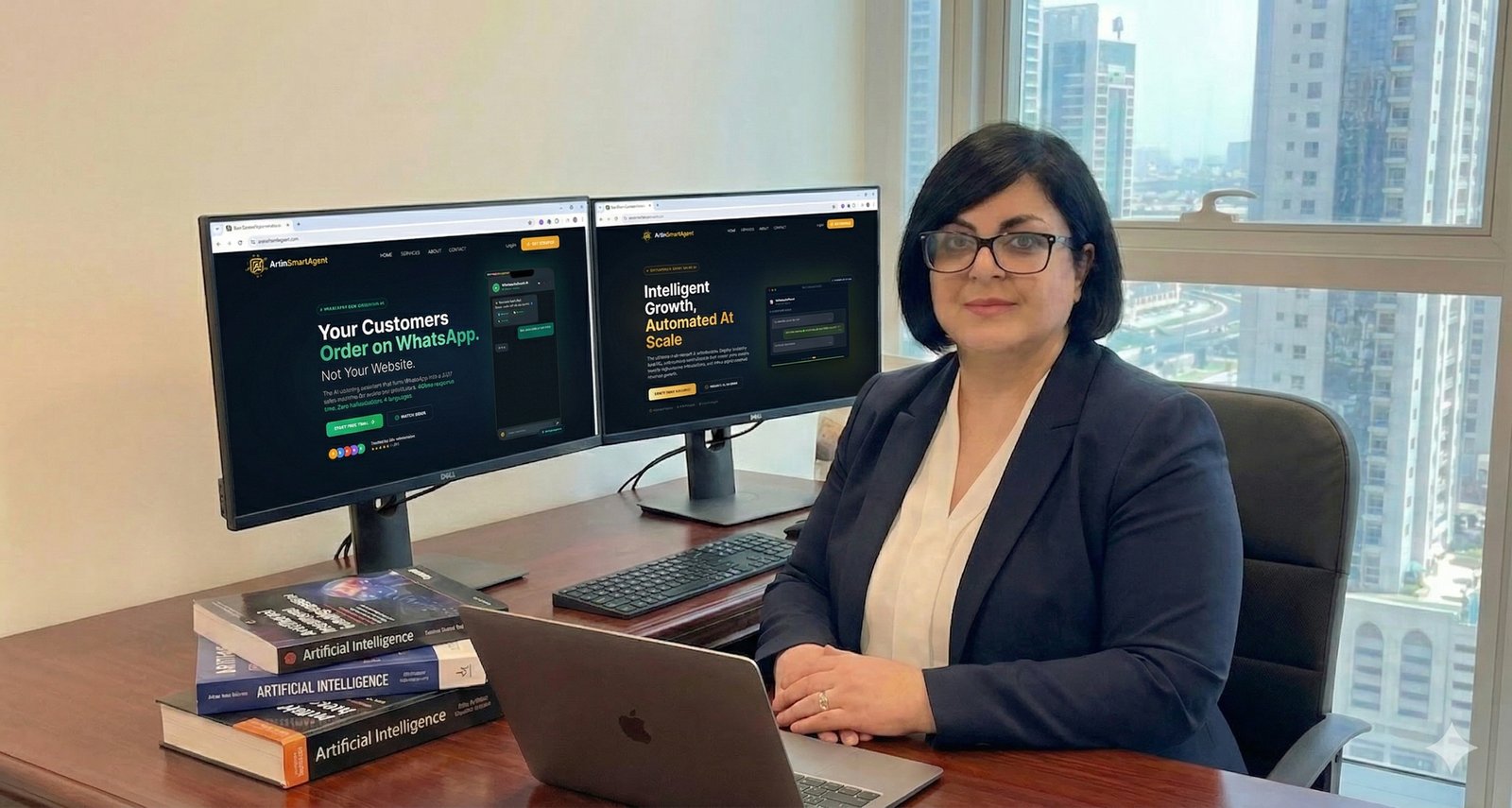
Dubai, a city built on ambition and foresight, has always been a beacon of innovation. From transforming vast deserts into bustling metropolises to pioneering smart city initiatives, the UAE has consistently demonstrated an uncanny ability to not just adapt to the future, but to actively build it. As an entrepreneur who’s had the privilege of witnessing and contributing to this incredible journey for the past 18 years, I’ve seen firsthand how technology has been the engine of this transformation. Now, we stand at the precipice of another monumental shift: the AI revolution. This isn't just another buzzword; it's a fundamental change in how businesses operate, compete, and grow, especially for the nimble Small and Medium-sized Businesses (SMBs) that form the backbone of Dubai’s vibrant economy. Forget the sci-fi fantasies; we're talking about tangible, practical applications that can redefine your daily operations, unlock unprecedented efficiency, and propel your business light-years ahead. Welcome to your practical AI automation tutorial for navigating Dubai's AI revolution, straight from the trenches of an agency that’s been building digital futures here for nearly two decades.
The Dubai Entrepreneur’s Edge: Navigating Tomorrow’s Business Landscape Today with AI Automation
Dubai is more than just a city; it's a mindset. A place where "impossible" is simply a challenge waiting to be overcome. This spirit has defined my journey since the early 2000s when I first started ArtinWebs. Back then, the digital landscape was nascent, but the hunger for innovation was palpable. We saw businesses, from traditional gold souk traders to burgeoning logistics companies, eager to embrace the internet, then e-commerce, and later, sophisticated digital marketing. It was a continuous cycle of learning, adapting, and innovating. What started with building basic websites quickly evolved into crafting complex enterprise resource planning (ERP) systems, then developing B2B e-commerce platforms like our own WholesaleOS platform, and now, harnessing the power of artificial intelligence and AI automation.
From Souks to Software: My 18-Year Journey in Dubai’s Tech Evolution and Business Process Automation
My journey began when the internet was still a novelty for many businesses here. I remember conversations with clients who initially questioned the need for a website, let alone online sales. Yet, Dubai's unique blend of tradition and forward-thinking vision meant that skeptics often became early adopters. I've witnessed the foundational shifts: from dial-up modems to fiber optics, from rudimentary online directories to sophisticated SEO strategies, and from manual data entry to integrated digital ecosystems. The constant has been the desire to do things better, faster, and smarter, driving the need for continuous business process automation.
When AI first started making headlines a few years ago, I heard the familiar whispers of skepticism: "It's just hype," "Too expensive for us," "Our customers prefer the human touch." But as someone who has seen every major tech wave break and reshape the market, I knew this was different. AI isn't just another tool; it's a paradigm shift. It's the culmination of years of data science, machine learning, and computational power finally reaching a point where it's accessible and practical for businesses of all sizes. I've seen local companies, from small trading firms in Deira to mid-sized logistics providers in Jebel Ali, cautiously dip their toes in, only to emerge with stories of dramatic efficiency gains and unexpected growth through AI automation. One client, a mid-sized distributor of FMCG goods, initially scoffed at the idea of using AI for inventory management. Six months after implementing a predictive analytics system, they reduced their stockouts by 18% and cut their carrying costs by 12% – figures that speak louder than any theoretical argument. These aren't just success stories; they're blueprints for how Dubai businesses can navigate tomorrow's landscape today.
The Silent Drain: Identifying Manual Bottlenecks in Your Business
In Dubai's hyper-competitive market, efficiency isn't a luxury; it's a necessity. Yet, many SMBs are unknowingly bleeding resources through manual, repetitive tasks that stifle growth and exhaust their teams. These bottlenecks are prime candidates for business process automation. Think about it:
- Lead Management: How many promising leads slip through the cracks because follow-ups are delayed, or information isn’t captured consistently? In a market where a quick response can mean the difference between winning and losing a client, manual lead qualification and distribution are significant bottlenecks. I’ve seen businesses lose 15-20% of potential sales simply due to slow response times or inconsistent follow-ups, especially in sectors like real estate or automotive. Effective business process automation can solve this.
- Customer Service: Are your valuable human agents spending hours answering the same ten FAQs? Are customers waiting too long for responses on WhatsApp or email? This not only frustrates customers but also diverts your team from handling complex, high-value inquiries. A construction materials supplier in DIP, for instance, found their customer service team spent 40% of their time on repetitive queries about product specifications and delivery statuses. This is where AI automation can step in.
- Repetitive Tasks: Data entry, report generation, invoice processing, basic HR queries – these are the silent drains on productivity. An accounting firm we worked with realized their junior staff were spending nearly two full days a week compiling basic financial reports that could be automated. This isn’t just about saving salaries; it’s about freeing up your talent to focus on strategic work that drives innovation and growth through smart business process automation.
The hidden costs of inefficiency are staggering: lost opportunities from missed leads, employee burnout leading to high turnover, stagnated growth as your team is too busy with administrative tasks to innovate, and ultimately, a diminished competitive edge. For a long time, businesses simply accepted these as unavoidable costs of doing business. But with AI, that narrative changes entirely. AI offers a powerful pathway to unlock this hidden potential, streamline operations, and scale your business without proportionally scaling your headcount or workload. It's about empowering your team to be more strategic, your customers to be more satisfied, and your business to be more resilient through comprehensive AI automation.
Your First Step into the Future: A Practical AI Automation Tutorial for SMBs
Stepping into the world of AI automation can feel daunting, like learning a new language. But just as you don't need to be a linguist to order a karak chai, you don't need to be a data scientist to start leveraging AI in your business. My goal here is to demystify it, to show you that the future is not only accessible but surprisingly practical, even for the smallest of businesses in Dubai. This section serves as your essential AI automation tutorial.
Demystifying AI: What AI Automation Truly Means for Your Small Business
Let's break down the jargon that often creates a barrier to entry. When we talk about AI, machine learning (ML), and automation, what do we actually mean for your business? This section serves as a mini AI automation tutorial to clarify.
- AI (Artificial Intelligence): Think of AI as the broad concept of machines performing tasks that typically require human intelligence. This can range from understanding natural language to recognizing patterns, making decisions, or solving problems. For an SMB, AI can be a smart virtual assistant that handles customer inquiries, a tool that predicts sales trends, or a system that automates content creation, all part of a broader AI automation strategy.
- Machine Learning (ML): This is a subset of AI where systems learn from data without being explicitly programmed. Instead of writing rules for every scenario, you feed the machine data, and it learns to identify patterns and make predictions. For instance, an ML model can learn to identify fraudulent transactions by analyzing historical data, or it can personalize product recommendations based on a customer’s past purchases, enhancing AI automation capabilities.
- Automation: This is the application of technology to perform tasks with minimal human intervention. AI and ML are often the brains behind sophisticated automation, allowing systems to not just follow rules but to make intelligent decisions. For your small business, automation means freeing up your team from repetitive chores, ensuring consistency, and operating 24/7 without fatigue, a core component of business process automation.
The tangible benefits of AI automation are what truly matter:
- Time Savings: Imagine an automated system handling all initial customer inquiries, sorting emails, or processing basic HR requests. This can save dozens of hours a week for your team.
- Cost Reduction: Less manual work means fewer errors, reduced need for overtime, and potentially optimized staffing levels for administrative tasks.
- Improved Customer Experience: Instant responses, personalized recommendations, and consistent service delivery lead to happier customers and stronger loyalty. A real estate agency in Business Bay, for example, used automated lead qualification to ensure potential buyers received information on relevant properties within minutes, dramatically improving their conversion rates through effective AI automation.
So, where do you start? Identify your "low-hanging fruit" – those simple, repetitive processes that consume significant time and effort but don't require complex human judgment. These are ripe for immediate automation. This could be anything from automatically sending welcome emails to new subscribers, to scheduling social media posts, or capturing website leads directly into your CRM. If you're wondering where to begin, our AI automation services offer a tailored approach to help SMBs identify these initial opportunities and build a solid foundation for their business process automation journey.
Building Your First Workflow: The ‘Hello World’ of Business Process Automation
Let's get practical. You don't need to be a coder to build your first automation. Many user-friendly platforms are designed specifically for this purpose. Tools like Zapier, Make (formerly Integromat), and the more advanced n8n (which we'll delve into later) allow you to connect different applications and automate workflows with simple drag-and-drop interfaces, making business process automation accessible.
For your inaugural automation, let's consider a common scenario for many Dubai businesses: automating lead capture from a website form to a CRM system. This is a fundamental step in any AI automation tutorial.
Here's a step-by-step example using a conceptual automation platform:
Scenario: A potential client fills out a ‘Contact Us’ form on your website. You want this lead instantly added to your CRM, and your sales team to be notified, without anyone manually copying and pasting data. This is a perfect candidate for business process automation.
Tools Needed:
- Your website form (e.g., WordPress form, Typeform, HubSpot form)
- Your CRM system (e.g., Salesforce, Zoho CRM, HubSpot CRM)
- An automation platform (e.g., Zapier, Make, or a similar low-code tool for AI automation)
Practical Steps:
- Define the Trigger: This is the event that starts your automation. In this case, it’s a “New Form Submission” on your website. You’ll connect your website form to the automation platform.
- Define the Action: This is what happens after the trigger. The primary action here is “Create New Contact/Lead” in your CRM.
- Map the Data: This is crucial. When the form is submitted, it collects data like Name, Email, Phone Number, Company, Message. You need to tell the automation platform which field from your form corresponds to which field in your CRM.
- Form Field “Name” -> CRM Field “First Name” and “Last Name”
- Form Field “Email” -> CRM Field “Email Address”
- Form Field “Phone Number” -> CRM Field “Phone”
- Form Field “Message” -> CRM Field “Notes” or “Description”
- Add Optional Steps (Enhancements):
- Internal Notification: After creating the lead, you might want to “Send a Slack Message” or “Send an Email Notification” to your sales team, informing them of the new lead. This ensures quick follow-up.
- Auto-responder: “Send a Welcome Email” to the new lead, thanking them for their inquiry and setting expectations for a follow-up. This improves customer experience.
- Test and Activate: Run a test submission through your form to ensure all data is correctly transferred and notifications are sent. Once confirmed, activate your workflow.
Conceptual Workflow Pseudo-code:
TRIGGER: New Form Submission on Website (Form ID: 123)
-> EXTRACT: Name, Email, Phone, Company, MessageACTION 1: Create New Lead in CRM (System: Zoho CRM)
-> MAP:
CRM.FirstName = Form.Name.split(' ')[0]
CRM.LastName = Form.Name.split(' ').slice(1).join(' ')
CRM.Email = Form.Email
CRM.Phone = Form.Phone
CRM.Company = Form.Company
CRM.Notes = Form.Message
ACTION 2 (Optional): Send Notification to Sales Team (System: Slack)
-> CHANNEL: #sales-leads
-> MESSAGE: "New Lead from Website: {{CRM.FirstName}} {{CRM.LastName}} ({{CRM.Company}}) - {{CRM.Email}}. Check CRM for details!"
ACTION 3 (Optional): Send Auto-Reply Email (System: Gmail/Outlook)
-> TO: Form.Email
-> SUBJECT: "Thank You for Contacting ArtinWebs!"
-> BODY: "Dear {{Form.Name}}, Thank You for your inquiry. Our team will get back to you within 24 hours. Best regards, ArtinWebs Team."
This "Hello World" example, while simple, demonstrates the core principles: a trigger, actions, and data mapping. By mastering this basic concept, you unlock the potential to automate dozens of similar repetitive tasks across your business, paving the way for more complex and impactful AI integrations and comprehensive business process automation.
Connecting with Customers 24/7: Mastering WhatsApp Business Bot Setup for Dubai
In Dubai, WhatsApp isn't just a messaging app; it's the digital lifeline for personal and business communication. Ignoring its potential for customer engagement is akin to ignoring email in the early 2000s – a critical mistake that can leave your business behind. This section provides a comprehensive guide to WhatsApp business bot setup.
The Unrivaled Power of WhatsApp in the MENA Region
Globally, WhatsApp boasts over 2 billion users, but its penetration in the MENA region, and particularly in the UAE, is staggering. Statistics consistently show that over 90% of internet users in the UAE actively use WhatsApp daily. For many, it's the primary channel for communication, often preferred over phone calls or emails for quick inquiries, bookings, and updates. This makes effective WhatsApp business bot setup crucial.
This ubiquity shapes customer expectations in Dubai. They expect:
- Instant Responses: In a city that moves at the speed of light, waiting hours for an email reply is simply not acceptable. Customers want answers now, which a well-executed WhatsApp business bot setup can provide.
- Personalized Interactions: While speed is key, generic, automated responses can be off-putting. The ideal is a blend of efficiency and a personal touch, achievable with smart WhatsApp business bot setup.
- Convenience: Messaging is unobtrusive. Customers can send an inquiry whenever it suits them and receive a response without having to pick up the phone or navigate a complex website.
I’ve seen local businesses transform their customer engagement by embracing WhatsApp business bot setup. A small boutique hotel in Old Dubai used a bot to handle common booking inquiries, check-in instructions, and local recommendations. They saw a 30% reduction in calls to their reception and a significant improvement in guest satisfaction scores. A car rental company leveraged a bot for instant quotes, availability checks, and even basic document collection, streamlining their entire rental process. These aren't isolated incidents; they are becoming the norm for businesses seeking to stay competitive in Dubai through advanced AI automation.
A Step-by-Step WhatsApp Business Bot Setup Guide
Setting up a WhatsApp Business Bot involves a strategic approach, moving from conceptualization to deployment. This WhatsApp business bot setup guide will walk you through the process.
1. From Concept to Deployment: Planning Your Bot’s Purpose and Key Functions
Before you even think about platforms, define what your bot needs to achieve for a successful WhatsApp business bot setup:
- What problem will it solve? (e.g., reduce customer service workload, qualify leads, provide instant FAQs, enable bookings).
- What are its key functions?
- FAQs: Answering common questions about opening hours, location, prices, services.
- Lead Qualification: Asking initial questions to gather prospect information (name, contact, specific needs) before handing over to a human.
- Bookings/Appointments: Guiding users through a simple booking process for services, consultations, or restaurant tables.
- Order Tracking/Status Updates: Providing real-time information on deliveries or service requests.
- Product Information: Offering details, specifications, or pricing for specific products.
- What’s the handover strategy? Crucially, when does the bot step aside for a human agent? Bots are excellent for repetitive tasks, but complex issues or sensitive conversations require human empathy and problem-solving. Define clear escalation points for your WhatsApp business bot setup strategy.
2. Platform Choices: Overview of Tools for Building Intelligent WhatsApp Bots
You have several options, depending on your needs and technical comfort for WhatsApp business bot setup:
- WhatsApp Business App: For very small businesses, this free app offers basic features like quick replies, greeting messages, and away messages. It’s manual but a good starting point.
- WhatsApp Business API: This is for larger businesses or those needing advanced automation. It requires working with a WhatsApp Business Solution Provider (BSP) like ArtinWebs. The API allows for programmatic interaction, integration with CRMs, and sophisticated bot development, essential for advanced WhatsApp business bot setup.
- Third-Party Bot Builders: Many platforms integrate with the WhatsApp Business API to offer no-code/low-code bot building interfaces (e.g., MessageBird, Twilio, ManyChat, or even n8n with specific WhatsApp integrations). These simplify the process of designing conversational flows and executing your WhatsApp business bot setup.
3. Workflow Example: Illustrative Flow Diagram for a Bot Handling Common Customer Inquiries and Escalating
Let’s map out a typical customer interaction with a WhatsApp bot for a B2B supplier in Dubai, a key part of any WhatsApp business bot setup guide. Imagine a business selling specialized industrial equipment.
Bot Workflow: Industrial Equipment Supplier
START: Customer sends "Hi" to WhatsApp Business Number
BOT: "Hello! Welcome to [Your Company Name]. I'm your AI assistant. How can I help you today?
Please choose an option:
Product Catalog & Pricing
Check Order Status
Request a Quote
Speak to Sales"
CUSTOMER selects an option:
IF CUSTOMER selects "1. Product Catalog & Pricing":
BOT: "Great! Which category are you interested in?
- Heavy Machinery
- Spare Parts
- Safety Equipment
- Back to Main Menu"
-> CUSTOMER selects "1. Heavy Machinery"
BOT: "Please visit our online catalog here: [Link to Website Category]. Would you like me to email you our latest pricing? (Yes/No)"
-> IF CUSTOMER says "Yes": BOT asks for email, then sends pricing.
-> IF CUSTOMER says "No": BOT offers to connect to sales or return to main menu.
IF CUSTOMER selects "2. Check Order Status":
BOT: "Please provide your Order ID (e.g., #AW12345)."
-> CUSTOMER enters Order ID
BOT: (Integrates with ERP/CRM via API) "Order #AW12345 status: 'Shipped, ETA: 2 days'. Is there anything else?"
IF CUSTOMER selects "3. Request a Quote":
BOT: "I can help with that! Please tell me:
- Your Company Name
- Your Name
- What product/service are you interested in?
- Your email address"
-> BOT collects information, thanks customer.
BOT: "Your request has been forwarded to our sales team. We'll get back to you within 2-4 hours. Thank you!" (This information is simultaneously pushed to CRM as a new lead)
IF CUSTOMER selects "4. Speak to Sales":
BOT: "Connecting you to a sales representative now. Please hold, someone will be with you shortly."
(Sends notification to human agent via CRM/internal chat. Passes conversation history to agent for context.)
END: Human takes over, or bot resolves query.
This illustrative flow demonstrates how a WhatsApp bot can efficiently handle a variety of common inquiries, qualify leads, and provide instant information, all while seamlessly escalating to a human agent when needed. This significantly reduces the load on your customer service team, ensures prompt responses, and enhances the overall customer experience in a channel that is absolutely central to communication in Dubai, all thanks to a well-executed WhatsApp business bot setup.
Beyond Simple Bots: Unleashing n8n Workflow Automation for End-to-End Efficiency
While basic automations and WhatsApp bots offer significant immediate gains, true digital transformation for a Dubai SMB lies in connecting the dots across your entire operational landscape. This is where tools like n8n become indispensable, offering a level of flexibility and power that transcends simple point-to-point integrations, making advanced n8n workflow automation a game-changer.
Bridging the Gaps: Why n8n Workflow Automation is a Game-Changer for Business Process Automation
The modern business environment in Dubai is a patchwork of specialized software: a CRM for sales, an ERP for inventory and finance, a marketing automation tool, an HR system, project management software, and various communication platforms. Each of these tools is powerful on its own, but their true potential remains untapped when they operate in silos. Data is duplicated, errors creep in during manual transfers, and workflows constantly hit roadblocks where one system ends and another begins. This challenge of disconnected systems is a major inhibitor to scaling and efficiency for many SMBs, highlighting the critical need for robust business process automation.
Enter n8n. It's a powerful, open-source workflow automation tool designed to bridge these gaps. Unlike simpler automation tools like Zapier, which are primarily cloud-based and often have limitations on the number of steps or custom logic, n8n can be self-hosted, giving you unparalleled control, flexibility, and often, cost-effectiveness for your n8n workflow automation. It allows you to connect virtually any application with an API, build complex conditional logic, transform data, and orchestrate entire business processes end-to-end.
Calculating End of Service for your employees?
Use our 100% free, private Gratuity Calculator updated for UAE Decree 33.
Calculate GratuityFor SMBs in Dubai, n8n workflow automation advantages are clear:
- Flexibility: From simple data transfers to multi-step, conditional workflows involving dozens of applications, n8n can handle it. Its visual workflow builder makes complex logic manageable, a hallmark of effective business process automation.
- Cost-Effectiveness: As an open-source tool, the core software is free. While there are hosting and maintenance costs if you self-host, or subscription costs for their cloud service, it often provides a more cost-effective solution for complex, high-volume automations compared to some enterprise-level iPaaS (Integration Platform as a Service) solutions, making n8n workflow automation an attractive option.
- Extensive Integration Capabilities: n8n boasts hundreds of pre-built integrations (called “nodes”) for popular apps, but critically, it also allows you to connect to any API, meaning you’re not limited by what’s “out of the box.” This is vital for businesses using niche or custom-built local applications, further enhancing its business process automation capabilities.
- Data Control: For businesses concerned about data privacy and sovereignty (a growing concern in the region), self-hosting n8n provides greater control over where your data resides and how it’s processed, a significant benefit of n8n workflow automation.
This power to connect anything, customize everything, and automate intelligently is what makes n8n a true game-changer for businesses ready to move beyond basic automation and embrace advanced n8n workflow automation.
Real-World Dubai Scenarios: Automating Complex Business Operations with n8n
Let's look at how n8n can tackle some intricate business challenges faced by Dubai SMBs, transforming them from manual headaches into seamless, automated flows, showcasing the power of n8n workflow automation and comprehensive business process automation.
Case Study 1: Streamlining HR Onboarding for a Logistics Company
Imagine a growing logistics company in Jebel Ali Free Zone. Their HR onboarding process was a nightmare: manual data entry from application forms, separate systems for background checks, payroll setup, IT provisioning, and a welcome email that often got sent late. With n8n workflow automation, this entire process was automated.
- Trigger: New hire status updated in Applicant Tracking System (ATS).
- Action 1: n8n pulls candidate data from ATS.
- Action 2: Automatically initiates background check with a third-party service provider via API.
- Action 3 (Conditional): If background check passes, n8n creates a new employee record in the Payroll system (e.g., Zoho Payroll).
- Action 4: Creates user accounts in internal systems (e.g., Google Workspace, Microsoft 365, internal logistics management software).
- Action 5: Assigns onboarding tasks in Project Management tool (e.g., Asana/Monday.com) to IT, HR, and department manager.
- Action 6: Sends a personalized welcome email to the new employee with orientation details and links to essential resources.
- Action 7 (Conditional): If background check fails, sends an automated rejection email and notifies HR for review.
This n8n workflow automation reduced onboarding time from 3-4 days to less than a day, drastically cut down on errors, and freed up HR staff to focus on strategic employee engagement rather than administrative drudgery, proving the value of business process automation.
Case Study 2: Automating Sales Follow-ups, Inventory Updates, and Invoice Generation for a B2B Supplier
A B2B supplier of construction materials in Al Quoz faced challenges with manual sales follow-ups, slow inventory updates, and delayed invoice generation, impacting cash flow and customer satisfaction. They needed a robust solution to connect their CRM, ERP, and accounting software, which n8n workflow automation provided.
- Trigger: A deal moves to “Closed-Won” status in the CRM (e.g., HubSpot CRM).
- Action 1: n8n extracts order details from the CRM.
- Action 2: Creates a new sales order in the ERP system (e.g., Odoo, SAP Business One), automatically deducting items from inventory.
- Action 3 (Conditional): If inventory for an item is low, n8n sends an alert to the procurement team and creates a purchase order draft.
- Action 4: Generates an invoice in the Accounting software (e.g., QuickBooks, Xero) based on the ERP order.
- Action 5: Sends a personalized “Order Confirmation & Invoice” email to the customer with payment links.
- Action 6: Schedules a follow-up task in the CRM for the sales rep to check in with the client after delivery.
- Action 7: Updates a shared Google Sheet or internal dashboard with sales metrics for real-time reporting.
This comprehensive n8n workflow automation dramatically improved response times, ensured accurate inventory, accelerated cash flow, and gave sales teams more time to focus on building client relationships. This kind of interconnected automation is essential for any business leveraging platforms like B2B Smart Ordering to manage their sales process, ensuring every step from order to fulfillment is seamless, thanks to advanced business process automation.
Workflow Snippet Idea: A Visual Representation or Pseudo-code of an n8n Workflow
Here’s a conceptual representation of an n8n workflow automation that connects multiple systems for a common marketing and sales process:
[WEBHOOK: New Contact Form Submission]
|
V
[IF: Email already exists in CRM?]
|--- [YES: Update existing Contact in CRM]
|          |
|          V
|   [NOTIFY: Sales Rep (Slack/Email) about updated contact engagement]
|          |
|          V
|   [CREATE: Task in Project Management (e.g., "Follow up with existing lead") for Sales Rep]
|
|--- [NO: Create New Contact in CRM]
|
V
[ADD: Contact to "New Leads" list in Email Marketing Software]
|
V
[SEND: Welcome Email Sequence (Drip Campaign) to New Contact]
|
V
[CREATE: Task in Project Management (e.g., "Qualify New Lead") for Sales Rep]
|
V
[NOTIFY: Sales Rep (Slack/Email) about new lead with details]
This pseudo-code illustrates how n8n can intelligently route and process information, making decisions based on existing data, and orchestrating actions across disparate systems. It's not just about automating a single task; it's about building an intelligent, interconnected nervous system for your entire business through powerful n8n workflow automation. For those looking to delve deeper into such complex integrations, exploring advanced n8n strategies for enterprises can unlock even greater potential.
The Next Frontier: Your AI Agent Development Guide for Proactive Growth
We've talked about automating repetitive tasks and building smart bots. But the true cutting edge of AI, and where the most transformative opportunities lie, is in the development of intelligent AI agents. These aren't just reactive tools; they are proactive, autonomous entities capable of reasoning, learning, and pursuing goals, acting as extensions of your business intelligence. This section serves as your comprehensive AI agent development guide.
From Reactive Bots to Proactive Agents: Understanding the Evolution
The distinction between a traditional chatbot or a simple automation and an intelligent AI agent is crucial, and a key concept in any AI agent development guide:
- Chatbots (Reactive/Scripted): These are typically rule-based or operate on predefined scripts. They react to specific inputs (e.g., “What are your opening hours?”) and provide programmed responses. They’re excellent for FAQs, basic data collection, or guided processes. Think of them as a highly efficient receptionist following a script. They don’t learn or make decisions outside their programming.
- Intelligent AI Agents (Proactive/Autonomous): These are far more sophisticated. They can:
- Reason: Analyze information, understand context, and derive logical conclusions.
- Learn: Continuously improve their performance by processing new data and interactions (Machine Learning).
- Make Decisions: Based on their learning and reasoning, they can choose the best course of action to achieve a defined goal.
- Pursue Goals: Unlike bots that wait for input, agents can initiate actions to achieve a specific objective, often operating in the background.
- Adapt: Adjust their strategies and responses based on real-time feedback and changing environments.
Envisioning the future, AI agents are not just tools; they are becoming digital colleagues, extensions of your business intelligence. Imagine an agent that doesn't just answer questions about your product but actively monitors market sentiment, identifies emerging trends, and suggests new product features. Or an agent that optimizes your supply chain by predicting demand fluctuations and pre-ordering inventory, all without human intervention until a critical decision point. This is the realm of proactive, goal-oriented AI, a core focus of this AI agent development guide.
Crafting Your Digital Workforce: A Conceptual AI Agent Development Guide
Developing an AI agent isn't about writing a few lines of code; it's about defining a mission, feeding it intelligence, and ensuring ethical oversight. This AI agent development guide outlines the conceptual steps.
1. Defining the Agent’s Mission: What Problem Will It Solve, What Goals Will It Pursue?
This is the most critical step in any AI agent development guide. What specific, high-value problem in your Dubai business can an autonomous agent solve? What measurable goals will it pursue?
- Example Mission: Optimize inventory levels for our electronics distribution company to minimize carrying costs while preventing stockouts for top 20 selling items.
- Goals: Reduce average inventory holding period by 10%, decrease stockout incidents for critical items by 15%, improve order fulfillment rate to 98%.
- Example Mission: Enhance personalized customer engagement for our luxury fashion brand to increase repeat purchases and average order value.
- Goals: Increase repeat customer rate by 5%, boost average order value by 8% through personalized recommendations.
The mission must be clear, measurable, and aligned with your core business objectives for successful AI agent development.
2. Data Is Destiny: Identifying Necessary Data Sources and Learning Parameters
AI agents are only as smart as the data they learn from. You need to identify and secure access to relevant, high-quality data sources, a crucial part of any AI agent development guide.
- For an Inventory Optimization Agent:
- Historical sales data (past 3-5 years)
- Supplier lead times and pricing
- Seasonal demand fluctuations
- Promotional campaign data
- Shipping and logistics data
- Economic indicators (e.g., local market trends, consumer spending in Dubai)
- For a Personalized Marketing Agent:
- Customer purchase history
- Website browsing behavior
- Email open/click rates
- Social media engagement
- Demographic data (if available and ethically sourced)
- Product attributes and categories
The quality, volume, and diversity of this data are paramount. The agent will use this data to identify patterns, build predictive models, and refine its decision-making parameters, a core aspect of AI agent development.
3. Ethical Considerations and Human Oversight: Ensuring Responsible AI Deployment
As agents become more autonomous, ethical considerations become critical. In a diverse market like Dubai, cultural nuances and privacy regulations (like GDPR if dealing with European clients) must be considered, as highlighted in this AI agent development guide.
- Transparency: Clearly communicate when customers are interacting with an AI agent.
- Bias Mitigation: Ensure the data used to train agents is diverse and free from biases that could lead to unfair or discriminatory outcomes.
- Human-in-the-Loop: Design agents to flag complex or sensitive situations for human review and intervention. Critical decisions should always have human oversight.
- Security and Privacy: Implement robust data security measures to protect sensitive information processed by the agent.
- Accountability: Establish clear lines of accountability for the agent’s actions and decisions.
Pioneering Examples: How AI Agents are Reshaping Industries
The potential applications of AI agents are vast and ever-expanding. Here are a few examples that are already redefining how businesses operate, showcasing the practical outcomes of following an AI agent development guide:
- Personalized Marketing Agents: For a luxury retail brand in The Dubai Mall, an AI agent could analyze individual customer browsing history, past purchases, social media sentiment, and even external fashion trends. It then dynamically tailors product recommendations, crafts personalized email campaigns, and even suggests optimal timing for promotions, leading to higher conversion rates and increased customer lifetime value. It doesn’t just send a generic discount; it suggests the perfect accessory to match a customer’s recent purchase, knowing their style preferences.
- Market Research Agents: Imagine an AI agent continuously monitoring global and local news, social media, competitor activities, and industry reports for a new restaurant concept launching in Dubai. It can identify emerging culinary trends, analyze competitor pricing strategies, gauge public sentiment about new food concepts, and even predict potential supply chain disruptions, providing real-time, actionable insights to strategic decision-makers. This goes far beyond what a human team could achieve manually.
- Dynamic Pricing Agents: For hotels in Downtown Dubai or tour operators offering desert safaris, an AI agent can optimize revenue in real-time. By analyzing current demand, competitor pricing, booking patterns, historical occupancy rates, local event calendars, and even weather forecasts, the agent can dynamically adjust room rates or tour package prices to maximize occupancy and revenue, ensuring the business is always competitively priced without leaving money on the table.
These examples highlight the shift from reactive problem-solving to proactive, intelligent growth. AI agents are not just helping businesses catch up; they’re empowering them to anticipate, innovate, and lead.
Building an AI-Powered Ecosystem: Scaling Your Business Process Automation Strategy
The true power of AI automation isn't in isolated bots or individual workflows; it's in creating a cohesive, intelligent ecosystem where all your systems and processes work in harmony. This requires a strategic vision, meticulous planning, and a commitment to continuous improvement for comprehensive business process automation.
From Isolated Workflows to Integrated Intelligence
Many businesses start their AI automation journey with point solutions – a WhatsApp bot here, a lead capture automation there. While these deliver immediate value, the real exponential growth occurs when these individual automations are integrated into a holistic strategy that spans departments and business functions, forming a robust business process automation framework.
Developing an integrated AI automation strategy means:
- Mapping Your Entire Business Process: Identify all key workflows, from lead generation to customer support, HR, finance, and operations. Pinpoint interdependencies and data flow across these processes. This is foundational for effective business process automation.
- Creating a Unified Data Strategy: AI thrives on data. Ensure your data is clean, consistent, and accessible across systems. This often involves data normalization, de-duplication, and establishing a single source of truth for critical information. APIs and platforms like n8n become crucial here, acting as the central nervous system connecting your CRM, ERP, marketing, and accounting software for seamless AI automation.
- Prioritizing for Impact: Not everything needs to be automated at once. Prioritize automations that deliver the highest ROI, address the most significant bottlenecks, or align with strategic growth objectives. For example, automating lead qualification with B2B Smart Ordering could be a high-impact first step for a trading company looking to expand its client base, showcasing immediate benefits of business process automation.
- Measuring Success with KPIs: How do you know your AI automation is working? Define clear Key Performance Indicators (KPIs) before you begin.
- Efficiency Gains: Reduction in manual hours, faster processing times (e.g., “reduced invoice processing time by 60%”), lower operational costs.
- Customer Satisfaction: Improved response times (e.g., “customer service response time decreased from 2 hours to 5 minutes”), higher customer retention rates.
- Revenue Growth: Increased lead conversion rates, higher average order value, identification of new revenue streams.
- Error Reduction: Decrease in data entry errors, fewer compliance issues.
One of our clients, a large facilities management company in Dubai, started with automating their tenant inquiry system. Once successful, they integrated it with their maintenance scheduling and billing systems using n8n. This created a seamless ecosystem that reduced their operational costs by 20% and significantly boosted tenant satisfaction, demonstrating the power of integrated intelligence and advanced business process automation.
Fostering an Innovation Culture: The Human Element in AI Transformation
Technology is only half the battle. The most successful AI automation transformations are those that embrace the human element. Automation isn't about replacing people; it's about augmenting human potential and fostering an innovation culture within your organization.
- Engaging Your Team: Change can be met with resistance. Involve your employees from the outset. Explain how AI will free them from mundane tasks, allowing them to focus on more creative, strategic, and fulfilling work. Demonstrate how it enhances their capabilities, rather than diminishes them. Celebrate early successes and highlight how AI is making their jobs easier and more impactful through AI automation.
- Upskilling Your Workforce: As AI takes over routine tasks, your employees need to evolve. Invest in training programs that equip them with new skills:
- AI Oversight: Learning to monitor, troubleshoot, and optimize AI systems.
- Data Analysis: Interpreting insights generated by AI.
- Strategic Thinking: Focusing on high-level problem-solving and innovation.
- Collaboration with AI: Understanding how to effectively work alongside AI agents and automated workflows.
This investment not only ensures your team remains relevant but also transforms them into a more strategic and capable workforce, ready for the age of AI automation and business process automation.
- Continuous Improvement: AI automation is not a one-time project; it’s an ongoing journey. The market changes, technology evolves, and your business needs will shift. Establish a culture of continuous improvement: regularly review your automated processes, gather feedback from users, identify new opportunities for automation, and iterate. This agility is crucial for staying ahead in Dubai’s fast-paced business environment.
By prioritizing your people alongside your technology, you build a resilient, future-ready business where AI serves as a powerful accelerator for human ingenuity.
Your Future Starts Now: Partnering for AI Automation Success in Dubai
We've journeyed from the bustling souks of old Dubai to the cutting edge of AI agent development, exploring how a practical, step-by-step approach to AI automation can transform your SMB. The message is clear: AI is no longer a futuristic concept; it is a present-day imperative for businesses in Dubai seeking to thrive in a competitive, rapidly evolving market.
The ArtinWebs Advantage: 18+ Years of Local Expertise and Global Vision
The transformative power of AI automation for SMBs cannot be overstated. It's about more than just saving money; it's about unlocking growth, enhancing customer satisfaction, empowering your team, and building a resilient, agile business capable of navigating any challenge.
But why does local expertise matter so profoundly in this journey? Dubai's business landscape is unique. It's a melting pot of cultures, governed by specific regulations, and driven by particular market dynamics. A generic, off-the-shelf AI solution often falls short. You need a partner who understands:
- Local Market Nuances: The specific communication preferences of customers in the UAE (e.g., the dominance of WhatsApp), the cultural expectations in service delivery, and the competitive pressures unique to Dubai’s sectors. This is crucial for successful WhatsApp business bot setup and other local integrations.
- Regulatory Compliance: Navigating data privacy laws, trade regulations, and business licensing requirements that might impact how you implement and deploy AI solutions.
- Integration with Local Systems: Many businesses use specialized local accounting, HR, or logistics software. A partner with local experience can ensure seamless integration with these systems, especially when implementing n8n workflow automation or other business process automation tools.
At ArtinWebs, our 18+ years of experience in Dubai have given us an unparalleled understanding of these local intricacies, combined with a global vision for technological innovation. We don’t just implement technology; we partner with businesses to design, implement, and scale custom AI solutions that are perfectly tailored to their unique needs and the specific demands of the Dubai market. From setting up your first WhatsApp Business Bot to building complex n8n workflow automation and developing bespoke AI agents, we offer comprehensive AI automation services that drive real results. We’ve seen firsthand the success stories of businesses that have embraced AI, and we’re passionate about helping more Dubai entrepreneurs achieve similar transformations. If you’re curious about the impact we’ve had, exploring our success stories of AI transformation in Dubai can provide compelling insights.
Taking the Leap: Your Next Steps Towards an Automated Future
The journey into AI automation might seem vast, but every great journey begins with a single step.
- Start Small, Think Big: Don’t try to automate your entire business overnight. Identify one or two high-impact, low-complexity processes as your starting point. Master these, demonstrate ROI, and then expand. Your initial success will build momentum and confidence within your team.
- Educate Yourself and Your Team: Stay informed about AI trends and tools. Encourage your team to explore how AI can simplify their tasks. A knowledgeable team is your greatest asset in this transformation. Consider this article your initial AI automation tutorial.
- Seek Expert Guidance: While many tools are user-friendly, designing a truly effective, scalable, and secure AI automation strategy requires expertise. Partnering with a seasoned agency like ArtinWebs can save you time, prevent costly mistakes, and ensure your solutions are robust and future-proof. We bring not just technical know-how, but strategic insights gleaned from years of transforming businesses in Dubai, whether it’s for WhatsApp business bot setup, n8n workflow automation, or advanced AI agent development.
Dubai is a city that never stands still, and neither should your business. The AI revolution is here, offering unprecedented opportunities for growth, efficiency, and innovation. Embrace this future, and let AI be the engine that propels your business to new heights.
The time to act is now. Don’t let your competitors seize the AI advantage while you’re still grappling with manual inefficiencies. Let us help you chart a clear path to an automated, intelligent future. Ready to transform your business and unlock its full potential?
Frequently Asked Questions (FAQ)
-
What is the primary difference between a simple chatbot and an AI agent?
A simple chatbot typically follows predefined rules and scripts to answer questions or perform basic tasks. An AI agent, however, is more advanced; it can learn from data, make independent decisions, pursue specific goals, and adapt its behavior over time without explicit programming for every scenario, acting more autonomously.
-
How much does AI automation typically cost for an SMB in Dubai?
The cost of AI automation for an SMB in Dubai varies widely based on complexity, chosen tools, and integration needs. Simple automations might start from a few hundred AED per month for SaaS tools, while custom AI agent development or comprehensive business process automation projects can range from tens of thousands to hundreds of thousands of AED, often offering significant ROI over time.
-
Do I need coding skills to implement AI automation for my business?
Not necessarily. Many modern AI automation tools, like n8n or various chatbot platforms, are designed with low-code or no-code interfaces, allowing business owners and non-technical staff to build sophisticated workflows. However, for highly customized or complex AI agent development, some coding knowledge or professional assistance from an agency like ArtinWebs would be beneficial.
-
What are the biggest challenges SMBs face when adopting AI in Dubai?
Common challenges for Dubai SMBs include identifying the right processes to automate, overcoming initial investment costs, integrating AI solutions with existing legacy systems, ensuring data privacy and security compliance, and managing change resistance within their teams. Choosing the right partner with local expertise is crucial to navigate these hurdles effectively.
-
How long does it take to see a return on investment (ROI) from AI automation?
The timeframe to see ROI from AI automation can vary significantly. Simple automations, like a WhatsApp bot handling FAQs, might show immediate returns through reduced workload and improved customer satisfaction. More complex business process automation or AI agent deployments might take 6-12 months or longer to fully realize their benefits, but often lead to substantial long-term savings and growth.