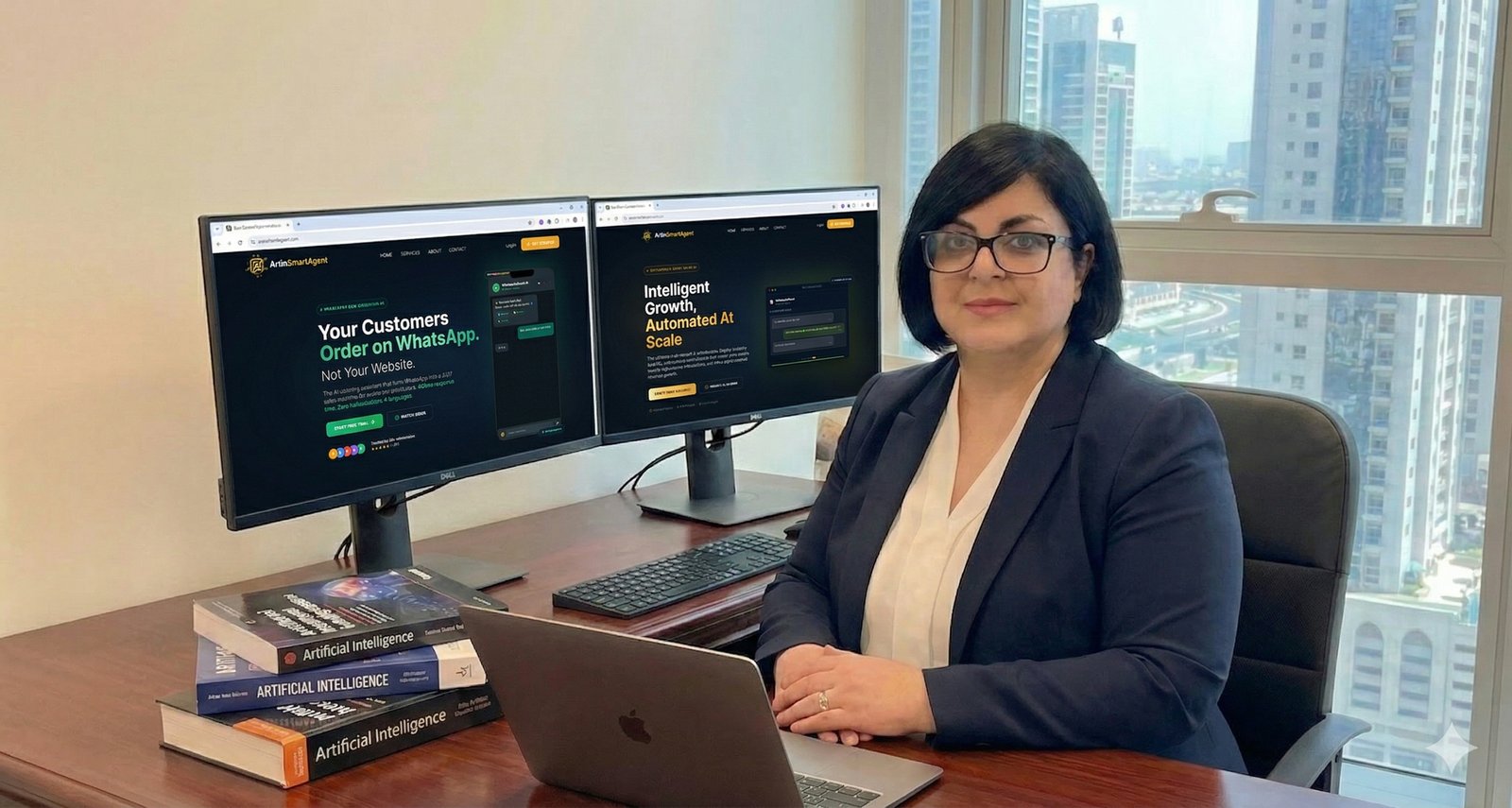
The desert wind whispers tales of old in Dubai, of bustling souks and dhows laden with spices. But for those of us who have called this city home for nearly two decades, we’ve witnessed a transformation that rivals any legend. From the intricate bartering in Deira’s gold souk to the dizzying heights of the Burj Khalifa, Dubai has always been about pushing boundaries. It’s a place where tradition meets ambition, and where the future isn’t just imagined, it’s built, brick by digital brick. Today, that future is undeniably intelligent, driven by AI, and it’s no longer just for the giants of industry. It’s for you, the vibrant small and medium business owners who form the backbone of this incredible emirate. If you’re ready to stop just reacting to the market and start proactively shaping your business’s destiny through advanced **business process automation** and cutting-edge AI, then settle in. This isn’t just an article; it’s a founder’s journey, a practical **AI automation tutorial**, and an invitation to join Dubai’s AI revolution.
From Souk to Software: My Journey into Dubai’s Automated Future
I landed in Dubai nearly two decades ago, a young entrepreneur with a vision for digital solutions in a city still heavily reliant on traditional commerce. The year was 2005, and while the city was already a hub of ambition, the digital landscape was a different beast entirely. I remember visiting clients in textile trading companies, their offices overflowing with physical ledgers, faxes humming, and a constant symphony of phone calls. Orders were taken manually, inventory was often a best guess, and customer service involved endless back-and-forths over the phone or, if you were lucky, a slow email chain. The efficiency that modern businesses now take for granted simply wasn’t there, and it created significant bottlenecks for growth.
ArtinWebs.com was born from this observation – a deep-seated belief that technology could transform these everyday struggles into streamlined successes. We started with basic web development, but even then, the underlying theme was automation: how can we make this process faster, more accurate, less dependent on human repetition? The challenges faced by local businesses were palpable: manual processes led to scalability issues, mistakes were costly, and the rising competition in Dubai’s fast-paced economy demanded a sharper edge. I saw businesses struggling to keep up with demand, drowning in administrative tasks, and missing out on opportunities because their operational infrastructure couldn’t handle rapid expansion. It wasn’t just about building websites; it was about building systems that could breathe, adapt, and grow with the businesses themselves. The ‘futurist’ vision, even back then, was clear: the inevitable shift towards intelligent automation and **business process automation** wasn’t just a luxury; it was a survival and growth imperative for any business looking to thrive in Dubai.
The Seed of Automation: Early Days in Dubai’s Business Landscape
My journey began at a time when Dubai was still charting its course as a global tech hub. While the skyscrapers were rising, many businesses operated with the same manual processes they had for decades. I recall a client, a prominent wholesale distributor of electronics in Deira, whose sales team spent hours each day simply confirming stock levels and processing orders via phone and email. They had a team of five dedicated to these repetitive tasks, constantly battling inaccuracies and delays. This wasn’t unique; it was the norm. We saw businesses with massive potential hamstrung by operations that couldn’t scale beyond a certain point without disproportionately increasing headcount and costs. Competition was fierce, margins were tight, and the market was moving faster than any human could keep up with. It was clear that without a fundamental shift in how they operated, these businesses would hit an invisible ceiling. My initial projects, though simple by today’s standards, often aimed at digitizing these manual pain points – moving paper forms online, creating basic inventory tracking systems, and streamlining communication. These early steps were the seed of automation, planting the idea that technology could be a force multiplier, not just a fancy add-on, and laying the groundwork for more advanced **business process automation**.
Why the Future of Business is Already Here (and How Dubai Embraces It)
Fast forward to today, and Dubai is a beacon of innovation. The city’s leadership has consistently championed smart city initiatives, digital transformation, and embracing cutting-edge technology. This isn’t just rhetoric; it’s evident in everything from government services to the bustling startup ecosystem. Global trends in AI are not just impacting Silicon Valley giants; they are directly shaping the regional market. From hyper-personalized customer experiences to predictive logistics, AI is no longer a distant concept but an immediate, tangible tool for competitive advantage. Dubai’s unique position as an innovation hub means that businesses here are often quicker to adopt and adapt. This rapid embrace creates both immense opportunity and a stark reality: those who don’t leverage these tools risk being left behind. This article isn’t about theoretical AI; it’s a practical, storytelling guide for SMBs in Dubai to navigate this new era. It’s an **AI automation tutorial** packed with actionable insights, designed to help you understand not just what AI can do, but how you can implement it, today, to drive real growth and efficiency in your business through effective **business process automation**.
Unlocking Growth: Why Business Process Automation is Non-Negotiable for SMBs
In the digital age, the phrase “business as usual” is often a euphemism for “slowly falling behind.” For many SMBs in Dubai, the daily grind is still dominated by a relentless tide of repetitive, manual tasks. Think about it: a small trading company managing hundreds of supplier invoices, a real estate agency manually qualifying leads from various portals, or a retail boutique trying to reconcile online and in-store inventory. These are not just inefficiencies; they are hidden costs that erode profitability and stifle growth. I remember a client, “Desert Bloom General Trading,” a bustling wholesale supplier of fresh produce to restaurants across Dubai. Their sales team would receive orders via WhatsApp, email, and phone calls. Each order then had to be manually entered into their accounting software, stock levels checked, delivery schedules coordinated, and invoices generated. This painstaking process consumed an average of 4-5 hours a day for their two administrative staff, often leading to errors in pricing, missed delivery slots, and frustrated chefs waiting for their ingredients. The time wasted wasn’t just administrative; it was opportunity cost. During those hours, they could have been proactively engaging new clients, optimizing logistics routes, or developing new product lines. Instead, they were caught in a cycle of reactive manual labor, perpetually playing catch-up.
This situation isn’t unique to Desert Bloom; it’s a common narrative across Dubai’s SMB landscape. The cumulative impact of these manual processes is staggering: high error rates leading to customer dissatisfaction and rework, significant time wasted on non-value-added activities, missed opportunities due to delayed responses, and a heavy burden on human resources who could be better utilized for strategic tasks. I call this the “digital debt” – the accumulating cost of not modernizing your operations. It’s not just about what you’re paying in salaries; it’s about the revenue you’re losing, the customers you’re alienating, and the competitive edge you’re sacrificing. In Dubai’s hyper-competitive market, where businesses are constantly vying for attention and loyalty, carrying this digital debt is a luxury no SMB can afford. Embracing **business process automation** isn’t just about cutting costs; it’s about investing in your future, ensuring your business is agile, resilient, and ready to seize every opportunity that comes its way.
The Hidden Costs of ‘Business as Usual’ in the Digital Age
Let me tell you about another client, “Al Safa Logistics,” a mid-sized freight forwarding company operating out of Jebel Ali. Their core business involved coordinating shipments, customs clearances, and deliveries. Every single inquiry from a potential client, whether via email or their website’s contact form, had to be manually qualified by a sales rep. This meant checking the client’s industry, shipment size, destination, and urgency, then cross-referencing against their service offerings and pricing tiers. This process took an average of 30 minutes per lead, and with 50-70 inquiries a day, it was a full-time job for two senior sales executives. Furthermore, around 10-15% of these inquiries were either spam, unqualified, or simply fell through the cracks due to the sheer volume and manual nature of the triage. The consequence? Not only were they paying two highly skilled individuals to perform a largely administrative task, but they were also missing out on valuable leads that could have translated into significant revenue. The hidden costs extended beyond salaries: delayed responses meant losing potential clients to faster competitors, the manual data entry into their CRM was prone to errors, and the sales team’s morale suffered from the repetitive, low-value work. This ‘business as usual’ approach wasn’t just inefficient; it was actively hindering their growth and burning out their best talent. It created what I often refer to as ‘digital debt,’ an accumulation of inefficient processes and outdated systems that drag down productivity and competitiveness, making it harder for SMBs to innovate and adapt in Dubai’s dynamic economy, highlighting the urgent need for robust **business process automation**.
The ROI of Automation: More Than Just Saving Money
The return on investment (ROI) of automation extends far beyond simply cutting operational costs. While cost savings are certainly a significant benefit, the true power of automation lies in its ability to transform the very fabric of your business. Consider “Bloom & Petal,” a popular local florist with both a physical store in Jumeirah and a thriving e-commerce presence. Initially, every online order required a staff member to manually enter the details into their delivery system, notify the florists, and then send a confirmation email to the customer. This was slow, prone to errors, especially during peak seasons like Valentine’s Day or Eid, and led to customer complaints about delayed confirmations or wrong deliveries. We helped them implement a simple automation: when an order was placed online, the details were automatically synced to their delivery management software, an internal notification was sent to the production team, and a personalized confirmation email, complete with tracking information, was sent to the customer within minutes. The immediate result? A 70% reduction in order processing time, a near-zero error rate, and a significant boost in customer satisfaction. Their staff, freed from the repetitive data entry, could now focus on designing unique floral arrangements, engaging with customers in-store, and developing new marketing campaigns. This shift empowered their human talent to innovate, turning a bottleneck into a competitive advantage.
Automation isn’t just about doing the same things faster; it’s about enabling a fundamental shift from rote tasks to strategic initiatives. It improves customer experience by providing faster, more consistent service. It accelerates decision-making by delivering real-time data and insights. It increases employee satisfaction by removing tedious work and allowing teams to focus on more engaging, high-value activities. For businesses leveraging robust platforms, like those offering comprehensive AI automation services, the transformation is profound. It’s about building a resilient, adaptable business that can scale effortlessly, respond dynamically to market changes, and ultimately, free up your most valuable asset – your people – to innovate and drive your business forward into the future through advanced **business process automation**.
Your First Digital Employee: An AI Automation Tutorial for Rapid Impact
The term “AI automation” often conjures images of complex robots or sophisticated algorithms accessible only to tech giants. This couldn’t be further from the truth, especially for today’s SMBs in Dubai. The reality is, you can start small, achieve rapid impact, and scale smartly. Think of your first digital employee not as a sentient being, but as a tireless assistant capable of handling the mundane, repetitive tasks that drain your team’s energy and time. The beauty of modern AI automation is its accessibility. You don’t need to be a data scientist or hire an army of developers. Many powerful no-code and low-code platforms have emerged, democratizing access to these tools. For an SMB, the key is to identify the “low-hanging fruit” – those tasks that are highly repetitive, rule-based, and consume significant human effort. These are the ideal candidates for your initial automation projects, promising quick wins and immediate ROI. Examples include automating email responses for common inquiries, syncing data between different applications (like your CRM and accounting software), generating routine reports, or managing lead qualification. These are the tasks that, while critical, don’t require human creativity, empathy, or complex problem-solving. By offloading them to AI, you free your human team to focus on what they do best: building relationships, innovating, and driving strategic growth, all guided by this practical **AI automation tutorial**.
Choosing the right tools is crucial but needn’t be overwhelming. Platforms like Zapier or Make (formerly Integromat) are excellent starting points for integrating various web applications with simple “if this, then that” logic. For more complex workflows, or when you need greater control and customization, tools like n8n truly shine, which we’ll delve into later. The goal is not to replace humans but to augment their capabilities, allowing them to operate at a higher level. Your first digital employee should be seen as an extension of your team, handling the grunt work so your human employees can focus on the strategic, creative, and human-centric aspects of your business. This approach minimizes risk, maximizes impact, and builds internal confidence in the power of automation, paving the way for more sophisticated AI implementations down the line. It’s about making AI accessible and actionable, turning complex concepts into tangible business benefits for every SMB in Dubai.
Demystifying AI: Starting Simple, Scaling Smart for SMBs
Many small business owners in Dubai hear “AI” and immediately think of science fiction or prohibitively expensive enterprise solutions. This perception is a major hurdle, but it’s simply not accurate anymore. AI automation is not just for Google or Amazon; it’s incredibly accessible, even for a café owner in Al Barsha or a boutique consultancy in Downtown. The trick is to start simple. Don’t try to automate your entire business on day one. Instead, identify those small, nagging, repetitive tasks that take up disproportionate amounts of time. For example, consider “Urban Cycles,” a bike rental shop near Jumeirah Beach. Their staff spent hours manually sending out rental agreement forms, collecting signatures, and then filing them. This is a perfect low-hanging fruit. A simple automation can send the form, track its completion, and file it digitally, saving hours each week. Other quick wins include: automatically sending welcome emails to new customers, syncing contact information from web forms directly into your CRM, or setting up automated appointment reminders. These are not complex AI projects; they are smart automations that leverage AI’s ability to process information and execute tasks based on predefined rules or simple learning algorithms. This **AI automation tutorial** emphasizes practical, achievable steps.
When choosing tools, think about your existing tech stack and your team’s comfort level. For simple integrations, Zapier or Make (formerly Integromat) are incredibly user-friendly, allowing you to connect hundreds of apps with intuitive drag-and-drop interfaces. For tasks requiring more logic or custom code, or if you prefer an open-source solution, n8n offers powerful flexibility. The key is to select tools that match the complexity of the task and your team’s technical proficiency. The goal is to get a quick win, demonstrate the value, and then gradually scale. By starting with simple, repetitive tasks, you build momentum, gain confidence, and foster an “automation-first” mindset within your team, proving that AI is not a threat, but a powerful ally that can augment human capabilities and drive efficiency for your Dubai-based SMB.
The Step-by-Step AI Automation Tutorial: From Idea to Implementation
Embarking on your first AI automation project doesn’t have to be a leap of faith. It benefits from a structured, practical framework. Here’s how we typically guide our clients in Dubai:
- Define the Problem: What specific, repetitive task is eating up time or causing errors? Be precise. For instance, “manually sending follow-up emails to new gym members” for “GymFit Dubai.”
- Design the Workflow: Map out the steps. Who does what, when, and what information is needed? For GymFit, it might be: New member signs up via web form -> Data goes to CRM -> Welcome email sent -> Trainer notified via Slack.
- Build the Automation: Choose your tools. For GymFit, we might use a webhook from their web form, connect it to their CRM (e.g., HubSpot), then use an email automation tool (e.g., Mailchimp via Make) and a Slack integration.
- Test Rigorously: Simulate different scenarios. What if a field is empty? What if the CRM is down? Test with real data (or test data) to ensure accuracy and robustness. GymFit would test with dummy sign-ups to ensure emails send correctly and notifications arrive.
- Refine Iteratively: Automation is rarely perfect on the first try. Monitor performance, gather feedback from your team, and make continuous improvements. Maybe the welcome email needs more personalization, or the Slack notification needs to go to a different channel.
Consider a practical example: Automating new member onboarding for “GymFit Dubai.”
Problem: New member sign-ups require manual data entry into the CRM, sending a welcome email, and notifying the assigned trainer, taking 15 minutes per member.
Workflow:
- New member fills out online registration form (e.g., Typeform).
- Typeform submission triggers a webhook.
- Automation tool (e.g., Make/n8n) receives webhook data.
- Tool adds new member’s details (name, email, membership type) to GymFit’s CRM (e.g., Salesforce).
- Tool then sends a personalized welcome email from GymFit via Mailchimp, including gym rules and class schedules.
- Finally, the tool sends a notification to the assigned trainer’s Slack channel, informing them of the new member and linking to their CRM profile.
Tips for Success: Always document your automations – what they do, why they exist, and how they’re built. This prevents future headaches. Monitor your workflows regularly to ensure they’re running smoothly and adapt them as your business processes evolve. Fostering an iterative improvement mindset within your team means they’ll actively look for new automation opportunities, turning them into champions of efficiency, rather than resistors of change. This systematic approach ensures that your AI automation efforts deliver tangible value and drive rapid impact for your Dubai business, making this **AI automation tutorial** a cornerstone for your digital transformation.
Beyond Replies: Setting Up a WhatsApp Business Bot for Customer Engagement
In Dubai and across the wider GCC, WhatsApp isn’t just another messaging app; it’s the undisputed king of communication. For many, it’s the primary way they connect with friends, family, and increasingly, businesses. Ignoring WhatsApp as a core customer engagement channel for your SMB in Dubai is akin to ignoring email a decade ago – it’s simply not an option if you want to stay relevant and accessible. From ordering groceries to booking salon appointments, people expect to interact with businesses on WhatsApp, often preferring it over phone calls or traditional emails due to its immediacy and familiarity. This cultural relevance presents an enormous opportunity for businesses to streamline customer service, generate leads, and even process orders through automated WhatsApp bots. This section provides a comprehensive guide to **WhatsApp business bot setup**.
I recall working with “Oasis Properties,” a rapidly growing real estate agency in Dubai, that was grappling with a deluge of inquiries. Potential clients would message them on WhatsApp at all hours, asking about apartment prices, viewing availability, or specific property features. Their small team of agents was overwhelmed, manually sifting through hundreds of messages daily. Responses were often delayed, leading to missed opportunities and frustrated clients who simply moved on to the next agency. The agents were spending more time on basic information dissemination than on actual sales. The shift from this manual, delayed, and inconsistent response system to an automated, personalized, and instant customer interaction through a WhatsApp bot was a game-changer. It transformed their customer engagement from a reactive bottleneck into a proactive, 24/7 sales and support engine. By leveraging a bot, Oasis Properties could instantly qualify leads, answer common FAQs, and even pre-book viewing appointments, ensuring that when a human agent did step in, they were engaging with a genuinely interested and well-informed prospect. This immediate, efficient service is not just a convenience; it’s a powerful differentiator in Dubai’s competitive market, made possible by strategic **WhatsApp business bot setup**.
The Power of WhatsApp in the GCC Market: A Local Imperative
The dominance of WhatsApp in the GCC is unparalleled. It’s the digital heartbeat of daily life for millions, making it an indispensable tool for any business looking to connect with its customers in Dubai. We’ve seen this firsthand with countless clients. Take “Spice Route Trading,” a wholesale food distributor supplying fresh produce and exotic spices to restaurants across the city. Their sales representatives used to receive orders via a chaotic mix of phone calls, text messages, and even scribbled notes. This manual process was ripe for error, slow, and incredibly inefficient, especially when chefs needed to reorder staples quickly during peak hours. The solution wasn’t just about digitizing; it was about meeting their customers where they already were: WhatsApp. We helped them implement a WhatsApp Business Bot, integrated with their inventory and B2B Smart Ordering system. Now, chefs could simply message the bot, browse a digital catalog, and place orders with a few taps. The bot could even suggest complementary items or alert them to promotions. This transformed their ordering process from a daily administrative headache into a seamless, 24/7 self-service channel. It significantly reduced manual errors, freed up sales reps to focus on client relationship building rather than order taking, and drastically improved customer satisfaction by offering instant, accurate service. This is just one example of how a WhatsApp bot moves a business from delayed, inconsistent manual responses to automated, personalized, and instant customer interactions – a local imperative for any Dubai SMB, and a key component of effective **WhatsApp business bot setup**.
WhatsApp Business Bot Setup: A Practical Guide for SMBs
Setting up a WhatsApp Business Bot might sound daunting, but with the right approach and tools, it’s highly achievable for SMBs. Here’s a practical guide to **WhatsApp business bot setup**:
- Choose Your Bot Platform:
- Simple Rule-Based Bots: For basic FAQs and lead capture, platforms like ManyChat (integrating with Facebook Messenger, which can then be linked to WhatsApp Business API) or even some CRM solutions offer built-in bot builders. These are great for quickly deploying a bot without code.
- Advanced AI-Powered Bots: For more natural language understanding and complex interactions, integrating with platforms like Google Dialogflow or leveraging custom solutions built on frameworks like Twilio’s WhatsApp API is essential. These allow your bot to understand intent, not just keywords.
- Design Conversational Flows: This is where the magic happens. Map out typical customer journeys and questions.
- FAQs: What are your opening hours? What services do you offer? How do I book an appointment?
- Lead Capture: “Are you interested in our services? Great! What’s your name, email, and what specific service are you looking for?”
- Customer Support Triage: “Are you an existing customer or new? What’s your query about (billing, technical support, general inquiry)?” The bot can then route them to the right department or provide self-service options.
- Automated Appointment Booking: Integrate with a calendar tool (e.g., Calendly). “What date and time works best for you?”
- Workflow Example: Lead Management for a Car Rental Company (“Wheels on Demand”)
Imagine a customer messages “Wheels on Demand” on WhatsApp: “I need to rent a car for a week next month.”
Bot Flow:
- Bot: “Welcome to Wheels on Demand! To help me find the best car for you, could you tell me your desired pick-up date and drop-off date?”
- Customer: “Pick up: Oct 1, drop off: Oct 8.”
- Bot: “Excellent. And what type of car are you looking for? (e.g., Economy, SUV, Luxury)”
- Customer: “An SUV, please.”
- Bot: “Great! I’ve found a few options. While I prepare them, could I get your name and email so I can send you the details and a special offer?”
- Customer: (Provides details)
- Integration: The bot, via an **n8n workflow automation**, automatically creates a new lead in the CRM, populates it with car preferences, and triggers an email with SUV options and a discount code. It then notifies a sales agent on Slack that a hot lead is ready for follow-up.
The key is to make the conversation feel natural and valuable. Start simple, test extensively, and continuously refine your bot’s scripts based on user interactions. A well-designed WhatsApp bot can be your 24/7 digital concierge, transforming customer engagement and driving efficiency for your Dubai business.
The Architect’s Blueprint: Mastering n8n Workflow Automation for Seamless Operations
While tools like Zapier and Make are fantastic for getting started, there comes a point for many Dubai SMBs when they hit a wall with their capabilities, cost, or customization limits. This is where n8n steps in as the architect’s blueprint for a truly custom and flexible automation ecosystem. n8n (pronounced “n-eight-n”) is an open-source workflow automation tool that allows you to connect any app with an API, database, or even custom code. Its power lies in its unparalleled flexibility and the vast array of integrations it offers – from CRMs and marketing platforms to databases, cloud services, and custom webhooks. Unlike proprietary solutions that often charge per task or integration, n8n’s open-source nature means you have more control over your data and, if self-hosted, can be incredibly cost-effective at scale. This makes it a perfect fit for ambitious SMBs in Dubai who need more than off-the-shelf solutions but aren’t ready for a full-blown custom development project, making it ideal for robust **n8n workflow automation**.
Comparing n8n to its competitors highlights its unique advantages. Zapier is great for simple, linear automations. Make offers a more visual and powerful interface, similar to n8n, but remains a cloud-based, proprietary service with tiered pricing. n8n, however, stands out for its self-hosting option, which offers complete data sovereignty and potentially limitless usage without per-task costs, making it ideal for businesses with high-volume workflows or sensitive data. This control is invaluable for a Dubai-based marketing agency, “Digital Mirage Marketing,” which we helped. They were struggling to automate their complex social media posting, analytics reporting, and client communication. They used various platforms – Hootsuite for scheduling, Google Analytics for data, HubSpot for CRM, and Slack for internal communication. Manually pulling data, generating reports, and tailoring client updates was a nightmare. Using n8n, we built a series of complex workflows: social media posts were scheduled and published automatically, Google Analytics data was pulled, transformed, and integrated into custom client dashboards, and automated summary reports were generated and sent via email, with internal alerts posted on Slack. This holistic approach, orchestrated by n8n, transformed their operations, saving hundreds of hours monthly and ensuring consistent, high-quality client communication, all while maintaining full control over their data infrastructure through advanced **n8n workflow automation**.
Why n8n? The Flexible Backbone for Your Automation Ecosystem
In the world of workflow automation, n8n has carved out a niche as the go-to tool for businesses that require ultimate flexibility, control, and scalability, especially when dealing with complex, multi-step processes. Its open-source nature is a significant advantage, meaning it’s free to use and can be self-hosted, giving you full ownership of your data and infrastructure. This is a critical consideration for many Dubai businesses concerned about data privacy and compliance. With over 500 integrations out of the box, n8n can connect virtually any web service, database, or custom application. Its visual workflow builder is intuitive, allowing you to drag, drop, and connect nodes to create intricate automation sequences without writing a single line of code for most tasks, making it perfect for comprehensive **n8n workflow automation**.
Need to generate WhatsApp QR Codes for your sales team?
Create instant click-to-chat QR codes with our free Business Generator.
Create WhatsApp QRWhen you compare n8n to other popular integration platforms like Zapier or Make (formerly Integromat), its strengths become even clearer. Zapier is excellent for simple, “if this, then that” scenarios but can quickly become expensive and restrictive for complex, high-volume workflows. Make offers more visual power and flexibility but is still a proprietary cloud service. n8n shines when you need deeper customization, conditional logic, error handling, and the ability to run custom JavaScript code within your workflows. This level of control is what makes it the flexible backbone for your entire automation ecosystem. Consider “Digital Mirage Marketing,” a Dubai-based agency that needed to automate a highly specific client reporting process. They had client data across Google Analytics, Facebook Ads, HubSpot CRM, and custom Excel sheets. Manually aggregating this data, generating customized reports, and sending them to 30+ clients each week was a full-time job for two account managers. We implemented n8n to pull data from all these sources, perform complex data transformations and calculations using custom JavaScript nodes, generate branded PDF reports, and then send these personalized reports via email, with a copy uploaded to the client’s dedicated Google Drive folder. This sophisticated workflow, which would have been prohibitively expensive or impossible with simpler tools, was built and managed efficiently with n8n, freeing their account managers to focus on strategic client engagement and campaign optimization.
Your First n8n Workflow Automation: A Step-by-Step Walkthrough
Getting started with n8n is surprisingly straightforward, especially if you opt for their cloud service, which removes the hassle of self-hosting. For those who prefer ultimate control, self-hosting via Docker is a robust option. Once you’re set up, you’ll be greeted by its intuitive visual interface, a canvas where you build your workflows by connecting “nodes.” This guide will walk you through your first **n8n workflow automation**.
Let’s build a practical workflow for a Dubai-based consultancy, “Insight Hub,” that wants to automate lead capture and notification:
- Trigger Node (Webhook): Start with a “Webhook” node. This acts as a listener for incoming data. When someone fills out Insight Hub’s contact form on their website (e.g., powered by Typeform or a custom form), the form submission will send its data to this webhook URL.
- Data Extraction & Transformation (Code Node – Conceptual Snippet): The incoming data from the form often needs to be parsed or transformed. We can add a “Code” node to extract specific fields and format them for the next steps. While n8n handles much of this visually, for more complex logic, a Code node is invaluable.
- CRM Integration (HTTP Request or CRM Node): Connect the “Code” node to a “HubSpot” or “Salesforce” node (or a generic “HTTP Request” node if your CRM isn’t directly supported) to create a new contact or update an existing one using the
crmPayload. - Notification (Slack Node): Finally, connect the CRM node to a “Slack” node. Configure it to send a message to a specific channel (e.g., #new-leads) with details of the new lead, including their name, email, and service interest. This ensures the sales team is immediately aware of new inquiries.
// Conceptual n8n node logic
// Assuming 'incomingData' is from a webhook (e.g., a form submission)
const clientName = incomingData.json.name;
const clientEmail = incomingData.json.email;
const serviceRequested = incomingData.json.serviceInterest; // Assuming a field like 'serviceInterest'

// Prepare data for the CRM (e.g., HubSpot, Salesforce)
// This structure would be specific to your CRM's API
const crmPayload = {
    properties: {
        firstname: clientName,
        email: clientEmail,
        'service_interest': serviceRequested, // Custom property in CRM
        'lead_source': 'Website Form - n8n'
    }
};

// Return the prepared data to the next node in the workflow
return [{json: crmPayload}];
Advanced Tips:
- Error Handling: Implement “IF” nodes to check for missing data or API errors. Use “Try/Catch” blocks to gracefully handle failures and send error notifications (e.g., to an admin email).
- Data Transformation: n8n’s “Set” node and “Code” node are incredibly powerful for manipulating data, concatenating strings, or running custom logic.
- Scheduling: For tasks that need to run periodically (e.g., daily reports), use the “Cron” trigger node to schedule your workflows.
By mastering n8n, you’re not just automating tasks; you’re building a resilient, interconnected digital nervous system for your business, allowing you to orchestrate seamless operations and respond dynamically to the demands of the Dubai market.
Developing Your Own ‘Jarvis’: An AI Agent Development Guide for Strategic Advantage
We’ve talked about bots and workflows, powerful tools in their own right. But imagine a digital entity that doesn’t just follow rules or execute predefined sequences, but rather understands a high-level goal, reasons through complex problems, accesses various tools, and even learns from its environment to achieve that goal autonomously. This is the realm of an AI agent – your own ‘Jarvis,’ capable of intelligent, proactive decision-making. Unlike a simple chatbot that reacts to specific keywords, or a workflow automation that executes a fixed series of steps, an AI agent operates with a degree of autonomy. It can break down complex problems into smaller tasks, choose the right tools for each task, execute them, and then synthesize the results to move towards its ultimate objective. For SMBs in Dubai, this isn’t science fiction; it’s the next frontier of competitive advantage, moving beyond mere efficiency to strategic foresight and execution. This section serves as your comprehensive **AI agent development guide**.
The distinction between agents and traditional automation is crucial. Traditional automation is reactive and rule-based: “If X happens, then do Y.” An AI agent, however, is proactive and goal-oriented: “Achieve Z, and figure out the best way to do it.” It leverages large language models (LLMs) for reasoning and planning, combined with access to various “tools” (APIs, databases, web scraping, custom scripts) to interact with the digital world. Picture an AI agent managing an entire customer journey for a small e-commerce business selling artisanal products in Alserkal Avenue. From understanding an initial customer query about product availability, to dynamically adjusting pricing based on demand and competitor analysis, to personalizing marketing campaigns for different customer segments, and even proactively reordering inventory when stocks are low – all with minimal human oversight. This agent isn’t just sending replies; it’s actively driving sales, optimizing operations, and enhancing customer satisfaction by making intelligent, data-driven decisions. Developing such an agent for your Dubai SMB means moving from automating tasks to automating strategic thinking and execution, unlocking unprecedented levels of productivity and innovation, as detailed in this **AI agent development guide**.
What is an AI Agent? Beyond Simple Bots to Intelligent Assistants
The journey from simple automation to a sophisticated AI agent is a significant leap, one that promises truly transformative power for Dubai’s SMBs. At its core, an AI agent is an autonomous entity designed to understand high-level goals, break them down into actionable steps, utilize various tools to execute those steps, and learn from the outcomes to achieve its objectives independently. Think of it less as a bot that responds to commands and more as a highly intelligent, self-sufficient digital employee capable of reasoning, planning, and executing complex tasks without constant human intervention, as explored in this **AI agent development guide**.
The key differentiator from traditional automation or even advanced chatbots lies in its proactive, goal-oriented behavior. A traditional automation might be programmed to send an email when a form is submitted. A chatbot might answer FAQs. An AI agent, however, could be given a goal like, “Increase customer lifetime value by 15% over the next six months.” To achieve this, it would autonomously:
- Perceive: Analyze customer purchase history, website behavior, and support interactions from your CRM.
- Reason: Identify customer segments, predict churn risk, and infer personalized product preferences using an LLM.
- Plan: Devise a strategy involving targeted email campaigns, personalized discount offers, and follow-up sequences.
- Act (Tool Use): Use your email marketing platform to send campaigns, your CRM to update customer profiles, and a discount API to generate unique codes.
- Learn: Monitor the success of these initiatives and adjust its strategy over time, continuously optimizing for the 15% CLTV increase.
Imagine an AI agent managing a small hotel’s entire booking and guest experience. It could dynamically adjust room pricing based on real-time demand and competitor rates, personalize pre-arrival communications, anticipate guest needs based on their booking history, and even proactively manage online reviews. This isn’t just about efficiency; it’s about building a strategic advantage, allowing your human team to focus on the truly human elements of hospitality while the AI agent optimizes the complex operational and revenue-generating aspects. This vision of an intelligent, autonomous assistant is no longer confined to sci-fi; it’s becoming an accessible reality for ambitious SMBs in Dubai.
Practical Steps: An AI Agent Development Guide for SMBs
Developing your own AI agent might sound like a massive undertaking, but for an SMB, it’s about strategic application and leveraging existing powerful tools. Here’s a pragmatic approach, serving as your practical **AI agent development guide**:
- Identify a Clear, High-Value Problem: Don’t try to build an agent for everything. Focus on one specific area where autonomous, intelligent action can yield significant results. Examples:
- Dynamic Pricing Optimization: For a small e-commerce store or a boutique hotel, an agent could monitor competitor prices, demand fluctuations, and inventory levels to adjust your product/room prices in real-time, maximizing revenue.
- Personalized Marketing Campaign Management: An agent could analyze customer segments in your CRM, identify personalized product recommendations, craft unique marketing messages using an LLM, and trigger campaigns through your marketing automation platform.
- Proactive Customer Retention: An agent could identify customers at risk of churn based on their activity, then automatically initiate a personalized outreach with a special offer or survey.
- Leverage Existing AI Models and APIs: You don’t need to train your own large language model. Tools like OpenAI’s GPT models (via API) provide the core reasoning capabilities. Frameworks like LangChain or AutoGen (Python libraries) are excellent for orchestrating these LLMs, giving them “memory” (context of past interactions) and “tools” (ability to interact with other systems).
- A High-Level ‘Code Snippet’ Concept for Agent Logic: While building a full agent involves more than a snippet, conceptually, here’s how an agent’s reasoning loop and tool usage might be initiated:
- Emphasize Ethical Considerations and Continuous Monitoring: AI agents, by their autonomous nature, require careful oversight. Address potential biases in data or decision-making. Implement robust logging and monitoring to track agent actions, identify unexpected behavior, and ensure it aligns with your business values and customer expectations. Regular human review is critical for refinement and safety.
# Conceptual AI Agent Workflow Logic (using a framework like LangChain)

from langchain.agents import initialize_agent, Tool
from langchain.llms import OpenAI
from your_custom_tools import CRMTool, EmailMarketingTool, InventoryAPI

# Initialize the Large Language Model (e.g., OpenAI's GPT-4)
llm = OpenAI(temperature=0)

# Define the tools your agent can use
tools = [
    Tool(
        name="CRM_Lookup",
        func=CRMTool().lookup_customer,
        description="Searches CRM for customer data by email or ID."
    ),
    Tool(
        name="Send_Marketing_Email",
        func=EmailMarketingTool().send_personalized_email,
        description="Sends a personalized marketing email to a customer."
    ),
    Tool(
        name="Get_Inventory_Status",
        func=InventoryAPI().get_stock_level,
        description="Checks the current stock level of a product."
    ),
    # Add more custom tools for your specific business needs
]

# Initialize the agent with its tools and the LLM
agent = initialize_agent(tools, llm, agent="zero-shot-react-description", verbose=True)

# Define a specific goal for the agent
agent_goal = "Identify customers who haven't purchased in 60 days, then send them a personalized re-engagement offer for product 'X' if stock is available, and log the outreach in the CRM."

# Run the agent to achieve its goal
agent.run(agent_goal)
This conceptual snippet illustrates how an agent can be given a goal, provided with a set of tools (like CRM lookup, email sender, inventory checker), and then use an LLM to reason, plan, and execute actions to achieve that goal. This level of customisation and intelligent automation is what our AI automation services are designed to help you achieve.
By taking these practical steps, your Dubai SMB can begin to harness the strategic advantage of AI agents, transforming complex challenges into automated, intelligent solutions that drive sustainable growth and innovation.
The Automated Horizon: Sustaining Innovation and Scaling with AI
Implementing AI automation isn’t a one-time project; it’s the beginning of a transformative journey. The real power of AI isn’t just in the initial setup, but in fostering a culture of continuous innovation and adaptation. For Dubai’s dynamic SMB market, this means viewing automation as an ongoing process, a living system that evolves with your business and the technological landscape. After initial successes, the temptation might be to rest on your laurels, but the digital world moves too fast for complacency. The most successful businesses are those that embed an “automation-first” mindset into their DNA, constantly seeking out new opportunities to streamline, optimize, and innovate using AI.
This long game requires more than just technical implementation; it demands a shift in organizational culture. It means empowering your team, from the front desk to senior management, to identify pain points and propose automation solutions. Training your employees to understand the basics of automation, and even how to build simple workflows themselves, turns them into champions of efficiency. Imagine a sales team member realizing that their follow-up emails could be automated, or a logistics coordinator identifying a more efficient route planning system. When employees are actively involved in the process, they not only contribute valuable insights but also become enthusiastic adopters, reducing resistance to change. Measuring success goes beyond mere cost savings; it encompasses key performance indicators (KPIs) like reduced error rates, faster customer response times, improved employee satisfaction, and ultimately, increased revenue. By continuously monitoring these metrics and iterating on your automation initiatives, your Dubai SMB can build a resilient, agile, and future-proof business, ready to scale and thrive in the ever-evolving digital economy.
Building a Culture of Automation: Beyond the Initial Setup
The true, sustainable success of AI automation in your Dubai SMB hinges not just on the technology itself, but on cultivating a culture that embraces and champions it. Think of it as planting a seed; the initial setup is just the beginning. The long game is about nurturing that seed into a thriving ecosystem where automation is seen as a continuous process of innovation, not a one-time fix. This requires a shift in mindset across your entire organization.
One of the most powerful strategies is to empower your employees. Instead of viewing automation as a threat to their jobs, frame it as a tool that frees them from mundane tasks, allowing them to focus on more strategic, creative, and fulfilling work. Conduct internal workshops to demystify AI and automation tools. Train your team members – even those in non-technical roles – to identify repetitive tasks in their daily routines and brainstorm potential automation solutions. Designate ‘automation champions’ within different departments who can serve as go-to resources and evangelists. When a sales associate, for instance, realizes they can automate lead qualification or follow-up sequences, they become a powerful advocate for the technology, fostering an ‘automation-first’ mindset organically.
Furthermore, establishing clear Key Performance Indicators (KPIs) for your automation initiatives is crucial for measuring success and adapting. Beyond just monetary savings, track metrics like:
- Time Saved: How many hours per week are now freed up from manual tasks?
- Error Reduction: What percentage decrease in errors can be attributed to automation?
- Customer Satisfaction: Are response times faster? Are customers happier with the service?
- Employee Engagement: Is morale improving as tedious tasks are automated?
Regularly review these KPIs, gather feedback from your team, and be prepared to iterate. Automation is not static; it’s a dynamic process. As your business evolves, so too should your automated workflows. By continuously monitoring, adapting, and involving your team, your Dubai SMB can build a resilient, innovative culture that leverages AI for sustained growth and efficiency, ensuring your investment pays dividends far into the future.
What’s Next for Dubai SMBs? Future Trends and Our Vision
As we look to the horizon, the pace of AI innovation shows no signs of slowing, and Dubai, with its forward-thinking vision, will undoubtedly be at the forefront of these advancements. For SMBs here, anticipating the next wave of AI is crucial for maintaining a competitive edge. We foresee a future where hyper-personalization at scale becomes the norm – imagine an AI predicting exactly what a customer needs before they even know it themselves, delivering tailored offers and experiences across every touchpoint, from your website to their WhatsApp. Advanced predictive analytics will move beyond simple forecasting to sophisticated scenario planning, allowing businesses to optimize everything from inventory management to staffing levels with unprecedented accuracy.
Voice AI integration will become seamless, transforming customer service and internal operations. Picture a customer simply speaking their order to a smart assistant, or a field technician verbally logging their daily tasks. Robotic Process Automation (RPA), which focuses on automating structured, repetitive digital tasks, will merge more deeply with AI, enabling intelligent robots to handle complex decision-making within existing software systems. The line between what’s human and what’s automated will blur, not to replace, but to augment and empower.
At ArtinWebs.com, our commitment is to guide Dubai businesses through this exhilarating and often challenging technological landscape. With 18+ years of experience deeply rooted in this market, we understand the unique nuances and opportunities that define success here. Our vision is to continue providing tailored, practical AI automation solutions that aren’t just cutting-edge, but genuinely solve real-world business problems. From custom **WhatsApp business bot setup** that resonate with the local communication culture to sophisticated **n8n workflow automation** that integrate your entire digital ecosystem, and the development of intelligent AI agents through our **AI agent development guide** principles, we are dedicated to being your trusted partner.
The future of business in Dubai is intelligent, automated, and incredibly exciting. Don’t wait for your competitors to embrace this transformation. The time to act is now. Embark on your AI automation journey today to secure your future success and redefine what’s possible for your business.
Frequently Asked Questions
What is AI automation and how can it benefit my Dubai-based SMB?
AI automation uses artificial intelligence to perform repetitive tasks, analyze data, and make decisions without human intervention. For Dubai SMBs, it translates to increased efficiency, reduced operational costs, improved customer service, and better scalability, allowing you to compete effectively in a dynamic and fast-growing market.
Is setting up a WhatsApp Business Bot complicated for a small business owner?
Not necessarily. While custom solutions can be complex, many no-code/low-code platforms (like ManyChat or integrated CRM tools) make **WhatsApp business bot setup** accessible. We recommend starting with simple FAQs and lead capture, then expanding functionality as your business needs evolve. ArtinWebs can guide you through this process from strategy to implementation.
What is n8n and why should I consider it for my business process automation?
n8n is an open-source workflow automation tool that allows you to connect various apps and services to automate tasks. It’s powerful, flexible, and often more cost-effective than proprietary solutions. It’s ideal for SMBs looking to build complex, custom integrations and streamline operations without heavy coding, making your systems work seamlessly together, and is a core component of effective **business process automation**.
What’s the difference between general AI automation and an AI agent, and which one do I need for my business?
AI automation typically refers to automating predefined tasks or workflows based on rules, often covered in an **AI automation tutorial**. An AI agent, however, is more autonomous, capable of understanding goals, making decisions, and learning to achieve those goals independently, as detailed in an **AI agent development guide**. You might start with AI automation for specific tasks like data entry, and as your needs evolve, consider AI agents for more strategic, complex problem-solving like dynamic pricing or personalized marketing campaigns.
How can ArtinWebs.com help my business implement AI automation in Dubai?
With 18+ years of experience in Dubai, ArtinWebs.com specializes in designing and implementing tailored AI automation solutions for SMBs. From initial consultation and strategy development to custom bot setups (like WhatsApp bots), **n8n workflow automation** integration, and advanced AI agent development, we provide end-to-end support to transform and optimize your business processes for the digital age.
Ready to transform your Dubai business with the power of AI automation? Don’t let your competitors get ahead. Contact ArtinWebs.com today for a personalized consultation and discover how our 18+ years of experience can help you navigate Dubai’s automated future.